
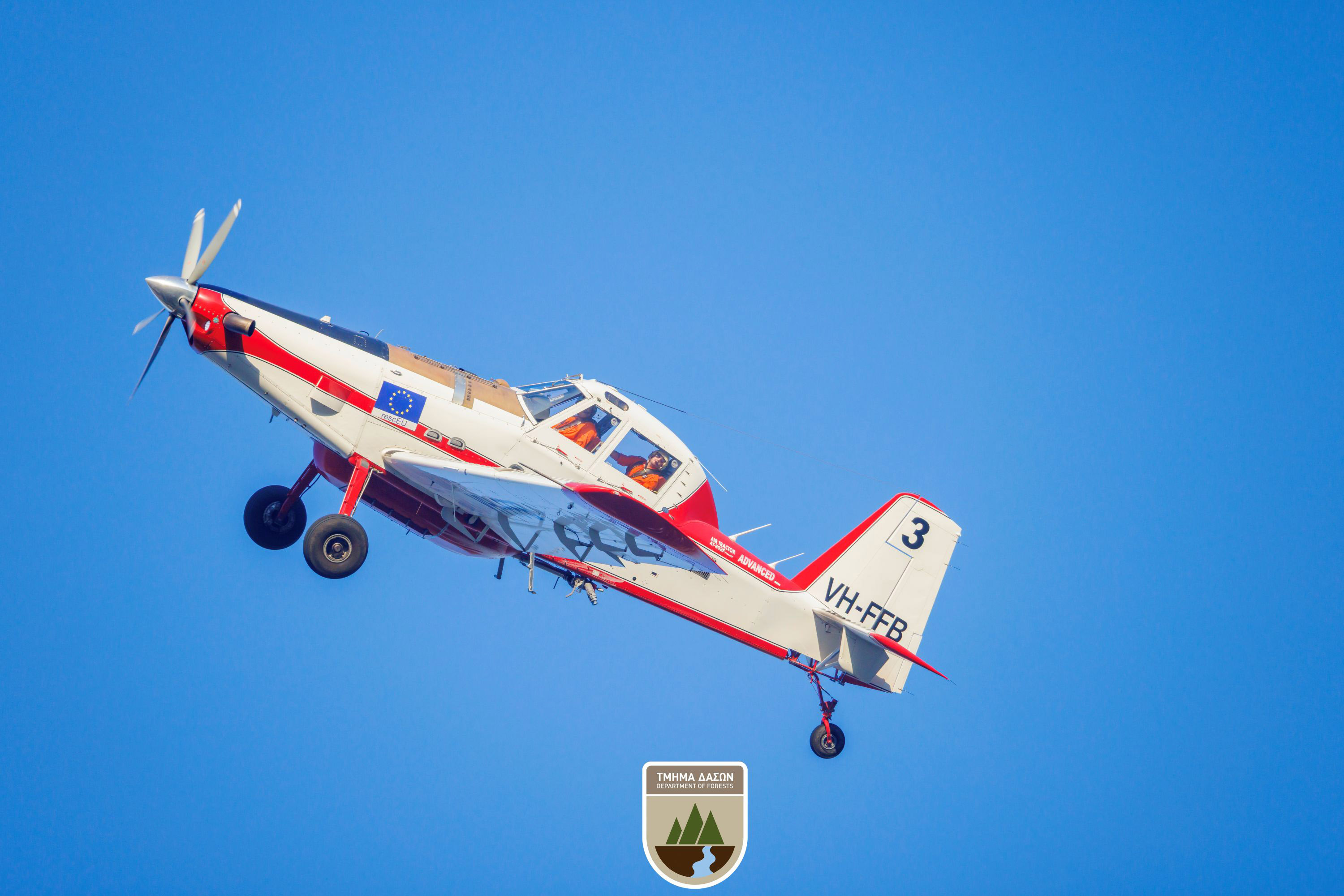
Safety in aerial firefighting missions should be the top priority and continuously improved, aviation expert Chrysanthos Hadjichrysanthou said following a recent firefighting helicopter accident in Greece in which two people were killed.
Hadjichrysanthou, chairman of the Flight Safety Foundation Mediterranean (FSF-MED), whose slogan is “safety is a shared value”, said it was too early to determine exactly what had happened in Greece, as the investigation was still under way.
“However, every such incident serves as a reminder that safety in firefighting missions demands being alert continuously. Helicopters operating in such missions must have a valid fight capacity certificate, be maintained according to the manufacturer’s specifications and the prerequisites of the aviation authority, and be manned by properly trained and experienced crews,” he said.
He added that possible causes of an aviation accident could include human error, technical failure, adverse weather conditions or a combination of factors.
On August 2, two helicopters collided while fighting a wildfire near Psatha, 65km west of Athens. A Danish pilot and a Greek fire brigade liaison officer were killed when one of the helicopters burst into flames and crashed into a ravine.
The second helicopter, although damaged, was able to make an emergency landing, with its British pilot and Greek coordinator surviving.
“Prevention is based on the strict adherence to procedures, quality training, proper maintenance and effective risk management,” Hadjichrysanthou pointed out.
He said all aircraft operating in Cyprus must meet the demands of the Civil Aviation Authority and, where applicable, the European Aviation Safety Agency (EASA).
Cyprus, he said, has a satisfactory inspection framework, however “there is always room for improvement” in training, coordination between services, state-of-the-art technology and the exchange of experience with other countries.
Weather conditions such as extreme heat, strong winds and smoke are taken into account in accordance with manufacturers’ specifications, while the final decision on whether to fly rests with the aircraft’s captain, with safety the overriding consideration.
Hadjichrysanthou said the main lesson from the accident in Greece was that authorities should never wait for the findings of an investigation before seeking to improve safety culture.
“Every incident is an opportunity to reevaluate procedures, training, communication and operational planning, so that we can continuously reduce risks. That is what our organisation is trying to promote,” he said.
FSF-MED, he explained, organises seminars and workshops to discuss safety issues, take action and help prevent accidents.
Hadjichrysanthou also expressed his respect and appreciation for those operating firefighting aircraft.
“Their mission is invaluable, but no mission is worth more than human life. There is a great responsibility here for the operators. If the captain of a flight sees fit, either due to the technical adequacy of the aircraft or due to adverse weather conditions or the closing of the airspace, he has the right and legal obligation to refuse to carry out that flight. The operators must be fully protected by their employers when they take such decisions,” he added.
He also called on the public to “have faith in the professionals who are operating, follow the instructions of the authorities and remember that behind every firefighting aircraft there are people who are working under particularly taxing and dangerous conditions”.




Click here to change your cookie preferences