
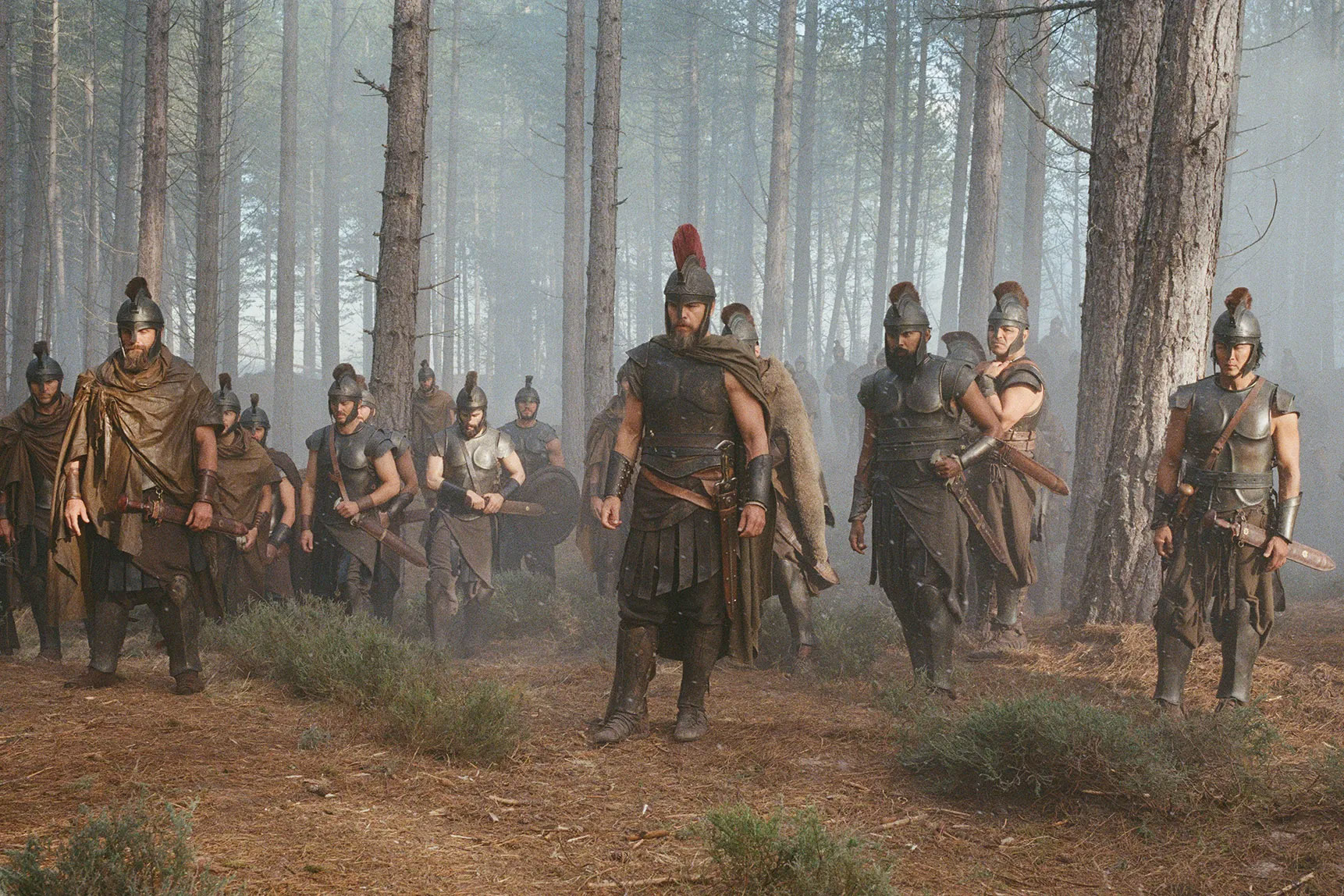
I paid to watch a story the ending to which I already knew. That was precisely why I went.
Before the lights went down, I knew about the giant with one eye, the Sirens, Circe and the men who forgot themselves after eating the lotus flower. I knew why Penelope wove by day and quietly undid her work at night. Above all, I knew that Odysseus was not searching for another kingdom or another victory. He simply wanted to go home.
I first learnt his story at school in Cyprus. Time had erased some names and islands, but not the shape of the journey. I did not need Christopher Nolan to tell me what happened. I wanted to see what happened when a story I carried for years was made too large for a textbook, too physical for a television and worth leaving home to experience.
Within minutes, something once learnt for a lesson felt dangerous again.
Only afterwards did I discover that, three days before Nolan’s $250 million production opened, an artificial-intelligence company had announced another Odyssey. That version ran for 135 minutes, took three months of part-time work and cost five figures. One film required thousands of people, real ships, vast sets, six countries and more than two million feet of celluloid. The other needed cloud credits, prompts and a small team.
Without meaning to, Homer had become the perfect test case for modern Hollywood. The source material was the same and free to use. Almost everything else, from the labour to the balance sheet, belonged to a different world.
The obvious question was whether Nolan had used AI too.
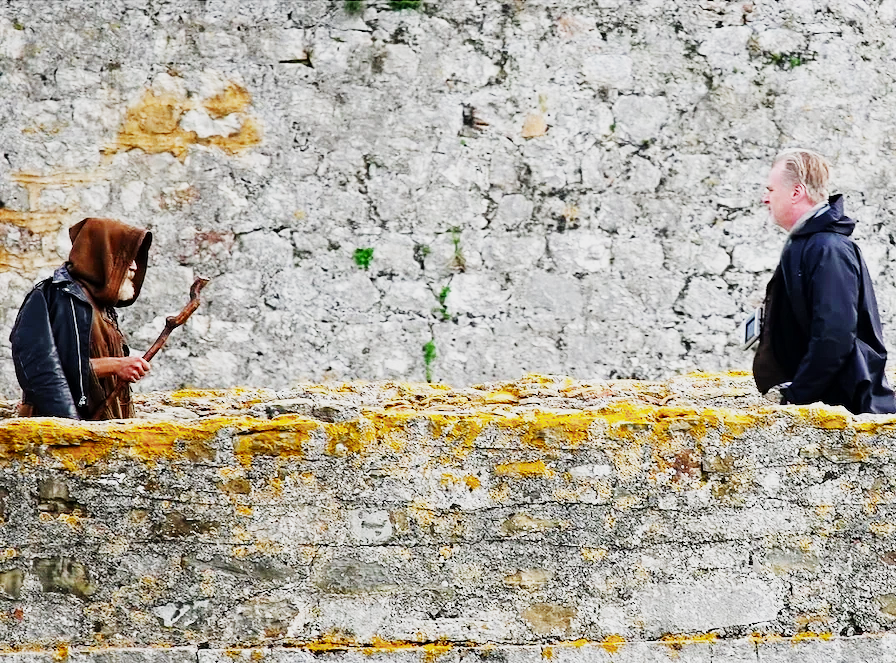
There is no project-specific confirmation that generative AI created any of the film’s writing, performances, voices or finished images. DNEG, its sole visual-effects partner, said its work brought together puppetry, stunt performers, special effects and CGI.
What the available evidence does show is that Nolan did not use AI to replace the actors, writers or physical world at the heart of his film. CGI, after all, is not automatically AI. Owning a new tool does not mean taking it out of the box for every job.
What Nolan put in front of his cameras was often stubbornly real. The production used ships, physical sets, puppetry and stunt performers, filming for 91 days across six countries and finishing nine days ahead of schedule. That effort can be felt on screen.
The Trojan Horse looks enormous, damp and almost unmanageable. The sea does not resemble a digital surface waiting politely behind the actors. It pushes against the ships, swallows men and makes Ithaca feel impossibly far away.
Nolan later borrowed Homer’s most famous trick to explain his suspicion of artificial intelligence, describing AI as “a Trojan horse that everybody knows the Greeks are inside”.
The metaphor is almost too perfect. Hollywood is being offered lower costs, faster production and an apparently endless supply of images. Nolan’s concern is what may be hiding inside, especially when efficiency becomes another word for removing writers, performers and other creative workers.
AI is already present elsewhere in Nolan’s production chain. DNEG’s wider group is investing heavily in it even as Nolan argues for cinema built around people. That does not expose a contradiction so much as the uneasy reality facing the entire industry. Traditional studios are testing AI while trying to decide which parts of filmmaking should never be surrendered to it.
Nolan is not opposed to technology. He simply appears more interested in technology that expands human ability than in technology that makes people unnecessary. The Odyssey became the first feature captured entirely with IMAX film cameras, using more than 2.1 million feet of 15-perf 65mm film. To make that possible, IMAX developed a new camera after Nolan challenged the company to solve the format’s long-standing problems.
Traditional IMAX cameras produced remarkable images but were heavy and so loud that recording intimate dialogue was extremely difficult. The new camera was lighter and quieter. Rather than manufacture a synthetic close-up, Nolan pushed engineers to redesign the camera so that it could move closer to a real face.
That decision also became part of the film’s commercial appeal. Universal reportedly committed $250 million to production and a further $125 million to marketing, placing an enormous bet on an R-rated adaptation of an ancient poem. When that much money has been spent before cinemas take their share of ticket sales, polite applause will not do.
However, Nolan turned the cost into evidence of value. The locations, physical construction and limited 70mm screenings were not simply production choices. They gave audiences a reason to believe that this was something they could not reproduce by pressing play at home.
The film opened with $264.1 million worldwide, a performance that confirmed something studios rarely see outside established franchises: Nolan’s name could create urgency on its own.
IMAX benefited directly. The Odyssey delivered a record worldwide debut for the format and helped the company achieve its highest-grossing month.
At the other end of the cost spectrum sat Odysseus: The Fall, created by London-headquartered AI studio Fountain 0 and director Ash Koosha.
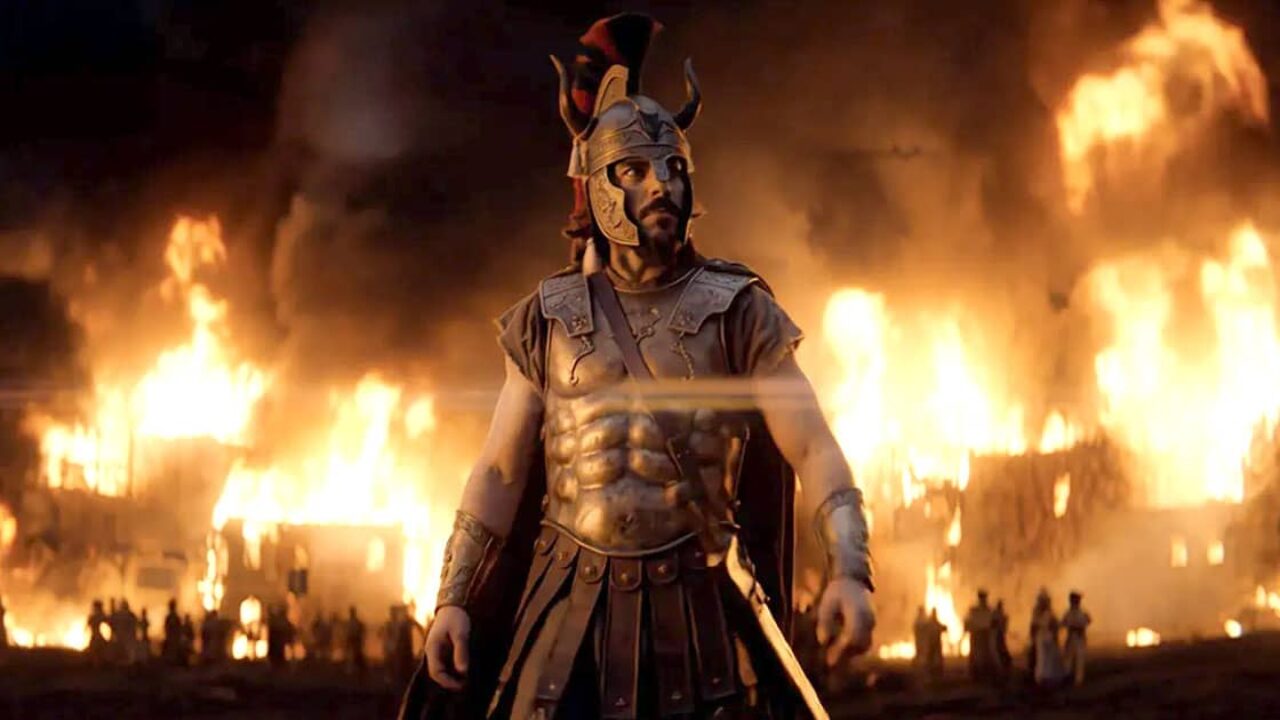
Every scene and image was generated artificially, although Koosha wrote and developed the film, supplied voices and used his own likeness for Odysseus. Fountain 0 said Kling rendered every scene, while other reports identified Google’s Nano Banana for images, Claude for language-related editing and Gemini for research.
Kling, Claude, Gemini and Nano Banana sound less like a production pipeline than the strangest crew Odysseus ever sailed with, but together they removed the need for ships, cameras, locations and a conventional cast.
The AI production used 12 consenting people as likeness models and was largely completed by Koosha over three months, with cloud-token credits accounting for much of the expense.
The AI version therefore needs only a comparatively small number of digital rentals to recover its production cost. Nolan’s film requires a worldwide theatrical event. Cheap to make, however, is not the same as easy to sell.
AI may remove many of the traditional barriers to filmmaking, but it does not guarantee an audience. When almost anybody can generate images, the scarce commodities become attention, trust and a reason to care.
Fountain 0’s timing was therefore astute. Its announcement arrived just as Universal’s marketing campaign had placed Odysseus at the centre of global conversation. Generative AI makes that strategy faster, cheaper and available to far smaller operators.
Nolan’s film, meanwhile, created business far beyond the cinema. In the year up to the end of July, US print sales across editions of The Odyssey rose 76 per cent, while British sales increased by 1,400 per cent during the four weeks to July 25 compared with the same period last year. Libraries reported long waiting lists, publishers ordered additional copies and people began buying the book they had once avoided at school.
Teachers who had spent years insisting that Homer was exciting were presumably entitled to one very long, very satisfied sigh.
I will probably watch the AI version when it appears. Curiosity, after all, caused at least half of Odysseus’ problems.
But for all the talk of AI models, cloud credits, new cameras and $250 million budgets, the thought I carried out of the cinema was far simpler. I had missed Odysseus. I had known him at school, when his ten-year struggle to reach Ithaca was an adventure to remember for a lesson. Meeting him again as an adult was different. Behind the monsters and angry gods was a tired man paying for every wrong turn, still clinging to the hope that home would be waiting exactly as he had left it.





Click here to change your cookie preferences