
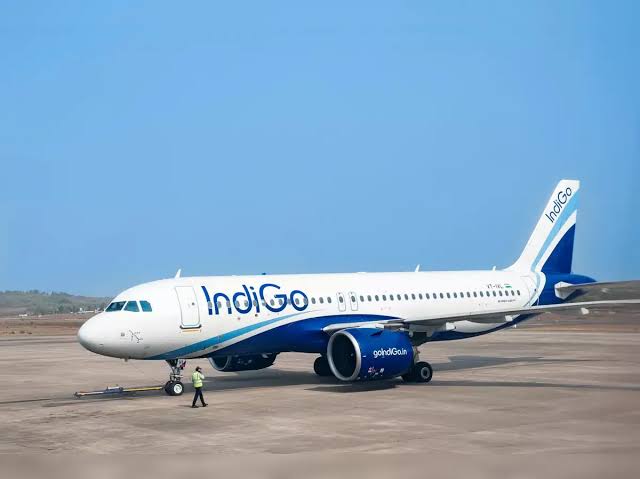
India’s largest airline is preparing its biggest push yet beyond the domestic market, with new long-range aircraft and direct services to Europe at the heart of its plans.
IndiGo made its name flying millions of passengers across India. Now the country’s largest airline wants to take them much further.
The airline expects to carry 200 million passengers a year by 2030, up from 123 million, while growing its fleet from 441 to more than 550 aircraft. It also wants international services to account for nearly 40 per cent of its capacity, compared with approximately 25 per cent today.
The strategy was detailed by Nomad Lawyer and also featured on Hermes Flight Mode, drawing on figures released during IndiGo’s June investor update.
Daily departures are expected to rise from about 2,200 to roughly 3,000, while overall capacity, measured in available seat kilometres, is forecast to almost double from 172 billion to approximately 300 billion.
The expansion represents a significant shift for a low-cost airline whose scale was built largely through domestic travel. IndiGo now wants to capture a greater share of the rapidly growing number of Indians travelling abroad, much of whose traffic currently passes through major Gulf airports.
International passenger traffic from India is expected to reach 160m by 2030, compared with 64m in 2019, according to industry and government estimates.
New aircraft will sit at the centre of the airline’s push. IndiGo has begun adding the longer-range Airbus A321XLR, allowing it to reach European destinations that were previously beyond the range of its narrow-body fleet.
The airline has also placed firm orders for 60 Airbus A350-900 aircraft, doubling its original commitment of 30. The first deliveries are expected to begin in 2027, providing the wide-body capacity needed for longer flights between major Indian cities and international markets.
Airbus confirmed the order in October 2025 as IndiGo prepared to establish a permanent long-haul operation.
The new aircraft could allow the carrier to strengthen direct connections between India and Europe, reducing passengers’ reliance on connecting flights through Dubai, Doha and Abu Dhabi.
That would bring IndiGo into closer competition with European airlines and Gulf carriers, which currently handle a large share of traffic between India, Europe and North America.
However, the airline’s early attempt to break into long-haul travel has not been trouble-free. IndiGo will end its temporary lease of six Boeing 787-9 aircraft in October after airspace restrictions, higher fuel costs and currency pressures weakened the economics of several routes.
Its Mumbai-Amsterdam service will switch to the A321XLR from October 25, while flights to London Heathrow will be suspended until IndiGo receives its own A350 aircraft. The carrier has also announced that its Manchester service will stop from August 31.
The wider expansion will depend on new aircraft arriving on schedule, enough airport slots becoming available and IndiGo recruiting and training sufficient pilots, cabin crew and technical staff.
Engine shortages, supply-chain delays, volatile fuel prices and growing pressure on India’s airport infrastructure could also slow the plan.





Click here to change your cookie preferences