
And will the stock market follow suit?
Last Sunday night I woke up sweating at around 1am after a particularly bad nightmare. Usually, I cannot get back to sleep easily, but this time I was so deeply into sleep mode that I had to fight to stay awake. I certainly did not want to go back to that particular dream.
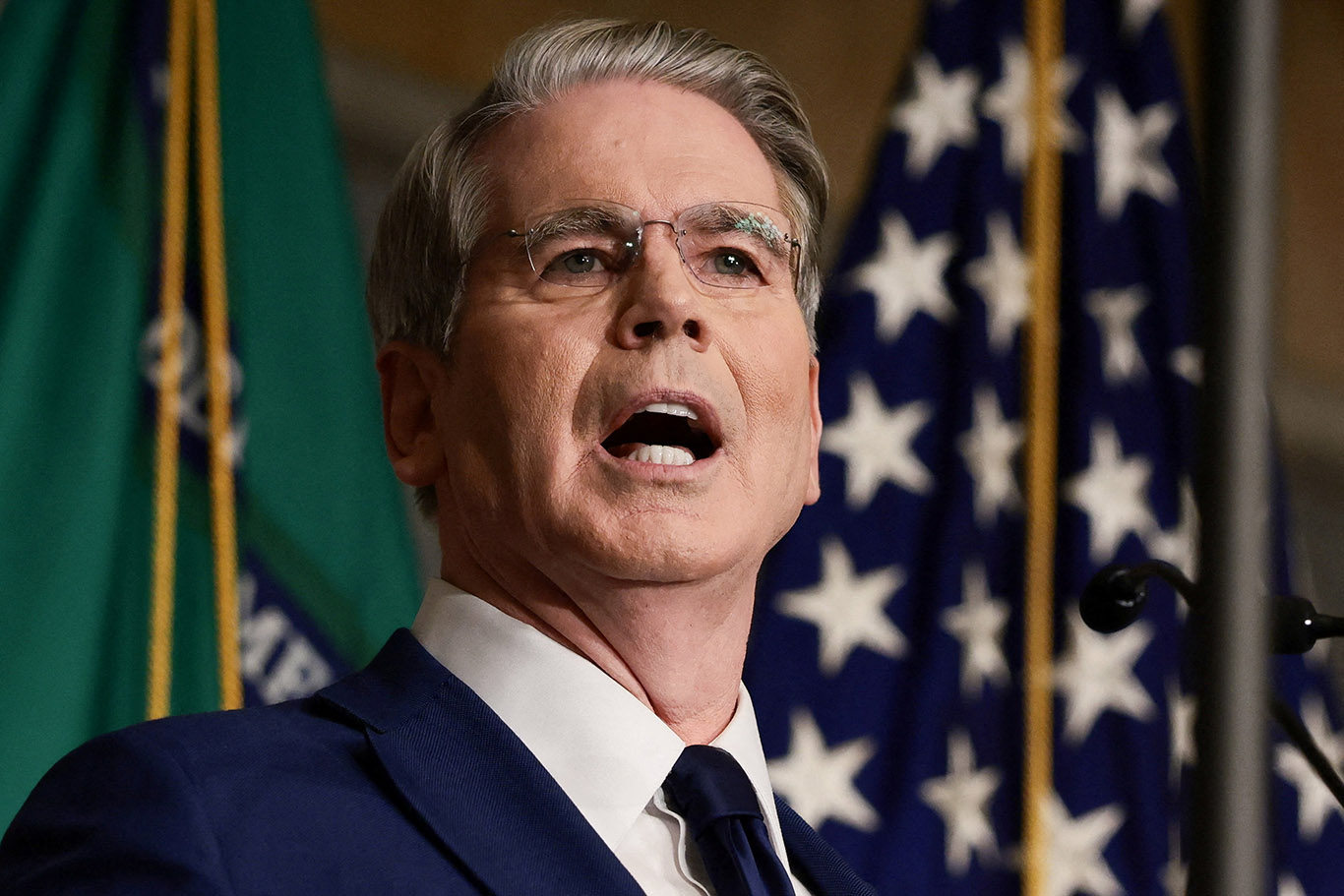
At moments like this, I turn to my trusted iPad to whizz away the time and get my mind off any bad thoughts. I ended up browsing the Financial Times to see what was new in the world. There, at the top of the page, was an article by none other than US Treasury Secretary Scott Bessent.
As readers of my column will know, I am a regular reader of the FT. Although heads of state or government ministers occasionally contribute articles, these are rarely mere opinion pieces. They are usually intended to send a message to the world, invariably on a subject of key importance.
As I was in the process of writing a piece about the possibility of a financial crisis in the US, anything the US treasury secretary had to say was of particular interest.
First though a word of warning. I am not an active investor, and economists are famously known to be giving bad investment advice. As a student of economic history though, I have read enough about past financial crises to recognise some of the warning signs that seem to be gathering before one comes along.
There are three factors that concern me: the first is financial deregulation.
Before many financial crises there is a tendency to forget the lessons of the previous one and gradually lower the financial guardrails leading to lax credit standards. This was evident in the years preceding both the 1929 crash and the 2007-08 financial crisis.
Today, although the main banking system appears to have remained relatively robust, the growth of the shadow-banking system has been phenomenal. Private credit, in particular, has grown rapidly, while the boundaries between traditional banking, insurance and private capital have become increasingly blurred. The FT recently reported in an article headed “Private credit’s mounting strains” how its analysis shows default stress spreading across a range of portfolios.
That brings me to the second warning sign: the possibility of a credit event involving a significant player in the financial system.
In the early 1930s, the failure of the Bank of the United States became one of the most notorious casualties of the banking crisis that followed the 1929 stock-market crash. In 2008, it was Lehman Brothers whose collapse transformed a financial crisis into a global catastrophe.
In March I wrote about the dangers facing the private-credit sector. More worrying signals have now emerged, particularly concerning the increasingly close links between insurance companies and private credit.
The case of Mark Walter’s Guggenheim Partners is particularly striking. Guggenheim manages about $367 billion in assets, while Walter has built a financial empire that has extended into some of the world’s most prestigious sporting properties, which he is now forced to sell.
Now federal investigators are examining transactions involving his insurance companies and other parts of his business empire. The issue is particularly important because people’s insurance premiums have increasingly become a source of capital for private-credit investments.
This does not mean that Guggenheim is the next Lehman Brothers. But it is precisely the sort of interconnectedness that regulators and investors are now watching.
The third warning sign is interest rates.
Again, there are similarities with both 1929 and 2007-08. Rising interest rates can expose weaknesses that were hidden when money was cheap and abundant.
Admittedly, the Federal Reserve has not, up to now, raised short-term interest rates which it directly controls. But long-term rates are telling a different story. The 30-year Treasury yield recently reached 5.34 per cent, its highest level since 2007, while the 10-year yield has also climbed sharply.
The sell-off in Treasury bonds – remember, bond prices move inversely to yields – has therefore been at the forefront of financial news. And that is very much the domain of Scott Bessent, who has been trying to find ways to stem the decline.
The decline is partly related to concerns about the country’s borrowing, which has now topped $40 trillion for the first time. But more important than the size of the debt is why we got there and where we go from here.
Borrowing as such, as I have said many times, need not be a problem. How you spend it is far more significant.
Trump’s “Big Beautiful Bill” provided tax cuts that have fuelled consumption, while defence spending has soared, even before the Iran war. Meanwhile, the long-term fiscal projections are dismal. The debt-to-GDP ratio is expected to rise dramatically over coming decades.
US inflation, meanwhile, remains significantly above the Fed’s 2 per cent target, and economists increasingly doubt that it will return to target quickly.
There is no room here to analyse the inflation dynamics in detail. Suffice it to say that persistent inflation is another reason investors demand higher yields on US bonds.
This brings us back to Bessent.
His attempts to shore up the Treasury market have included a series of gimmicks, which appear particularly ironic given that he made his fortune as a hedge-fund manager working with George Soros, including the famous 1992 attack on sterling.
First, he apparently “accidentally” allowed the media to photograph a note containing a plan to buy Japanese yen, by selling euros. The intervention was presented as support for a friendly country’s currency, but in reality it was to avoid Japan selling US Treasury securities to support the yen.
Then, as Treasury yields continued to rise, Bessent announced that the Treasury would double its purchases of longer-term Treasury securities. The move briefly supported the market, but the relief proved short-lived. Within a day, yields had moved back above their pre-announcement levels.
The market realised that this does not reduce the government’s underlying borrowing requirement. It simply changes the composition of the debt and attempts to influence the overall yield curve. The Treasury’s strategy has been compared with an old idea, dating back to President Kennedy, known as Operation Twist: buying longer-term bonds while increasing the issuance of shorter-term debt.
You can therefore understand why I was so keen to read Bessent’s article in the FT.
It turned out to be a frightfully disturbing piece. I still get the chills reading it days after it was published.
The article begins with a sentence that sounds more like a declaration of war than a Treasury statement: “At dawn begins an economic D-Day – the single greatest financial offensive ever marshalled against any adversary.”
It goes on to describe how the US intends to launch an unprecedented financial offensive against Iran, while warning countries that continue to provide financial or economic assistance to Tehran that they too risk being targeted.
In the early hours of Monday morning, I lay awake wondering how China – or indeed Russia – might react to this latest escalation in America’s confrontation with Iran.
Today, after witnessing Bessent’s Monday evening press conference, I wonder whether in part this was an attempt at another distraction.
Moving attention away from the increasingly uncomfortable story in the US Treasury market towards something more dramatic.
But the more the US government embarks on financial and military adventures that increase the strain on its finances, the greater the risk that its capacity to come to the economy’s assistance is constrained.
That is the real danger.
If the US does suffer a financial crisis, the only way to prevent a major recession – as we bitterly learnt here in Cyprus, not to mention the lessons from 1929 and 2007-8 – will be for the government, and more importantly the Federal Reserve, to step in.
As I write this, all eyes are now on Fed Chairman Kevin Warsh, who is hosting the annual conference of central bankers at Jackson Hole to gauge his reaction.
After reading Bessent’s article in the early hours of Monday morning, I decided that I really should go back to sleep.
Much better to face my own make-believe nightmares than get on board the Bessent ones.


Click here to change your cookie preferences