
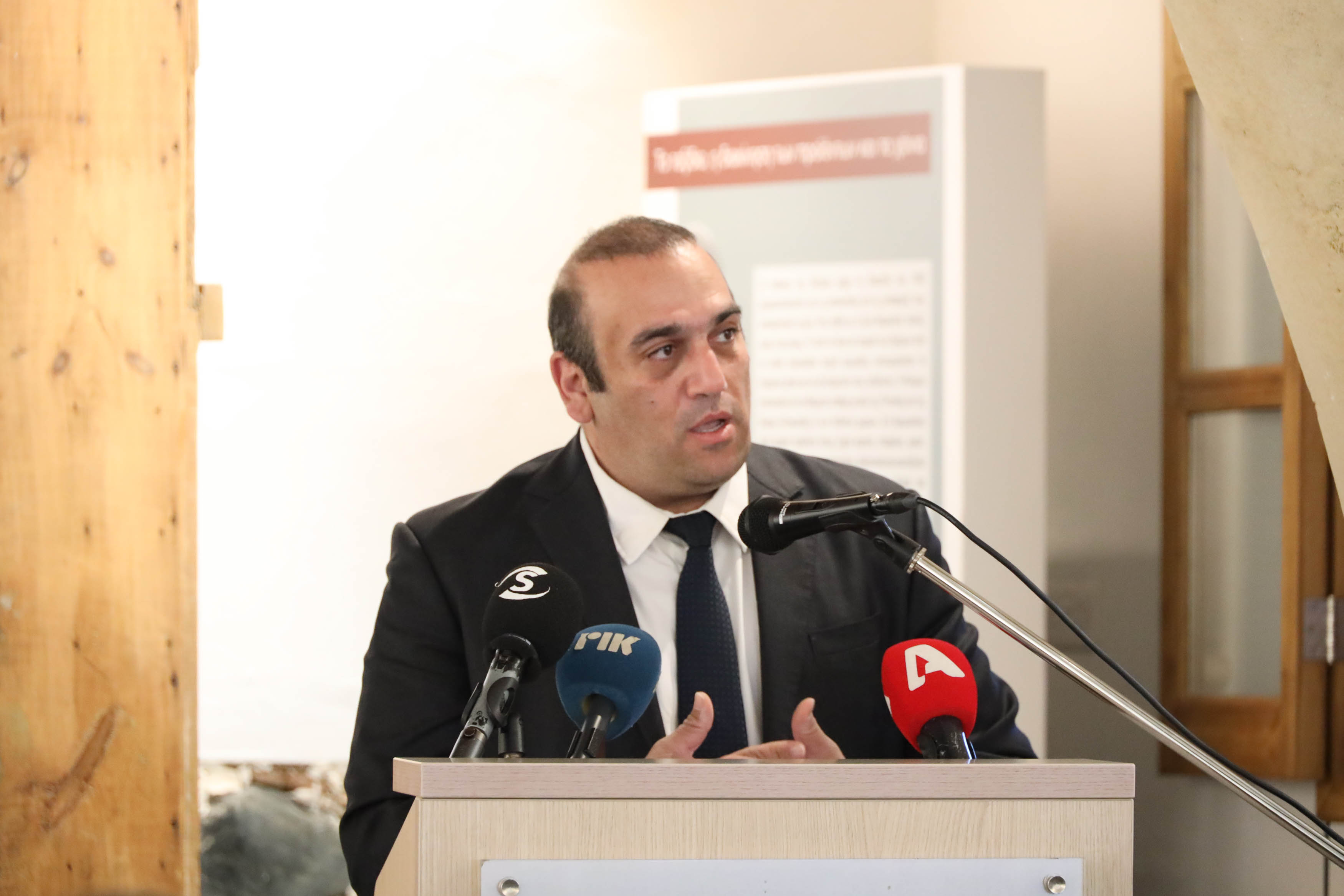
Famagusta district governor Yiannis Karousos on Friday spoke of “serious staffing problems” at the Famagusta general hospital in Paralimni, describing those shortages as “seriously concerning”.
He said that he had written a letter both to Health Minister Neophytos Charalambides and the state health services organisation (Okypy) to request “immediate answers” on the matter and a “specific timetable” to address the matter.
The hospital itself, he said, has no permanent pulmonologist, with visits made by a non-permanent pulmonologist only three or four times a month, despite the fact that “even serious pulmonary cases are treated at the hospital”.
Additionally, he said, a neurologist is only present at the hospital “once a week”, despite the fact that “cases of strokes and other serious diseases of the nervous system are being treated there”.
“At the same time, the waiting list for an examination exceeds six or seven months,” he said.
He added that there used to be “daily coverage by an ophthalmologist” at the hospital, but that now “there is no corresponding permanent presence, despite the fact that in serious cases, an immediate ophthalmological evaluation may be required”.
On this front, he said that he had requested information as to whether doctors or other staff who were previously based in Paralimni have been moved elsewhere, and the reasons for them being moved, if that is the case.
“Famagusta is not asking for preferential treatment. It is asking for the obvious. It is not possible for a district-level hospital, which is called upon to serve the residents of the whole free district, but also one of the largest tourist areas in Cyprus, to lack adequate and daily coverage in basic medical specialities,” he said.
He added that the matter “is not partisan and should not be turned into a partisan confrontation”, but instead is “a matter of public health, patient safety, and equal treatment of the Famagusta district”.
“We expect specific answers, specific actions, and a clear timetable from the health ministry and Okypy. The Famagusta hospital must be strengthened, and it must be strengthened now,” he said.
Cyprus has faced medical staff shortages for years
Shortages of staff, and nurses in particular, have been a running issue for health services across Cyprus for years, with nurses’ union Pasyno having previously described staff shortages as the “gangrene of the health system”.
“The nursing staff strives to offer the best care to all patients, despite experiencing the consequences of chronic understaffing, having as a principle the oath they took that they will not leave any patient helpless and alone,” the union said at the time.
Prior to that, the union had complained that nurses “live every day in miserable working conditions, in understaffed hospitals, with serious shortages”.
Akel, too, has previously shared these concerns, saying that “chronic understaffing, precarious working conditions and inadequate remuneration outside collective agreements have led to burnout, high rates of resignation and migration of nurses”.
As far back as 2024, state doctors’ trade union Pasyki warned that some hospital departments could be forced to close “due to severe understaffing”, while pharmacists at the Limassol general hospital once went on strike, also complaining of understaffing.
At the time, trade union Pasydy’s nursing branch said that nurses are “often treated with contempt” by those in power in relation to staffing levels, while the Pancyprian nurses’ and midwives’ association (Pasynm) called on Cyprus’ political leadership as well as nurses’ employees to protect the nursing and midwifery professions and invest in them.
The union added that this should be done to “create and improve support mechanisms concerning these people’s welfare, ensuring health and safety at work, and respecting their rights.”
The union added that this should be done to “create and improve support mechanisms concerning these people’s welfare, ensuring health and safety at work, and respecting their rights.”




Click here to change your cookie preferences