
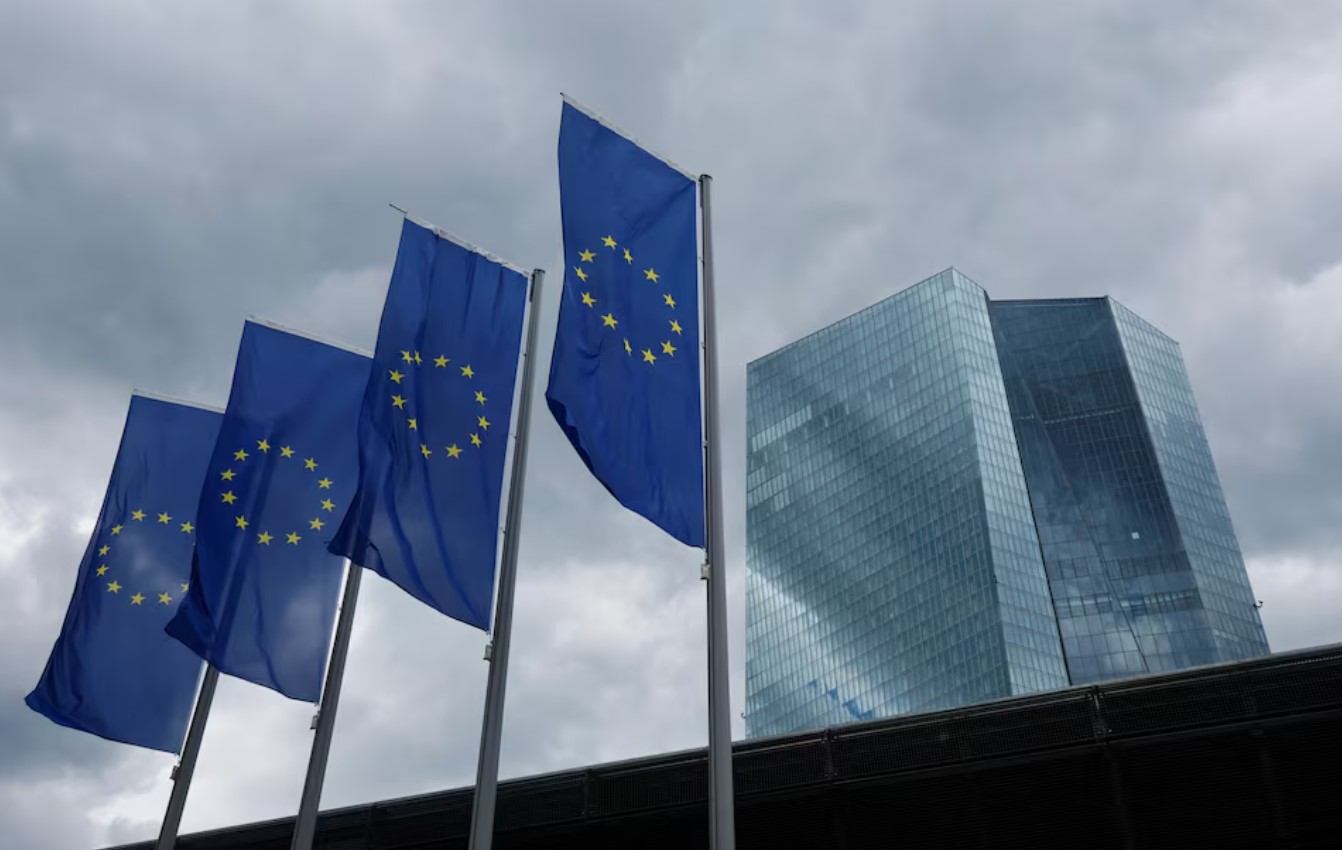
The European Central Bank (ECB) may need to gradually raise interest rates further to curb inflation before an Iran war-driven rise in fuel costs starts seeping through to wages and other prices, ECB policymaker Martins Kazaks told Reuters.
The ECB raised its key rate on Thursday — to 2.5 per cent from 2.25 per cent — for the second time this year and warned that price pressures from the Iran conflict could prove lasting, fuelling bets on more policy tightening as soon as October.
Kazaks, Latvia’s central bank governor, saw scope for more, incremental hikes as energy prices and broader inflation stay elevated.
“The case is building up for more tightening,” he said in a phone interview.
Kazaks added that 2.5 per cent, which the ECB has described as the upper end of a neutral range which neither stimulates nor curbs growth, should not be seen as a ceiling.
“Interest rates may need to wade into restrictive territory,” he said. “There’s no unobservable threshold, or some higher bar to reach, for the rates to move above 2.50 per cent.”
Euro zone inflation stood at 3.3 per cent in August and the ECB expects it to rise further in the coming months.
ECB CAN MOVE WITHOUT RUSH
Kazaks would not be drawn on whether a fresh hike may already come in October but he said the ECB could afford to move “stepwise” and “without rush”.
“If we move stepwise, we’ll be well-positioned,” he said. “Thanks to past decisions that have proven appropriate, so far we can afford to act without rush or jumpiness.”
The Latvian policymaker pointed out that the euro zone’s economy was running at capacity, so higher fuel costs might be passed on more easily.
“The output gap is closing, which means that pass-through to prices and wages may strengthen,” he said. “That is clearly an upside risk to inflation.”
Kazaks argued inflation, which the ECB puts at 3.6 per cent in the last quarter of this year, was still in the “inattention area” for consumers and businesses, but this may change if staples such as fuel and food become even more expensive.
“Those are largely everyday purchase items, which may increase sensitivity to inflation, more so if inflation exceeds wage growth,” he said.
Negotiated wages rose by 2.44 per cent in the euro zone in the three months to June, compared with a 2.56 per cent increase in the first quarter of the year.



Click here to change your cookie preferences