
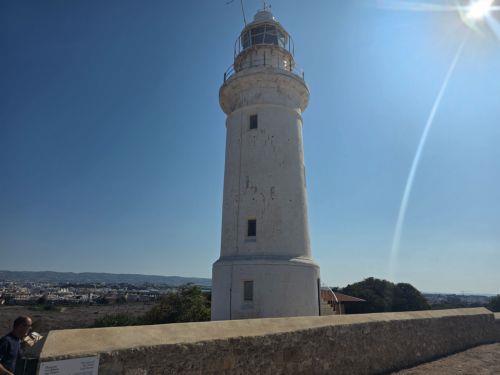
Restoration work on the auxiliary buildings of the Paphos lighthouse, including the landscaping of the surrounding areas and the creation of access paths, has been completed, the antiquities department said on Monday.
As part of the works, a cistern, a pebbled floor and a canal were excavated, which are believed to have been part of an ancient water management system dating back to the early Roman period in the first to second century AD.
Constructed during the British administration in 1888, the 20-metre lighthouse has served as a key reference point for navigation for the past decades and does so until today.
Speaking to the Cyprus News Agency (CNA), officer of the Cyprus ports authority at the Paphos port Theofanou Markou said that before the establishment of the British administration, ships were warned of dangers along the cost with fires lit at strategic locations, with the construction of the lighthouse marking a crucial step for organised maritime signaling on the island.
The lighthouse was operated by lighthouse keepers who lived with their families in the auxiliary buildings and were responsible for maintaining the light and maintaining the equipment for several decades before the last family retired in 1982 due to technological advancements and automation.
Senior archaeological officer of the antiquities department Efstathios Raptou, said the lighthouse was “emblematic” as the largest recognisable lighthouse in Cyprus.
Located within the archaeological site of Kato Paphos, the building itself has been modernised and does not constitute an ancient monument itself but is part of what he described as a “unique coexistence” of different historical periods.
While continuing to serve navigation purposes, the lighthouse has since established itself as an important landmark of Paphos and an integral part of the adjacent archaeological site.




Click here to change your cookie preferences