
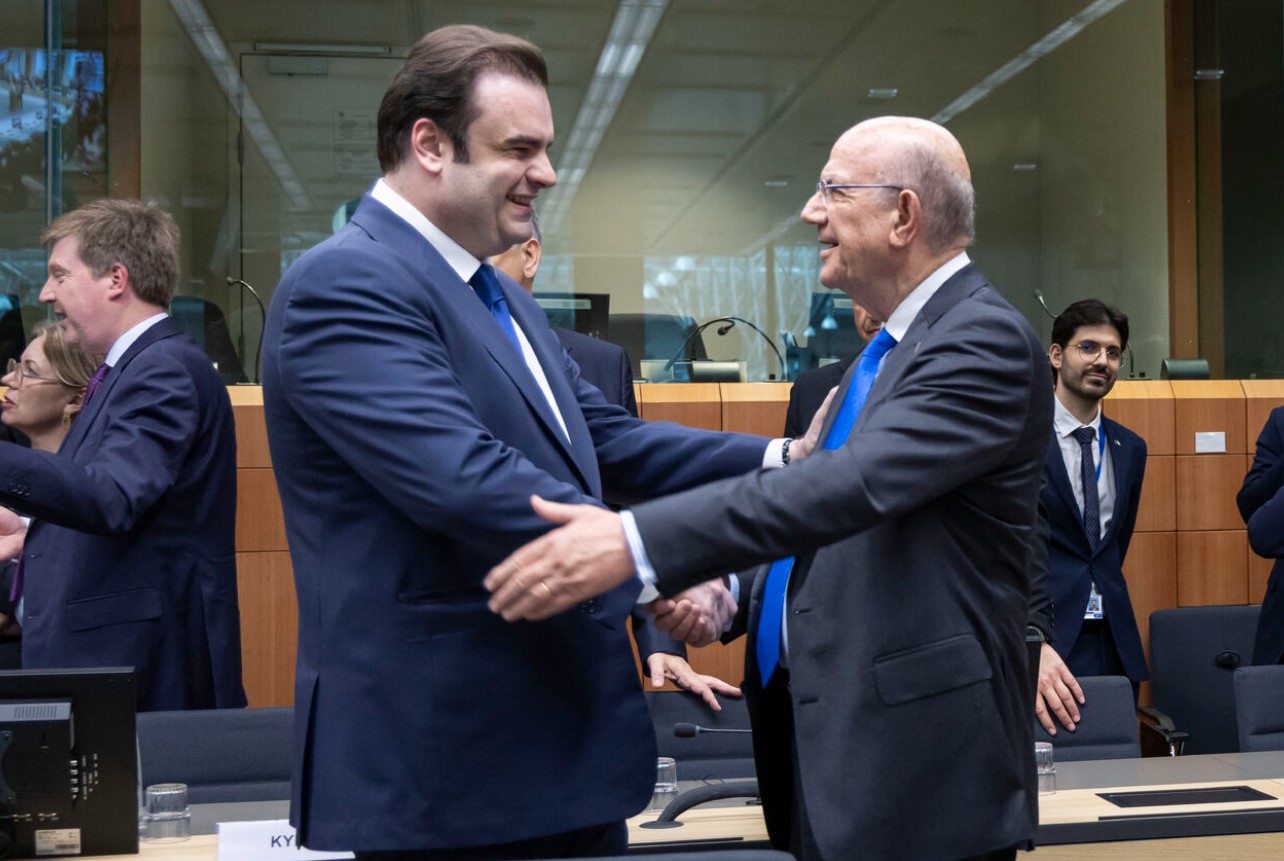
Keravnos heads to Dublin for talks on Europe’s economic challenges
Cypriot Finance Minister Makis Keravnos travelled to Dublin on Thursday for the Eurogroup and informal meeting of EU finance ministers, where discussions are set to cover economic pressures, banking competitiveness, financial innovation and artificial intelligence.
Keravnos is attending the meetings taking place on September 18 and 19 as part of Ireland’s presidency of the Council of the European Union.
The Eurogroup meeting on Friday will include an exchange of views on recent economic developments and economic policy priorities, with the participation of the chair of the European Parliament’s Economic and Monetary Affairs Committee.
Ministers will also discuss ways to improve productivity and competitiveness in the euro area, based on a presentation by OECD Secretary-General Mathias Cormann.
The wider informal meeting of EU economy and finance ministers will then turn to the competitiveness of the European banking sector, based on a recent European Commission report.
The discussion will examine the current state of the banking sector and policy priorities ahead of an expected package of legislative measures from the European Commission.
Finance ministers and central bank governors will subsequently discuss the future of financial innovation in Europe, based on a discussion paper prepared by the Irish presidency.
The session will include presentations by Patrick Collison, chief executive of Irish financial infrastructure company Stripe, and Pablo Hernández de Cos, general manager of the Bank for International Settlements.
The programme will continue on Saturday with a session examining the impact of artificial intelligence on European economies, based on a presentation by International Monetary Fund managing director Kristalina Georgieva.
Ministers will examine the effects of AI on the labour market, the public sector, energy and the geopolitical environment.
The two-day meeting is being hosted in Dublin by Ireland’s Tánaiste and Finance Minister Simon Harris, while Central Bank of Ireland Governor Gabriel Makhlouf is hosting the EU central bank governors taking part in the programme.
The meeting is intended to provide an informal setting for ministers and central bank governors to exchange views on macroeconomic developments, financial stability and strategic policy priorities facing the EU.
Friday’s programme includes the Eurogroup meeting from 9am to 11.30am, followed by a press conference, before finance ministers and central bank governors move into separate working lunches.
The joint session is scheduled to run from 2.15pm to 5.15pm on Friday, with the second working session for finance ministers taking place on Saturday morning from 9.30am to 12.30pm.
The meeting comes as Europe faces continuing external economic pressures, according to Greek National Economy and Finance Minister and Eurogroup President Kyriakos Pierrakakis.
Speaking to a local radio station in Greece ahead of the Dublin meetings, Pierrakakis said ministers would examine the external crisis affecting Europe, including inflationary pressures, strains on supply chains in the Middle East and other factors influencing bond markets.
Pierrakakis also addressed the prospect of a new package of measures in Greece ahead of elections next April, ruling out such an approach.
“That is not our approach,” he said. “It is the logic of electioneering measures, not simply in the sense of their timing before an election, but of introducing spending measures ahead of the vote.”
“That is like a political system telling citizens that their vote is transactional, that I am thinking of spending money to support the economy because I believe you will vote for me,” he added.
“First, that is completely wrong economically, politically and socially, and it belittles both the country and its citizens,” Pierrakakis explained. “Second, it has never worked.”
“Tell me of a single occasion in Greek history when people responded to it,” he stated.
Pierrakakis has also recently stressed the importance of structural reforms and competitiveness, saying that fiscal discipline alone would not be sufficient to secure growth and economic sovereignty.
The Dublin discussions will therefore bring together a range of issues that are increasingly linked to Europe’s economic competitiveness, from banking and financial technology to artificial intelligence, energy and labour markets.
For Cyprus, the meetings will also provide an opportunity for Keravnos to participate in discussions shaping the economic and financial policy priorities of the euro area and wider EU.




Click here to change your cookie preferences