
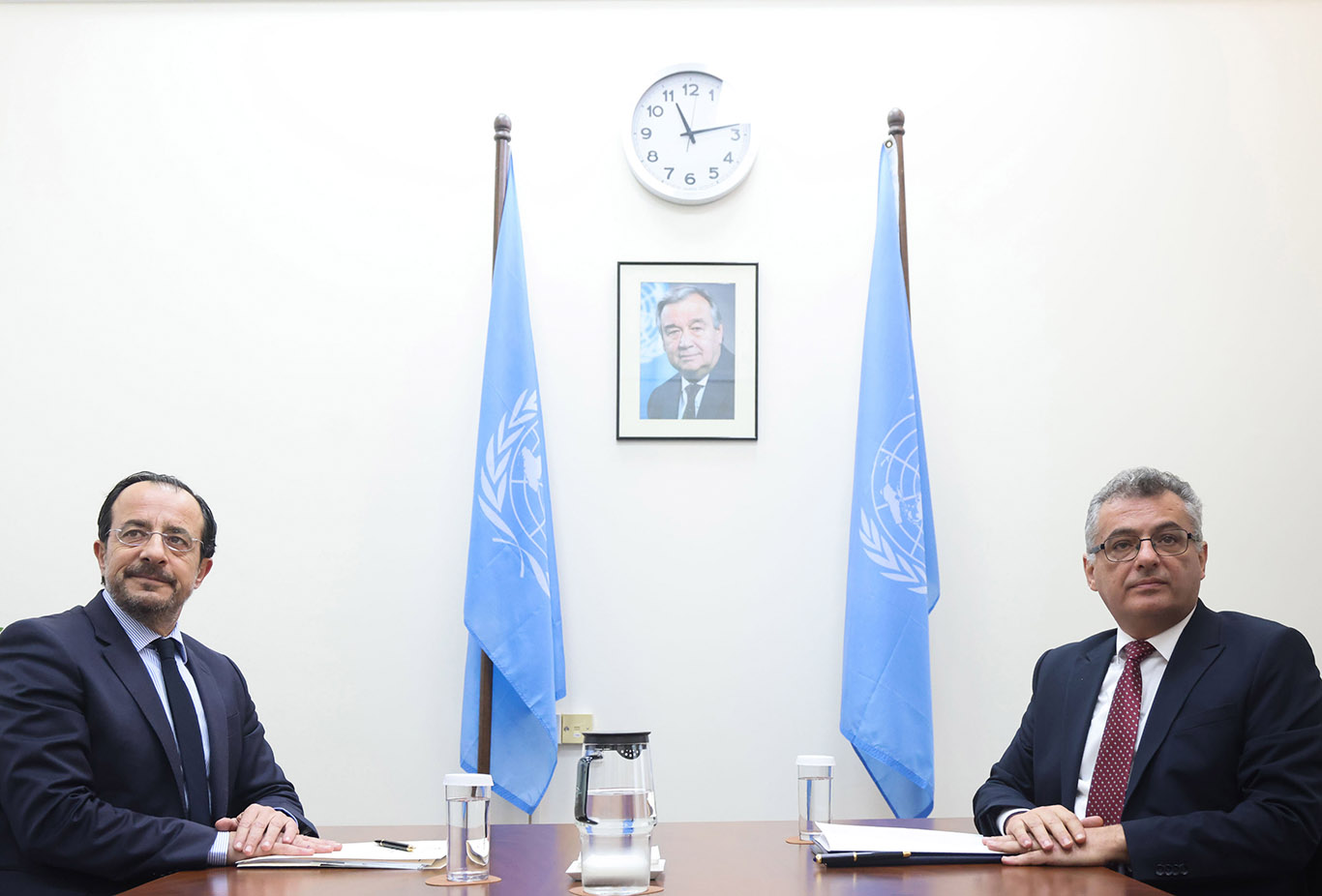
President Nikos Christodoulides said on Thursday that new proposals put forward by the Greek Cypriot side during his latest meeting with Turkish Cypriot leader Tufan Erhurman could lead to “positive developments”.
Speaking to reporters at the presidential palace after their meeting, Christodoulides was asked whether the two leaders were now aligned on the matter.
“No, we were not on the same page, I raised some new points regarding all three areas, confidence building measures, methodology and substance. It was a good meeting, as noted in the UN communique.”
He said Erhurman had reserved the right to study the proposals, though stressed that “there was no negative reaction” and that he had provided further clarifications where requested.
Christodoulides said he intended to present the ideas, along with other measures prepared by his side, to UN Secretary-General Antonio Guterres and Under Secretary General for Political Affairs Rosemary DiCarlo during meetings in New York.
“I believe these proposals and ideas can lead us to positive developments as soon as possible,” he said.
Pressed to elaborate on the content of the proposals, the president declined.
“I fully understand the media’s interest. However, I wish to brief the Secretary-General first and, out of respect for the Turkish Cypriot leader, await his final position,” he said.
Asked whether developments could materialise as early as next week, he said this would depend on the positions eventually taken.
“These are ideas that, provided the necessary political will exists, could indeed lead to developments as early as next week. Speaking for our side, we are fully prepared,” he said.
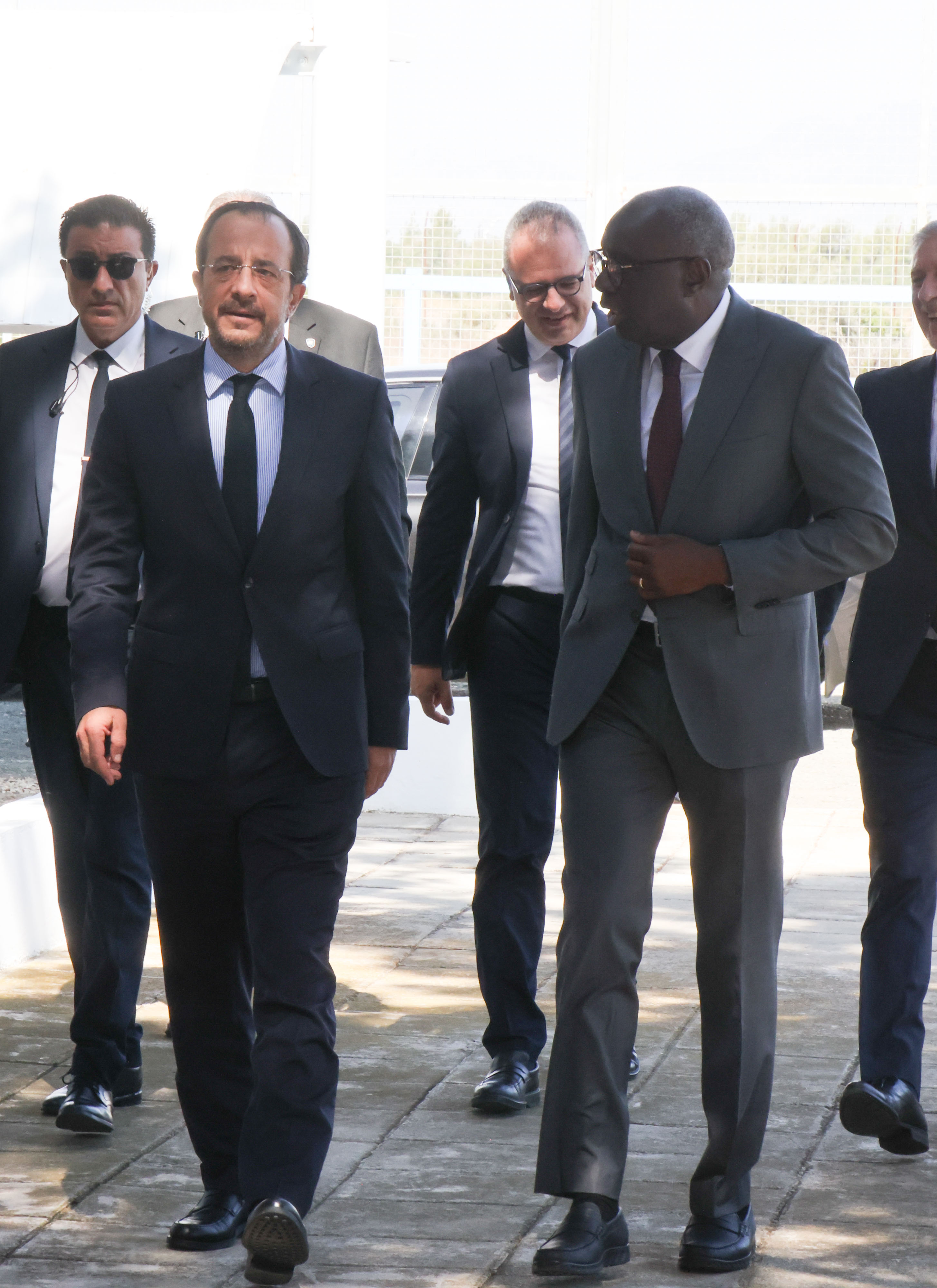
Christodoulides confirmed that some of the ideas propositioned to Erhurman were “entirely new” rather than amendments to existing proposals.
Asked whether the issue of convergences, meaning areas of prior agreement in the negotiations historically, had been discussed, he confirmed.
“The substance of the matter touches upon the issue of convergences, and yes, we did submit some very specific new ideas and approaches regarding this issue as well,” he said.
He added that the Greek Cypriot side had chosen to set aside topics where the two parties hold entrenched differing views.
“A dialogue on matters where there is constant disagreement will not yield results. We want results,” he said.
Asked directly whether the Greek Cypriot side was proposing the opening of new crossing points, Christodoulides declined to confirm or deny it.
“I do not wish to say anything publicly at this stage, it would not be appropriate,” he said.
On whether the two leaders had discussed jointly requesting a trilateral meeting with Guterres in New York, he said the decision rested with the Secretary-General himself.
“We will brief the Secretary-General on all the discussions. I can speak on our behalf, we will put forward additional ideas and views, and it is the Secretary-General who will decide, whenever he deems appropriate, that being whether to hold a joint meeting or an expanded conference.”
Ahead of the meeting, Christodoulides had said he was fully prepared to take part in an expanded conference on the Cyprus problem whenever the secretary-general deemed it appropriate, telling reporters he would bring some 19 specific points to the table covering methodology and confidence building measures.
He confirmed he had spoken by phone that morning with the EU’s special envoy for the Cyprus problem, Raffaele Fitto, and said he would meet DiCarlo during his opening days in New York.
Asked about the possibility of further initiatives from Fitto, he said the envoy had already acted within his mandate on EU-Turkey relations.
On the issue of mixed marriages, raised in the context of his talks with Erhurman, Christodoulides said it was not a confidence building measure and that the Republic “applies the same citizenship rules to all applicants regardless of background”, operating under regulations subject to daily EU oversight.
The issue concerns children born to Turkish Cypriots who have married Turkish settlers, whose applications for Republic of Cyprus, and by extension EU, citizenship face additional scrutiny not applied to other applicants.
His comments followed an announcement on Wednesday night by Guterres that no 3+1 or 5+1 meeting on the Cyprus problem would take place on the sidelines of the General Assembly.
“There is still much work to be done,” Guterres said, adding that any future meeting must be prepared in a way that creates “real prospects for an outcome” and stressing “we cannot repeat the mistakes of the past.”




Click here to change your cookie preferences