
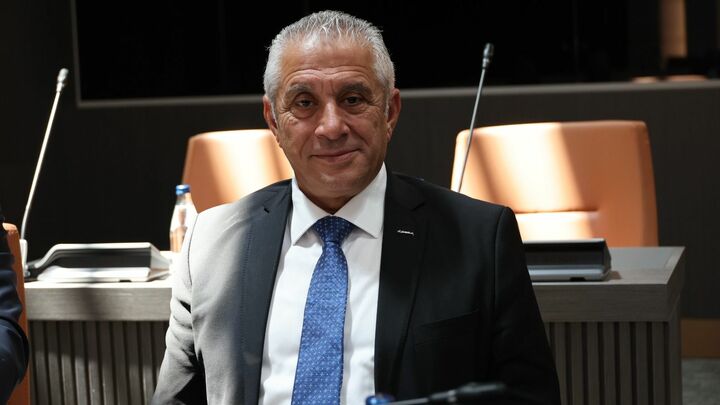
A planned undersea electricity interconnection cable linking Cyprus and Lebanon is “not possible without Turkey’s permission”, Turkish Cypriot ‘energy minister’ Hasan Tacoy said on Wednesday.
“If there are plans for nautical activities in the Blue Homeland, whether they be for research, surveys, the laying of cables, or whichever other activities which may be carried out, nothing can go ahead without the Republic of Turkey having the final say. It is not possible without the Republic of Turkey’s permission,” he told the Cyprus Mail.
He explained that such activities would require the publication of a navtex, a message used to transmit information to seaborne vessels, to warn sailors of any plans to conduct research or lay cables, and that “in Turkish territorial waters, it is Turkey which applies them, just as it applies Notams in Turkish airspace”.
“We have seen similar things in the past, for example with the Great Sea Interconnector, and when attempts were made to conduct surveys in Turkish waters without permission, the Republic of Turkey enforced its own sovereignty,” he said.
On this front, he said that “the rule does not change, whether it is a planned cable to Lebanon or to Israel, if the activities are in Turkish territorial waters, it is Turkey which will have the final say”.
Turkey, Greece have previously deployed warships over seabed surveys
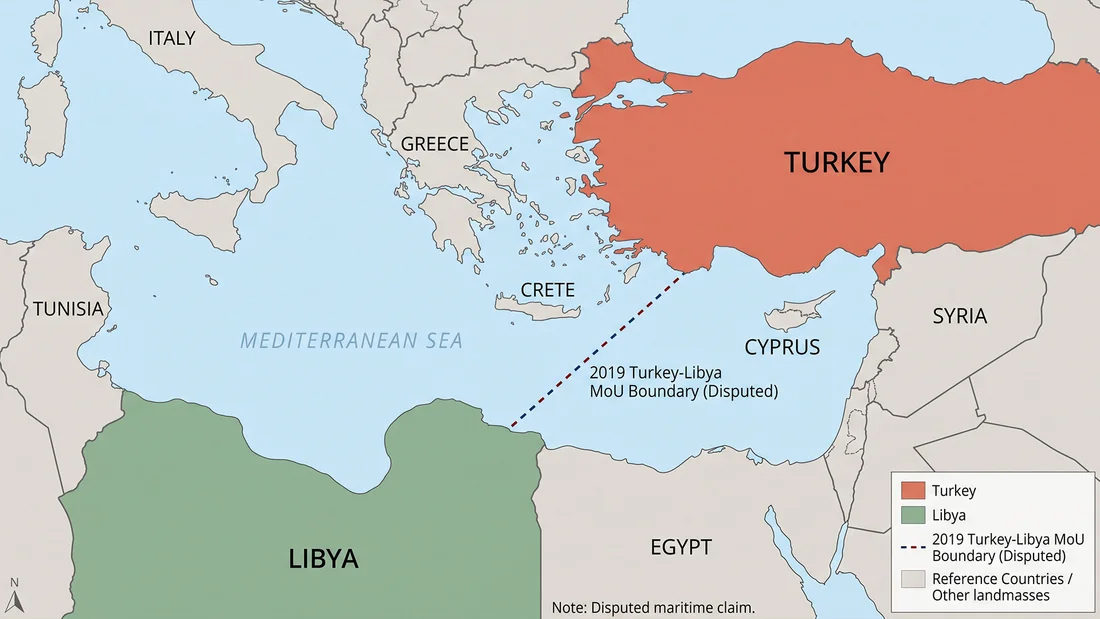
His reference to previous incidents comes with Turkish naval vessels having been deployed in 2024 after the Italian research vessel the Ievoli Reulme strayed into what Turkey believes to be its own waters while conducting seabed surveys between Cyprus and Crete for the Great Sea Interconnector.
The naval vessels escorted the research ship away from Turkey, but not before Greece, too, dispatched a number of its own naval vessels, including the frigates the Nikiforos Fokas and the Aittitos, to the area.
Greek Foreign Minister Giorgos Gerapetritis has since indicated that should a similar dispute arise again, Greece would once again be prepared to send warships into the disputed waters should Turkey do the same.
The dispute about the ownership of the waters stems from the question of whether islands generate their own exclusive economic zone (EEZ) or not.
Greece and Cyprus, citing the United Nations convention on the law of the sea (Unclos), state that they do, while Turkey, which is not a signatory to Unclos, states they do not, and has issued its own “Blue Homeland” doctrine outlining claims based off its continental shelf.
As such, according to Turkey’s position, beyond the 12 nautical miles of territorial waters to which Turkey believes both islands are entitled, the sea between Cyprus and Crete, and the sea to the east of Cyprus, is Turkish.



Click here to change your cookie preferences