
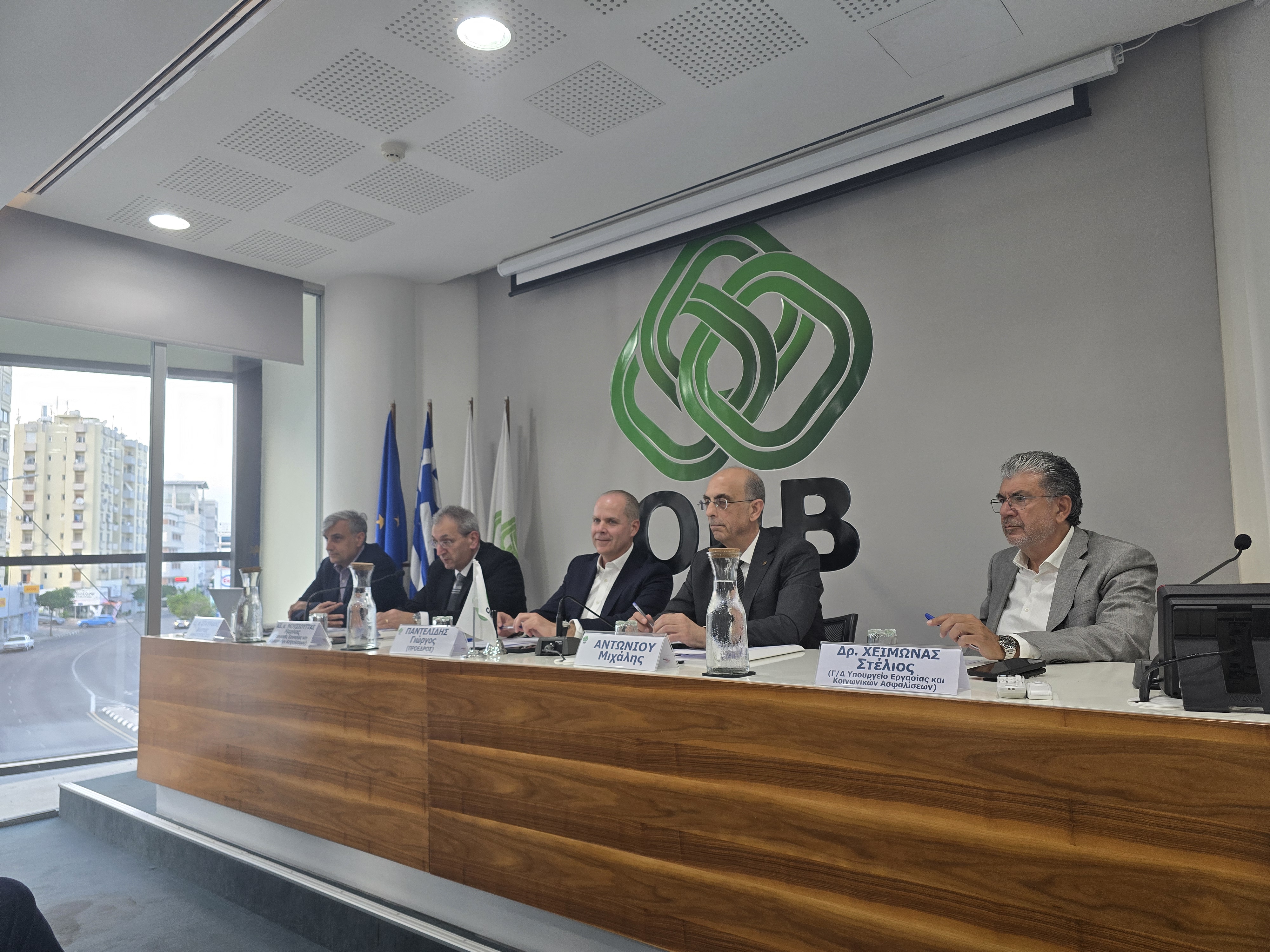
The proposed pension reform was discussed by Labour Minister Marinos Mousiouttas and International Labour Organisation (ILO) actuary Costas Stavrakis with the board of the Employers and Industrialists Federation (Oev) on Thursday.
Mousiouttas and Stavrakis attended a regular meeting of the Oev board at the federation’s offices, where they briefed board members on the pension reform being advanced by the government and provided clarifications on individual aspects of the proposals.
Oev president George Pantelides reiterated that adequate pensions and the long-term sustainability of the system were priorities for the business community.
While recognising positive elements in the proposed reform, Pantelides stressed the need for sufficient time to allow for a meaningful assessment of the measures and their future impact.
He also said that if a future actuarial assessment identified a sustainability problem, all available options should be considered, including a gradual increase in the retirement age.
Pantelides also raised with the minister the need to clarify how the proposed improvements would be financed.
The issue of cost was also raised by Mousiouttas separately on Thursday, when he said the fiscal cost of the overhaul would be “considerably more” than €50 million a year, although he declined to provide a specific figure.
He said the government remained committed to submitting the reform bills to parliament by September 30, with the aim of implementing the changes from January 1, 2027, so that pensioners would begin seeing the difference from February.
The labour advisory board, which was meeting twice a week to examine the proposals, was due to continue discussions until October 10.
Mousiouttas said the reform would increase pensions for around 123,000 retirees, with more than 50,000 expected to receive increases of over €100 a month and more than 8,000 receiving increases of €200 over five years.
“Depending on the case, the increases range from five to 55 per cent,” he said.
The reform is intended to ensure adequate income for lifelong workers, improve intergenerational fairness and maintain the Social Insurance Fund over the long term, according to the minister.
Among the main changes is a new method for calculating the basic pension, based on the total period a person was registered and insured, including periods where contributions were subsidised by the state.
The statutory retirement age would remain at 65, although people would be able to continue working until 67, while the contribution rate to the Social Insurance Fund would not increase.
The early retirement reduction would fall from 12 per cent to around 7.5 per cent, rather than being abolished, with Mousiouttas warning that scrapping it entirely would threaten the fund’s viability.
The reform would also guarantee every currently insured pensioner a minimum increase of €30 a month for pensions of up to €600.
The overall pension increases would be phased in between 2027 and 2031, with beneficiaries receiving up to 60 per cent of their increase during the first two years.
Mousiouttas also said the state would stop borrowing from the Social Insurance Fund, with future annual surpluses to be placed in an investment fund and the existing state debt to the fund, currently around €12 billion, gradually repaid over 40 years.
Actuarial studies indicate that the fund would generate surpluses over the coming four decades, he said.
He stressed that the pension reform should also be viewed alongside the recent tax reform, which he said had increased disposable income.
“Two reforms, one logic: that growth only has meaning when a family sees the results on the table,” Mousiouttas said.
Oev stressed that the improvements should remain within the system’s actual financial capacity.
The federation also highlighted the need for an independent management body to be established by legislation if the Social Insurance Fund is to build a genuine reserve.
Oev said such a reserve would also require a clear governance framework and stronger mechanisms for supervision and control.
On provident funds, Oev reiterated that their voluntary nature should be maintained.
It said wider coverage among workers could instead be achieved through strong state incentives for employers.
Pantelides confirmed that Oev was prepared to continue contributing constructively to the dialogue, with the aim of creating a fair, balanced and sustainable pension system for current and future generations.




Click here to change your cookie preferences