
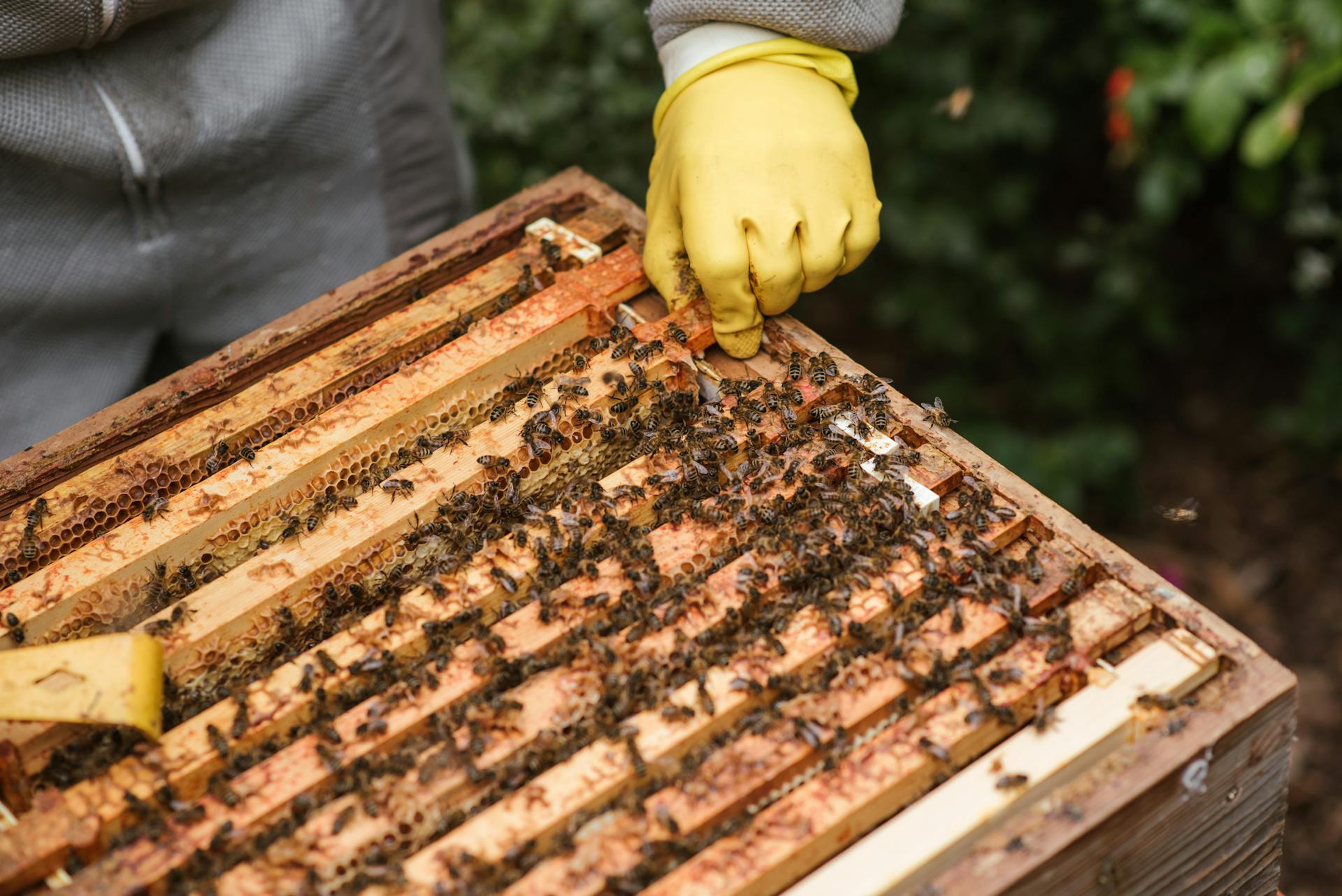
The Cyprus Chamber of Commerce and Industry (Keve) has announced that a new cycle of free training for beekeepers in Cyprus will begin on October 17, 2026, under the European Union-funded PLANBEE project, with a focus on sustainability, innovation and new business opportunities.
The Interreg NEXT MED project, PLANBEE, or Promoting Local Apiary Networks and Bee Entrepreneurial Excellence, is launching its second cycle of training in Cyprus under the title “Beekeeping – From Science to Practice”.
The programme is aimed at beekeepers seeking to improve their knowledge and practices while responding more effectively to the modern challenges facing the sector.
The organisers said the training would combine scientific knowledge with practical experience, covering issues directly affecting bee health, productivity and the sustainability of beekeeping activities.
It will also examine ways of making greater use of hive products and developing new business opportunities.
The 16-hour programme will consist of three training sessions, delivered both in person and online.
The first session will take place on Saturday, October 17, from 8.45am to 4.45pm at the Skarinou Environmental Education Centre and will focus on bee pathology, including enemies and diseases.
The session will be delivered by Alexandros Papachristoforou, assistant professor in the Department of Animal Science at the University of Thessaly.
The second session will take place online on Wednesday, October 21, from 4.30pm to 8.30pm and will examine hive products, processing opportunities and financial tools.
It will be delivered by Christina Christodoulou, an agronomist, organic farmer, beekeeper and experienced trainer.
The final session will be held online on Friday, October 30, from 4.30pm to 8.30pm and will focus on bee flora and the impact of climate change.
The session will be led by Dimitris Sarris, senior lecturer at KES College and director of the KES Research Centre.
Participation is free, while the training will be conducted in Greek.
Participants who successfully complete the programme will receive a certificate of attendance, with the support of the Cyprus Beekeepers Association.
The organisers said PLANBEE was intended to go beyond technical education by creating opportunities for professional and business development among people working in the beekeeping sector.
Participants who complete at least 75 per cent of the training programme, as well as at least 75 per cent of a separate Entrepreneurial Skills Training Programme scheduled for early 2027, will be encouraged to apply for PLANBEE’s competitive Tailored Services Voucher Scheme.
Under the scheme, selected entrepreneurs in the beekeeping sector will be able to receive personalised business support services worth up to €5,000.
The support is intended to strengthen competitiveness and innovation and help entrepreneurs develop their activities.
The organisers stressed, however, that completing the training programmes does not guarantee selection for the voucher scheme.
Beneficiaries will instead be selected through an open call for applications, based on eligibility criteria and an evaluation process that will be set out in the relevant announcement.
Registrations for the training have already opened, with interested beekeepers invited to apply through an online registration form.
PLANBEE is a European project co-funded by the European Union through the Interreg NEXT MED Programme and coordinated by the Cyprus Chamber of Commerce and Industry (Keve).
The project is being implemented with partners from Cyprus, Egypt, Lebanon, Palestine, Italy and Jordan, with Filagrotiki Symvouleftiki participating on behalf of Cyprus.
PLANBEE aims to strengthen the beekeeping economy across the Mediterranean by promoting sustainable beekeeping, entrepreneurship, innovation and the development of bee tourism.
Through educational activities, specialised support services and cooperation between countries, the project seeks to create new economic opportunities, particularly for women and young people.
The organisers also said the initiative was intended to contribute to the revitalisation of rural areas and the protection of the environment.




Click here to change your cookie preferences