
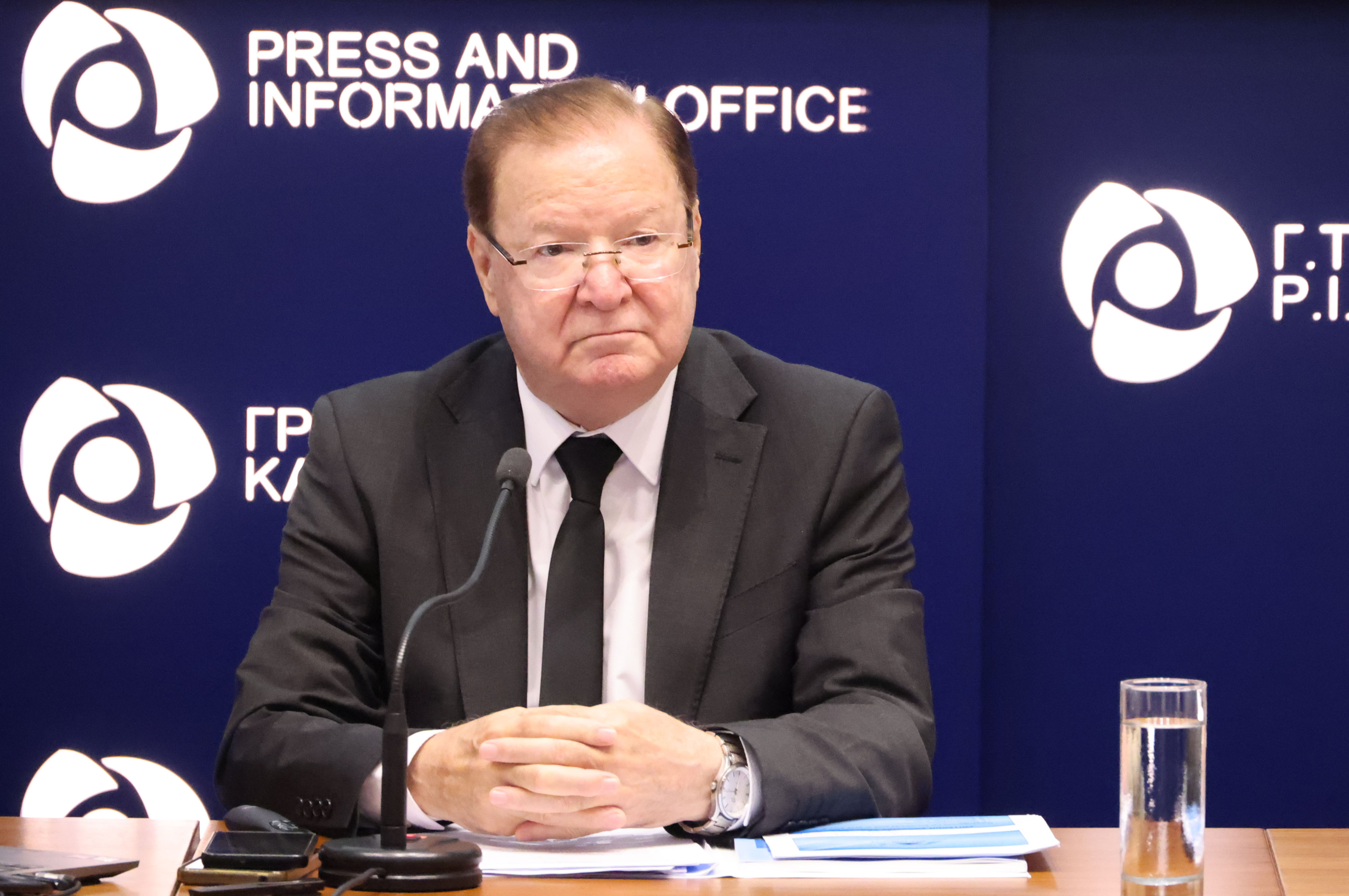
Women now outnumber men at every level of Cyprus’ civil service, including senior management positions traditionally dominated by men, according to figures presented by Public Service Commission (PSC) chairman Giorgos Papageorgiou on Friday.
Women account for 63 per cent of civil servants, compared with 37 per cent men, and hold a majority even among directors and permanent secretaries, positions which until a few years ago were predominantly occupied by men.
Presenting the PSC’s 2025 annual report, Papageorgiou also highlighted significant changes in promotions following public service reform, while expressing concern over increasingly generous employee performance evaluations.
He said the reforms had enabled candidates to secure promotions based on their abilities and performance rather than seniority. In 70 per cent of interdepartmental promotions, successful candidates were employees who would not have been promoted under the previous system because of the importance attached to length of service.
However, only 12 per cent of positions were filled by candidates from outside the department concerned.
Papageorgiou said the new system should be continuously monitored to assess its effectiveness and identify weaknesses.
Despite progress in promotions, he described the trend in civil servant performance evaluations as disappointing, warning that the system was gradually returning to the previous practice of rating almost everyone as excellent.
Average evaluation scores have risen steadily since the new system was introduced in 2023, increasing from 8.7 out of 10 that year to 9.01 in 2024 and 9.12 in 2025.
“Gradually, steadily, over time, we are returning to the previous phenomenon where everyone was assessed as excellent in every respect,” he said.
He warned that this undermined the purpose of evaluations by making it difficult to distinguish employees according to their actual performance.
Papageorgiou placed considerable responsibility on department heads and permanent secretaries, calling for more realistic assessments.
The report also showed that approximately 72 per cent of civil servants hold university or postgraduate qualifications, although only around 30 per cent of positions require a university degree.
Of the workforce, 41.44 per cent hold postgraduate qualifications and 29.86 per cent university degrees, indicating that many employees have higher academic qualifications than their positions require.
In terms of age, 65.95 per cent of civil servants were between 35 and 54 years old as of September 15, while 26.38 per cent were aged 55 or older and 7.67 per cent were between 18 and 34.
The commission made 541 appointments and 707 promotions in 2025, conducting a record 894 interviews. By September 15 this year, it had made 313 appointments and 447 promotions.

Seventeen civil servants were suspended from duty in 2025, compared with 21 by September 15 this year.
Under the reformed recruitment system, 4,065 candidates sat examinations in 2025, while the commission handled procedures for 142 positions at salary scale A13 and above.
Aptitude tests account for 10 per cent of candidates’ final scores, subject knowledge examinations for 30 per cent and assessment centre evaluations for 60 per cent.
The average time required to fill a position has fallen to 7.5 months, compared with cases previously taking two or three years.
Papageorgiou also outlined further digital changes taking effect on November 1.
Applications will be submitted through CyLogin, while candidates for appointments will be able to view their detailed assessment scores and final rankings electronically, improving transparency in selection procedures.
The commission received 34,452 applications in 2025, compared with an average of approximately 24,473 in previous years, an increase attributed partly to electronic applications.
However, official employee performance reports remain outside the digital system.





Click here to change your cookie preferences