
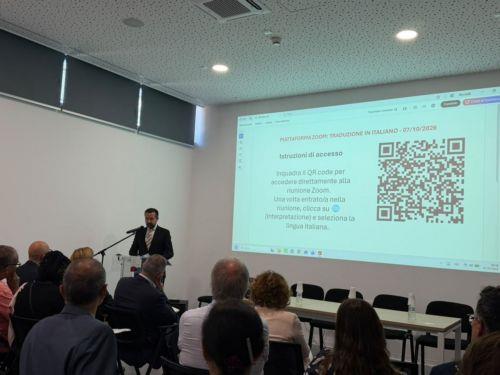
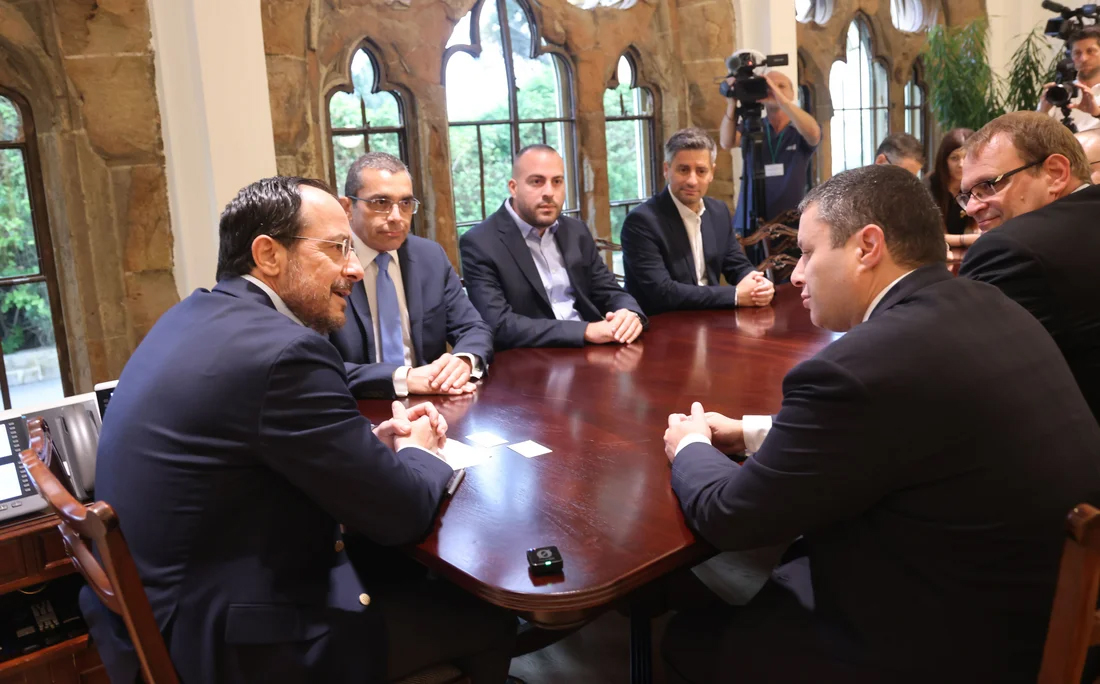
Deputy migration minister Nicholas Ioannides on Wednesday emphasised the need for what he described as a “balanced and sustainable” migration policy, combining the protection of those in need with the tackling of irregular migration.
Speaking at the MigraMed conference in Nicosia, Ioannides spoke of migration management as a “constant balancing act”.
He said that a credible migration system must provide protection to those who truly need it while at the same time addressing irregular migration, human trafficking and ensure effective repatriations.
These pursuits, he emphasised, should not be seen as competing, but as complementary elements of a balanced and sustainable policy which required cooperation between countries of origin, transit and destination and the relevant governments, as well as civil society organisations.
Ioannides referred to the cooperation between Cyprus and Italy, highlighting the ties between both countries as European Union member states and as countries in the Mediterranean.
He added that Cyprus and Italy were working closely together to address the migration challenges faced by member states at the EU’s external borders.
Ioannides noted that the choice to host MigraMed in Cyprus was directly linked to the conference’s theme, given the island’s geography, history and contemporary realities.
Meanwhile the ambassador of Italy to Cyprus, Antonella Cavallari, emphasised the human dimension of migration and the role of civil society in its handling.
Cavallari said that while governments and politicians had the greatest responsibility for decision-making, society played an important role and responsibility for the choices made in the context of migration.
“Behind every number there is a person, a family, a story,” she said, adding that the human dimension should not be lost in the debate surrounding migration.
Cavallari stressed that migration flows should not only be addressed, but also managed, as migration can, under certain conditions, also be an opportunity, while contributing to meeting the needs of host countries.
The Italian ambassador also highlighted conflicts as a significant cause of migrations, particularly in regions such as the Eastern Mediterranean, underlining the importance of European-level cooperation for the joint management of migration.
Nicosia mayor Charalambos Prountzos said that the public debate needed to move from stereotypes and focus on the real economic and social dimension on migration.
He spoke of a form of “social hypocrisy” in the way migrants from different backgrounds are treated, saying that wealthy migrants received different treatment to those arriving from war-torn or economically underdeveloped areas, with the latter often presented as a burden on society.
Prountzos referred to the real contribution of immigrants to the Cypriot economy, especially in sectors facing labour shortages such as construction and tourism, raising the question of whether the high growth rates of the Cypriot economy could be achieved without immigrant labour.
He said that the discussion on migration needed to examine what immigration really offers and what it entails for host countries.
The mayor referred to the particular experience of Nicosia, explaining that the division of the city, the gradual removal of residents from areas near the Green Line, economic degradation and lower rents created conditions for the concentration of a large number of immigrants.
Prountzos said that this concentration created challenges for the urban space’s ability to integrate its population, while simultaneously raising the issue of exploitation of migrants by property owners, who charged high prices for overcrowded, unsanitary accommodation.
He concluded that addressing such phenomena requires legislation to be implemented not only against immigrants, but also against those who exploit them.


Click here to change your cookie preferences