
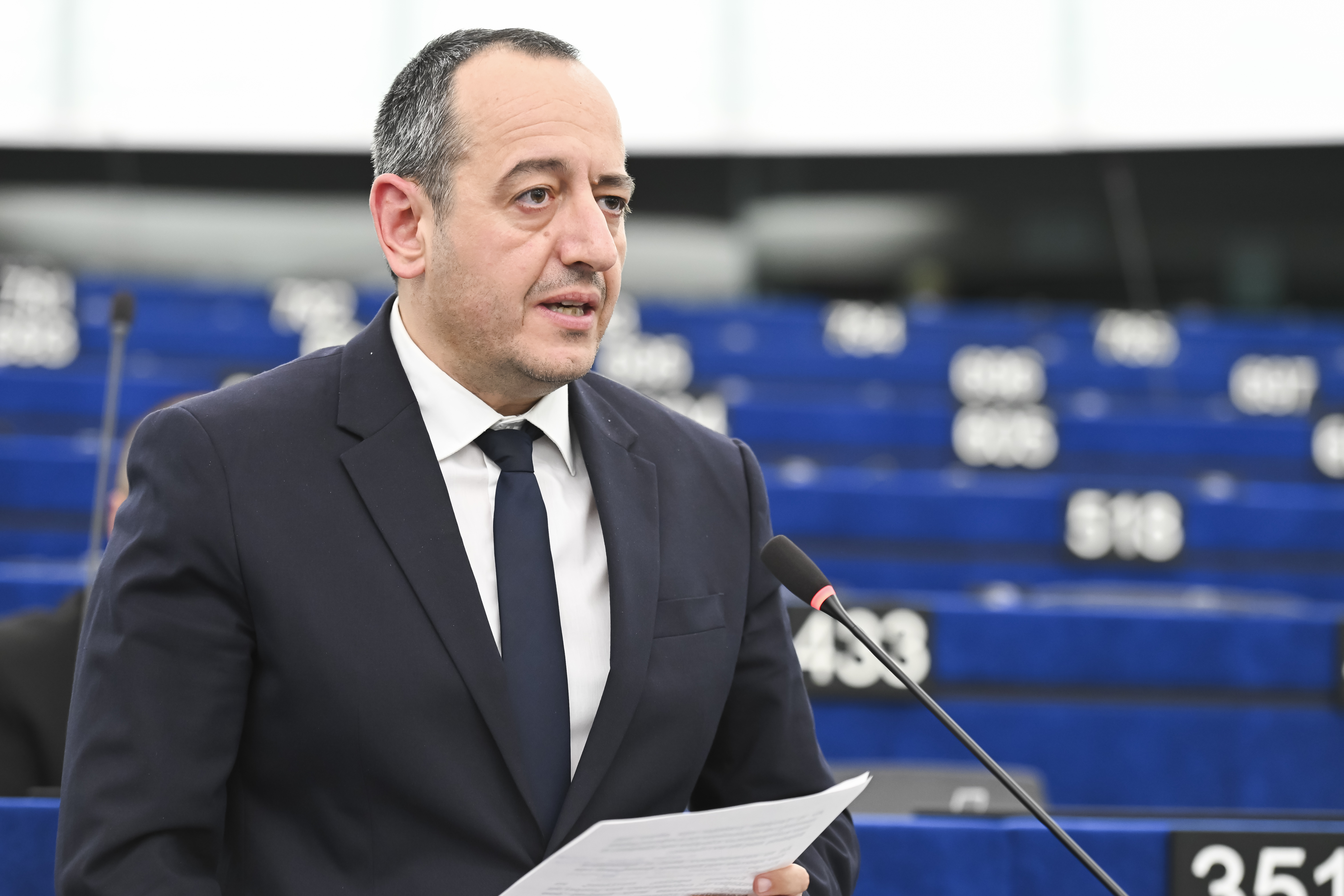
Elam member of the European Parliament Geadis Geadi on Thursday demanded that the European Union provide more funding to Cyprus and other islands in Europe, as the day’s plenary discussion discussed the EU’s strategies for islands, coastal communities, and its outermost regions.
“Islands are not merely a geographical detail. They represent a reality characterised by economic and social challenges. We in Cyprus, the European Union’s easternmost island state, are acutely aware of this,” he said.
He said that as a result of its geography, people in Cyprus “face higher transport costs, increased expenses for people and businesses, and limited air connections”.
“The European strategy for islands must transform obstacles into opportunities, because true European solidarity requires specialised funding, energy interconnections, improved transport, the strengthening of local authorities, better air and maritime connectivity, and measures to address demographic challenges,” he said.
He added that “protecting islands means protecting European heritage and our historical traditions”.
“No European citizen, whether on an island, in a coastal community, or in an outermost region, should be considered a second-class citizen,” he said.
‘Comprehensive framework’ for islands, coastal communities
Earlier in the day, European Commission Vice President for cohesion Raffaele Fitto had said that he is “very pleased” that the commission has “responded to a longstanding call from this parliament” by adopting strategies for islands, coastal communities, and outermost regions.
“Together, these strategies provide, for the first time, a more comprehensive framework for territories facing specific geographical, economic, and demographic challenges,” he said.
He said that island communities “face specific challenges linked to insularity, distance from mainland markets, dependence on maritime and air connections, higher transport costs, and limited economies of scale”, and that the commission’s islands strategy was built “on four pillars”, taking these factors into account.
The first pillar, he said, covers “economic development, connectivity, competitiveness, and innovation”, while the second covers “energy, climate, and the environment”, the third “focuses on people, population decline, ageing, brain drain and housing”, while the fourth “addresses security and crisis preparedness”.
On the coastal communities strategy, he said that it is “built around three priorities – prosperity, resilience, and liveability”.
“‘Prosperity’ means unlocking the potential of coastal economies. ‘Resilience’ means preparing coastal communities for climate change and other shocks. ‘Liveability’ means ensuring that coastal areas remain places where people can live, work, and build a future,” he said.
€865 billion in funding
Previously, the European Commission has said that the islands strategy “promotes the establishment of a regular dialogue between EU institutions and stakeholders representing the interests of islands, as well as various technical support measures, including capacity building and exchange of good practices”.
In line with the strategy, it said, EU member states are “invited to include targeted measures for the development of islands in their future national and regional partnership plans”, through which the EU plans to invest €865 billion.
That investment, it said, will be focused on “reducing disparities, supporting agriculture and fisheries, strengthening social rights, and promoting equal opportunities”.
It has also said that the coastal communities strategy “emphasises tailored, locally led solutions, recognising the diverse needs of coastal communities—from remote fishing villages to major port cities”.
European Fisheries Commissioner Costas Kadis told the Cyprus Mail that the two strategies will complement each other, and that they will be “extremely relevant for Cyprus”.
“Coastal communities hold enormous potential for sustainable development but at the same time they face common challenges, not least from the effects of climate change. For islands like Cyprus, there are additional challenges related to the natural insularity, such as connectivity, energy and waste management,” he said.



Click here to change your cookie preferences