
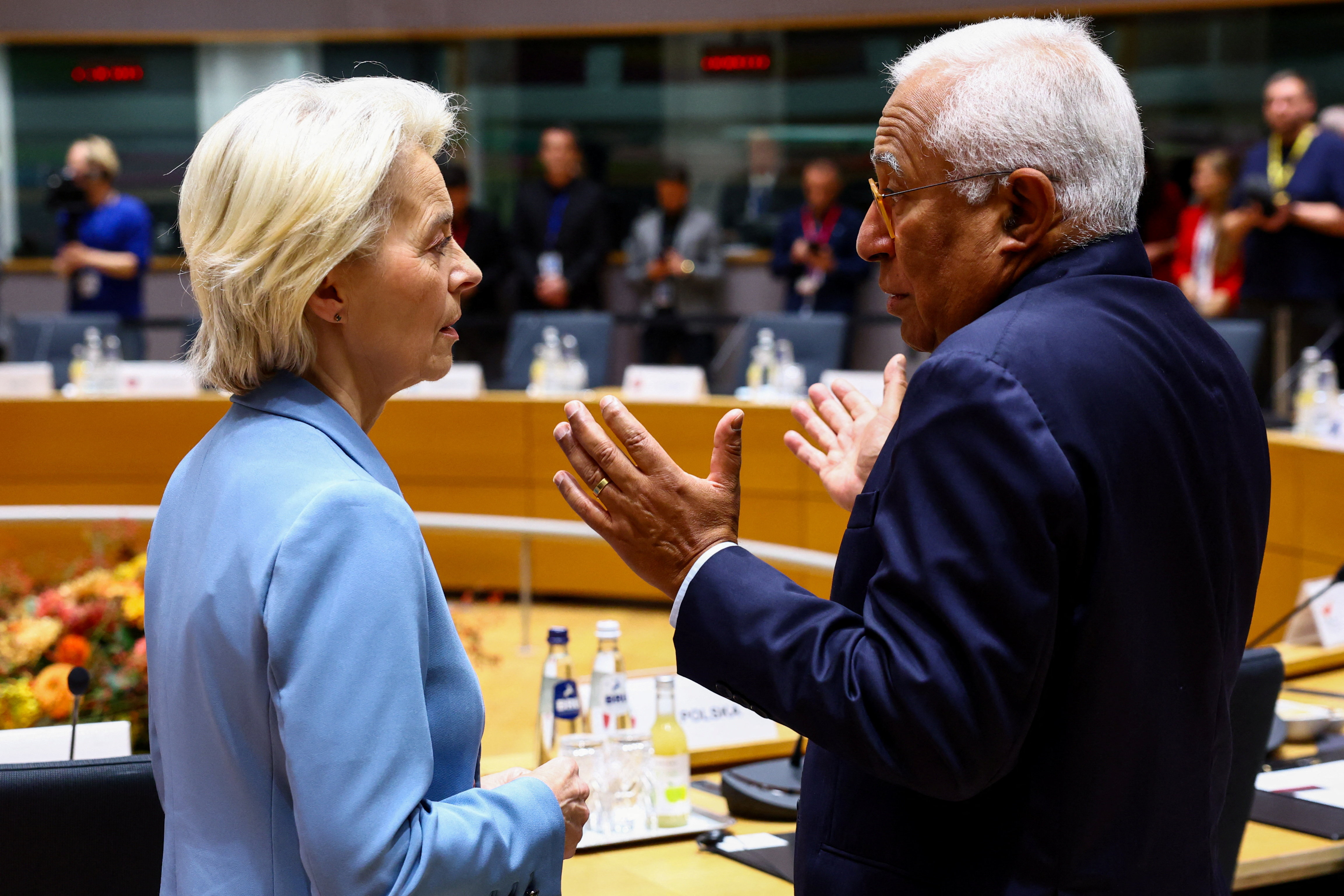
The European Union began a packed summit on Thursday that quickly underscored wrangles over how to tame soaring energy prices, design a budget to keep the bloc competitive and curb surging exports from China that are blamed for job losses.
The leaders from the EU’s 27 members met in Brussels on the back of securing an agreement with Beijing to limit imports of hybrid cars from China, a first step towards cutting a goods trade deficit that hit €360 billion in 2025.
The summit takes place at a time of heightened economic anxiety, with fuel price spikes since the Iran war putting cash-strapped governments on the back foot, companies struggling and Europe wanting to shore up its defences and support Ukraine.
The clock is also ticking on a series of elections in Europe over the coming months including in France in April, which could propel French far-right leader Marine Le Pen to the presidency vowing to slash her country’s contribution to the EU budget.
Slumping in the polls at home, German Chancellor Friedrich Merz told reporters that positions were still far apart on the budget, which has pitted net contributors such as Germany against net beneficiaries. The latest proposal would safeguard subsidies for farmers and regions, which critics say sucks money away from more urgent areas to keep up with the US and China.
“We are, therefore, facing very, very difficult negotiations,” Merz said.
MERZ SAYS FROZEN RUSSIAN ASSETS MUST STAY IN EUROPE
Merz also gave a pointed rebuff to a proposal by the United States, reported in the Financial Times, for European countries to unfreeze some Russian sovereign assets immobilised after the invasion of Ukraine. The idea would be to transfer them to a vehicle overseen by Washington in an attempt to revive peace talks, the FT reported, citing people briefed on the matter.
“These are assets that are frozen in Europe, and they should remain frozen in Europe. This is our affair, and we are the ones who decide on it,” Merz said.
While France is also a net contributor to the EU budget, its officials warned that a blunt focus on spending cuts would be counterproductive, hobbling measures that were also intended to make the bloc more competitive.
“We can clearly see that cuts alone cannot resolve the equation,” one official said.
Draft conclusions from the summit indicate leaders want the Commission to continue talks with Beijing, while also making full use of EU trade defence measures and adding new trade instruments to protect the bloc further.
“These imbalances are not limited to one sector. We don’t have much time because every month that goes by, thousands of jobs are lost,” said a senior EU diplomat.
Beijing has said that hyping up the issue of economic imbalances is an excuse to promote protectionism and exert pressure on and restrict China.
“We don’t have enough measures to counter unfair practices, we have also not invested enough in our own competitiveness and innovation, the new EU budget will need to be equipped for that,” Dutch Prime Minister Rob Jetten told reporters.
GERMANY’S U-TURN ON CHINA IMPORTS
Franco-German proposals released last week are also likely to be the focus of discussions. The EU’s two largest economies said there was an urgent need for measures to deal with imports of chemicals and PET — the plastic widely used in packaging — and called for measures to retaliate quickly against countries that harm the bloc.
The paper marks a sharp turn for Germany, which only two years ago was the most vocal critic of EU anti-subsidy tariffs on Chinese electric vehicles.
Several EU countries have also put high energy prices on the agenda.
One area of contention is the wish by countries including the Czech Republic and Italy to weaken or suspend the EU Emissions Trading System, a regulation forcing power plants and industries to buy CO2 permits when they pollute.
The prime ministers of Finland, Sweden and Denmark hit back in a letter praising the system as a driver of energy security by helping Europe reduce reliance on imported fossil fuels. They warned “any weakening” would hinder investment in clean industries.
One of Friday’s main topics will be the challenges facing Ukraine, with President Volodymyr Zelenskiy due to attend at a time when Kyiv is at loggerheads with the US over intelligence sharing while missiles and drones hammer Ukrainian cities.
Leaders are expected to discuss Ukraine’s funding needs for 2027, with Latvia’s Prime Minister Andris Kulbergs comparing the cost to each citizen of the price of a beer.
“It is one beer less for one European a year. We can afford that. But Ukraine needs it now,” he said.





Click here to change your cookie preferences