
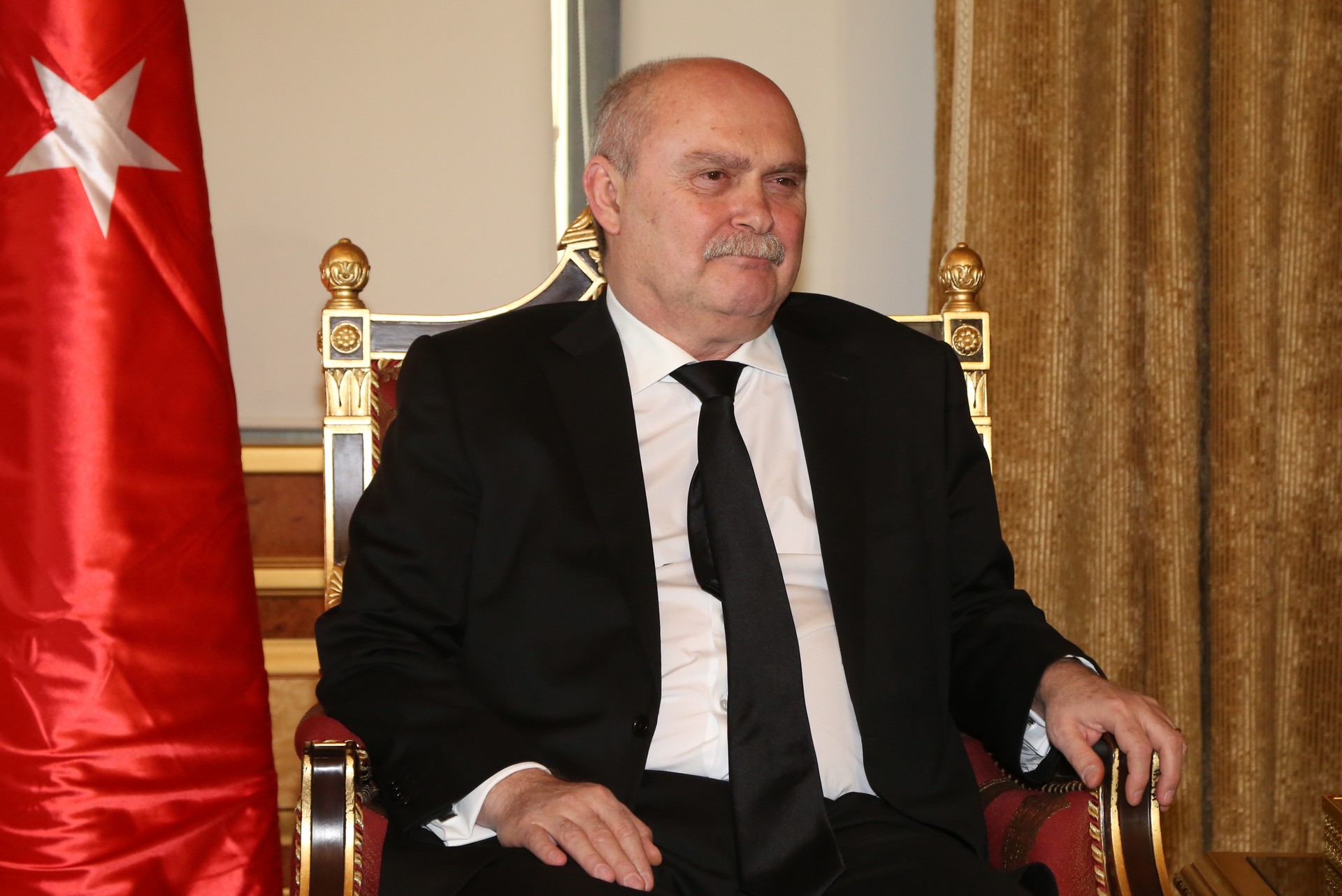
Cyprus and Greece have challenged Turkey’s candidate for UN secretary-general, Feridun Sinirlioglu, as he pledged “impartiality” without addressing most of their questions directly.
Cyprus’ ambassador to the UN, Maria Michael, tabled five questions to him in the General Assembly’s interactive dialogue.
She cited a letter he wrote on May 19, 2022 in his national capacity, which she said claimed the Republic of Cyprus ceased to exist as a legal entity in 1963.
She asked whether he recognises its sovereignty, independence, territorial integrity and status as a UN member.
She also requested him to condemn attacks on peacekeepers in Pyla in August 2023, accept the Security Council’s position on Varosha and commit to implementing council resolutions.
On the two further questions relating to human rights infringements in Turkey, Michael asked, “do you share the committee’s concerns, and would you support independent, impartial and effective investigations into these allegations?”.
She also asked whether he agreed with the UN human rights office that blanket bans on demonstrations after the 2025 arrest of Istanbul mayor Ekrem Imamoglu were unlawful.
Greece’s ambassador, Aglaia Balta, focused on the 2019 Turkey-Libya maritime memorandum, saying the two countries have no adjacent or opposite coasts and no common maritime border, and that the deal ignores Crete and the Dodecanese.
She called it “a blatant reshaping of geography” and said its recent ratification by the Libyan House of Representatives gives it no legal effect.
She asked how he reconciled a commitment to international law with having defended such claims.
Sinirlioglu said the UN Charter would guide his work “including with regard to the Cyprus issue”, and that changing global conditions affect international disputes.
He quoted former Secretary-General Dag Hammarskjold on neutrality and called it an “act of integrity”, yet offered no explicit answer on recognition, Pyla, Varosha or the human rights questions.
On the memorandum he said he was nominated by Turkey but was “not here as a representative” of the state.
He recalled that Greece supported his election as OSCE secretary-general, insisting that “I have also repeatedly demonstrated that I can be an impartial and independent international civil servant”.
Sinirlioglu briefly served as Turkey’s foreign minister in 2015 and its UN ambassador from 2016 to 2023, and became the first Turkish national to head the OSCE in December 2024.
Foreign Minister Hakan Fidan said Turkey nominated him to help break a deadlock in the selection process.
A candidate requires nine Security Council votes and no veto from a permanent member, then General Assembly approval.

Click here to change your cookie preferences