
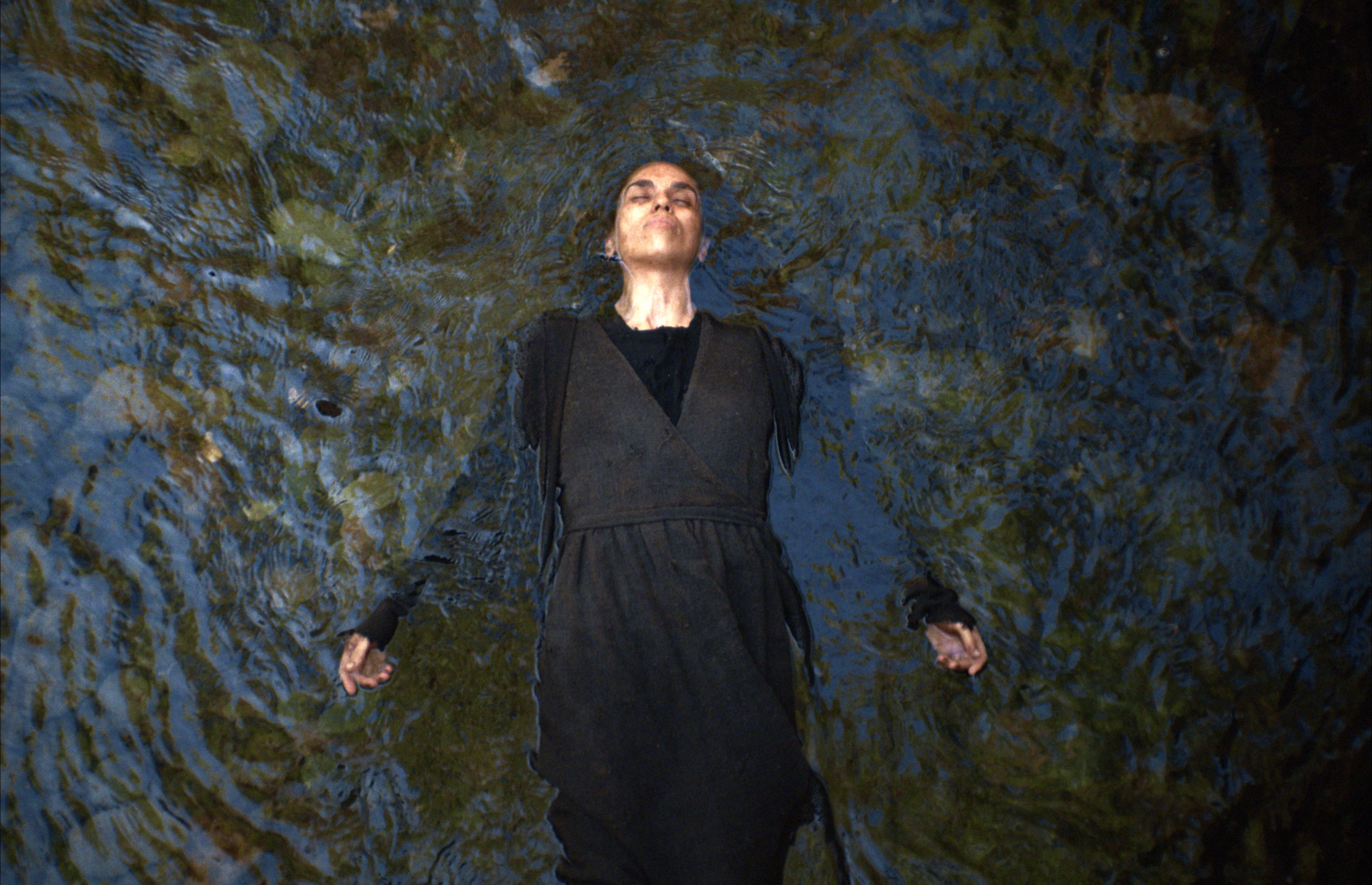
Its director prefers the term 19th century Gothic but it’s out in time for Halloween
Why is Motherwitch – opening this Thursday in local cinemas – quite a special kind of film? Let us count the ways.
“It’s special because it’s Cyprus’ first folk-horror feature film,” says Minos Papas, who directed it and also co-wrote the script (with Nikolas Kouroumtzis and Euripides Dikaios).
It’s also special because “it’s based on Cypriot folklore that has not been seen onscreen before” – the fabled kalikantzari, mischievous goblins (sometimes said to be the spirits of lost kids coming back to haunt their parents) who appear during the 12 days of Christmas, and were previously immortalised in the silkscreen prints of Hambis Tsangaris.
It’s also special, says Minos, because “it’s shot in real locations of Cyprus – the abandoned 15th-century village of Parsata” (which the production spent a month restoring), and “the ruined monastery of the Holy Cross, ‘Timios Stavros’, in Anogyra.”
What’s more, “it’s a wintry Cyprus that we don’t usually see, the colour palette is grey and green and brown”. In fact, with its green fields and layered purplish hills stretching into the horizon, the landscape often seems more Balkan than Mediterranean, adding to the doom-laden atmosphere.
It’s also special because “it’s a movie where people will hear the actual Cypriot dialect of the late 19th century – or at least what we assume it was,” adds the director. Note that the film is being released not just with English, but also Greek subtitles – though he actually went back and forth on that, says Minos, the effect of the archaic dialect on modern Cypriot viewers (allowing them to catch the dramatic flow without understanding every word) adding a strangeness, “an arcaneness” that’s actually interesting.
Is that all? Not entirely.
Motherwitch is also special for genre buffs and special-effects geeks because its effects are almost entirely ‘practical’ (i.e. not computer-generated), a huge point of pride in the horror-fantasy world.
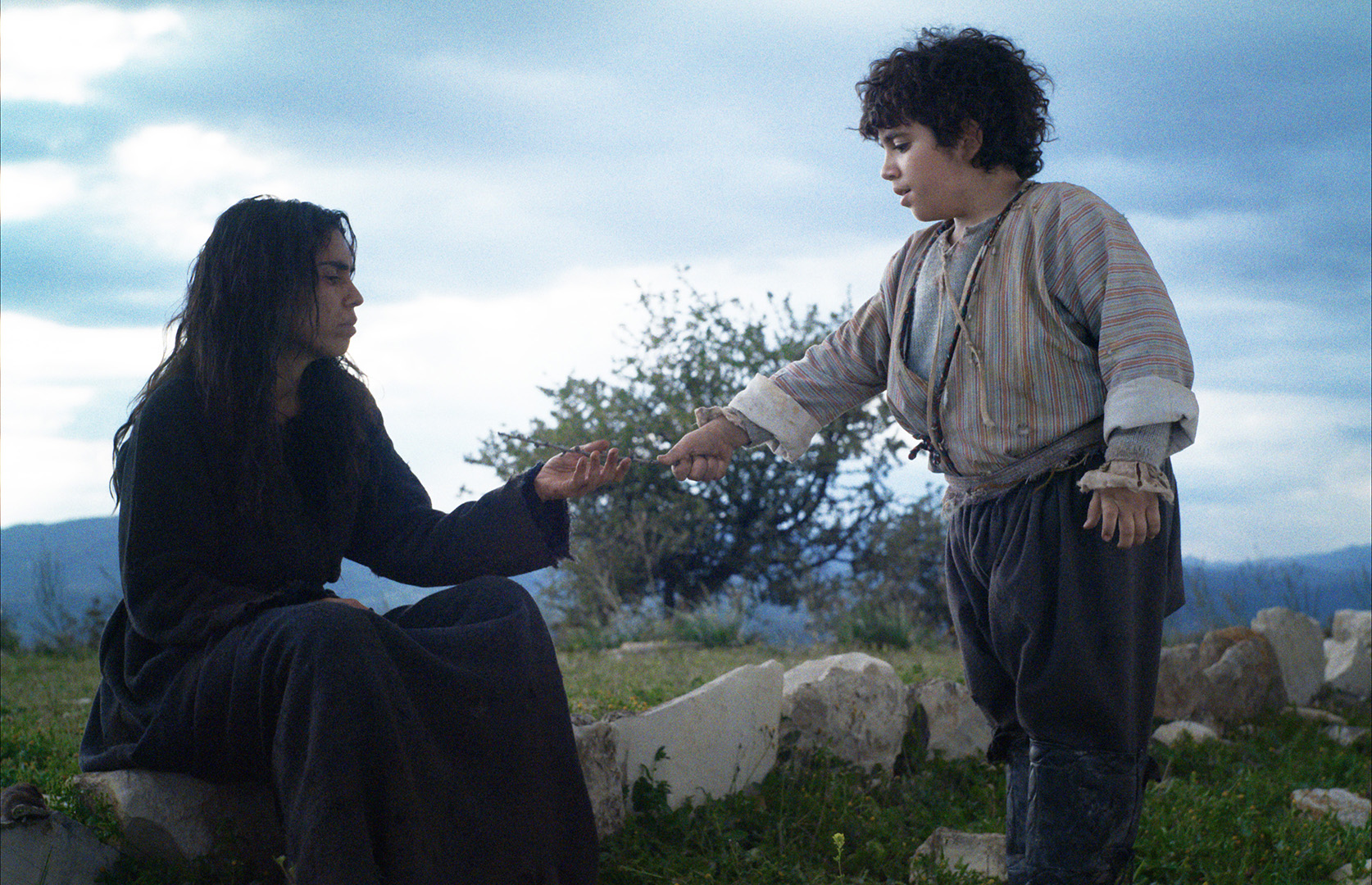
The filmmakers used “the ‘Schüfftan effect’ from the original Blade Runner” to create glowing eyes, says the director – an intricate effect, involving literal mirrors placed next to the camera – and also, for instance, used a “cloud tank to create these dreamy skies”, shot in his apartment in LA “then composited onto the skies here”.
Then again, lest we get too geeky, the film also provokes some emotional reactions.
“In Malta, I had somebody [from the audience] coming up to me sobbing – because she was going through a loss,” he reports. “She’d recently lost her mother, and she said –” Minos laughs out loud – “she told me to go fuck myself” for having hit a nerve so precisely. “Which was really touching…”
Motherwitch is the story of Eleni (Margarita Zachariou), a wandering painter in rural Cyprus in 1882, soon after it became a British colony. (The British play a small but significant part in the narrative.) Having lost her children in a tragic accident, she initially withdraws from life – but then, teaming up with an abused village boy, she embarks on a blood ritual that she hopes will bring back her kids. But “something ancient is unleashed” instead.
The film took seven years to make, much of that devoted to writing the script and finding the budget of €1.7 million – which sounds like a lot to the layman, but “the layman needs to get educated then,” jokes Minos grimly, “because 1.7 doesn’t go very far, especially in the European funding system [where] you have to pay for a lot of accounting and auditing”.
About half the funding came from the Cyprus government and Invest Cyprus, the rest includes equity (i.e. private investors) from both here and the US – the country that’s been Minos’ base for the past 27 years, since he went to study in New York at the School of Visual Arts. (Motherwitch is his third feature film.)
The idea was brewing in his head for a lot more than seven years, however, sparked by Tsangaris’ prints of the kalikantzari – but in fact they later meshed with something else, an artist friend in the US who lost her son when he was two days old and, grief-stricken, painted his portrait and wrote a book of poems (Poems for Wyatt) about her loss.
That unlikely mix lies at the heart of Motherwitch – and is also part (yet another part) of what makes it special.
The film’s done well on the festival circuit, having played Fantasia in Montreal and Sitges in Spain, two of the world’s biggest fests for genre films (a catch-all term for horror, sci-fi, fantasy, action, and cult cinema) – but the most common reaction he gets, says Minos, is perhaps that “it’s unique, it’s its own thing”.
Wikipedia describes Motherwitch as a “gothic folk horror fantasy film”. The trailer calls it simply ‘A Cyprus Gothic’. It’s coming out for Halloween, and the shoe obviously fits – yet “I think ‘horror’ is my least favourite word for the movie,” admits Minos. “It’s the word we adopted because we had to classify it, y’know?
“In the beginning we were saying to people ‘It’s a fairytale’ – and we’d describe it, and they’d be like ‘Oh, so it’s a horror film’.” He laughs. “No, no, no! There’s no blood, there’s no violence…” There are creatures – kind of – but “you don’t really see anything”.
Minos’ own preferred term is ‘Gothic’ – “19th-century ghosts, more or less. A very sort of wintry, stone look”.
There’s a certain texture (“It’s a very handmade movie”), a certain melancholy, a certain atmosphere that sticks to your bones. It’s there in the visuals, the antiquated words, the emotional pull of the grief-stricken mother.
An unusual film? You could say that. An unusual Cypriot film? And how.

Click here to change your cookie preferences