
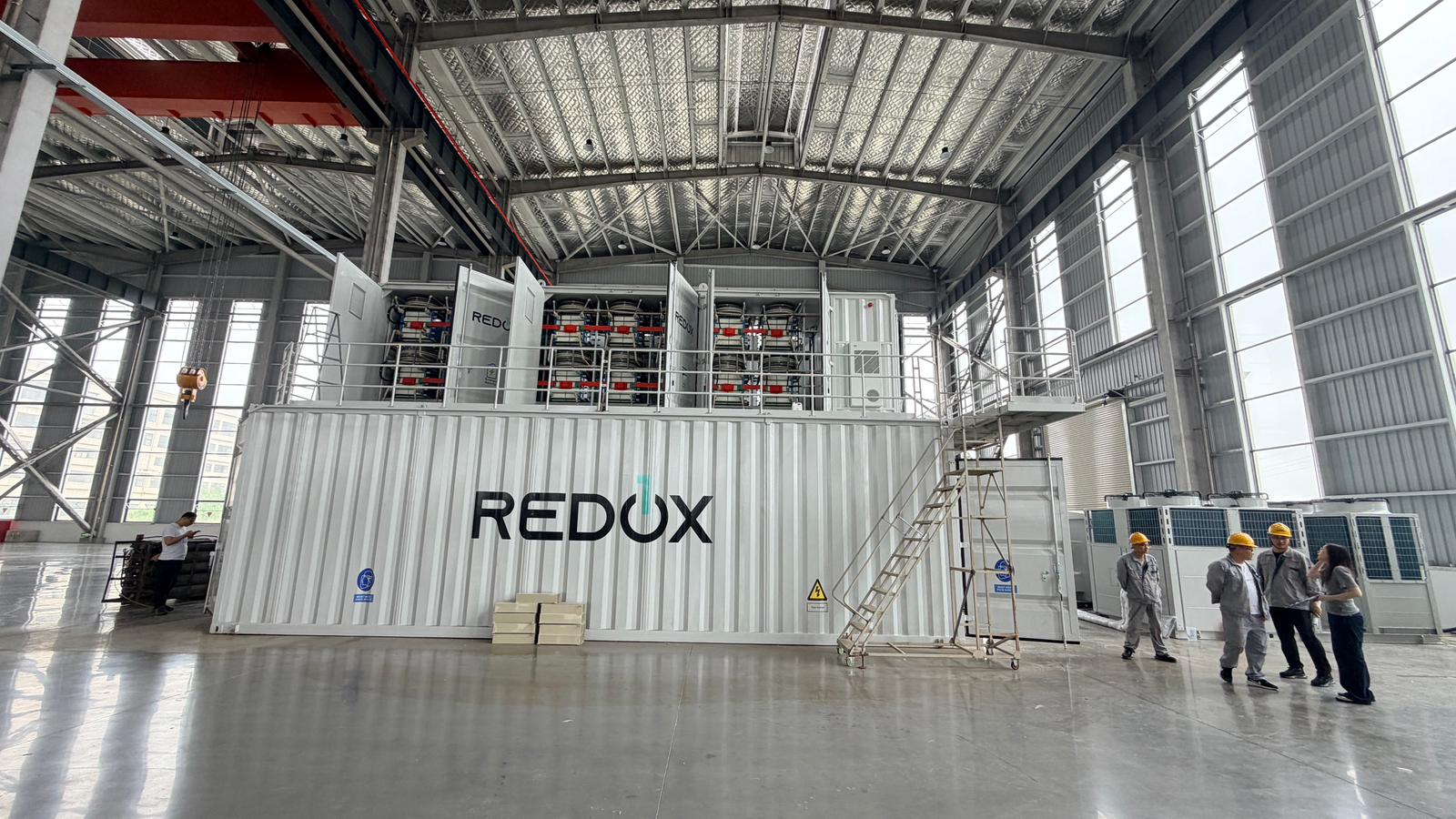
The company is developing iron-chromium flow batteries to support renewable energy storage at scale.
In this interview, Redox One outlines its technology, progress towards commercial deployment and international ambitions. It also explains why Cyprus, home to its headquarters, could become an early market and demonstration base for wider regional adoption.
From development to deployment
Redox One was established in 2022 by Tharisa plc to develop iron-chromium redox flow battery technology for safe, sustainable and cost-effective energy storage.
Building on Tharisa’s expertise in chromium production, mining, metallurgy and chemical processing, the company was created to address one of the most significant challenges of the energy transition: storing renewable energy reliably at scale.
A key strength is our vertically integrated approach, spanning chromium resources, electrolyte production and complete energy storage systems. This provides greater control over quality, supply security, cost and long-term scalability.
One of our biggest challenges has been moving from technology development to fully integrated, real-world energy storage systems. Important milestones include the successful operation of demonstration systems at our European Technology Centre in Germany and the development of a 625 kWh demonstration system in China.
Our next focus is advancing larger demonstration projects and progressing towards commercial deployments that can support renewable energy growth worldwide.
Storage built for duration
Our iron-chromium redox flow battery technology is designed to transform intermittent renewable energy into dependable, dispatchable power. It complements lithium-ion batteries by addressing applications that require longer-duration storage, high utilisation rates and long operating lifetimes.
The technology uses abundant materials such as iron and chromium and is engineered for decades of operation with minimal capacity degradation.
Safety is a major advantage. The system uses a water-based, non-flammable electrolyte that eliminates the thermal runaway risks associated with conventional lithium-ion batteries.
Flow batteries also offer significant economic benefits for long-duration storage because power and energy capacity can be scaled independently. Extending storage duration primarily requires additional electrolyte and storage tanks rather than a complete battery system expansion.
From a sustainability perspective, the electrolyte can be reused and recycled, while the battery chemistry relies on widely available materials. Together, these attributes create a safe, sustainable and cost-effective solution for large-scale energy storage.
International growth
Our commercialisation strategy is international from the outset. We are advancing the technology through demonstration projects and strategic partnerships across Europe, China and South Africa, while engaging with utilities, industrial customers, renewable energy developers and technology partners.
Our immediate priority is to validate demonstration systems and use operational data to support larger commercial projects. We see strong opportunities in mining, industrial, utility-scale and renewable energy applications where long-duration storage can improve reliability, flexibility and asset utilisation.
Our connection to Tharisa provides access to critical raw materials and metallurgical expertise, enabling participation across the value chain, from electrolyte production to complete energy storage systems.
Cyprus could potentially play an important role as a gateway to Southern Europe, the Eastern Mediterranean and the Middle East. Over the next three to five years, our goal is to develop a growing portfolio of commercial installations and establish scalable manufacturing and supply-chain partnerships.
Cyprus as an early market
Cyprus is home to our headquarters and an important part of our long-term growth strategy. As an island electricity system with abundant solar resources, it faces many of the challenges that long-duration energy storage is designed to solve.
Our technology can store excess renewable electricity during periods of strong solar generation and deliver it when demand exceeds supply. This improves grid flexibility, reduces renewable energy curtailment, enhances energy security and helps lower reliance on imported fuels.
We believe Cyprus could become an important early market for sustainable energy storage and a valuable demonstration platform for wider deployment across Southern Europe and the Eastern Mediterranean.
More broadly, Cyprus has the potential to strengthen its position as a regional deep-tech and clean-energy hub. Faster pathways for demonstration projects, targeted funding programmes and closer collaboration between government, industry, universities and investors would encourage more innovation-led companies to establish and expand their operations on the island.




Click here to change your cookie preferences