
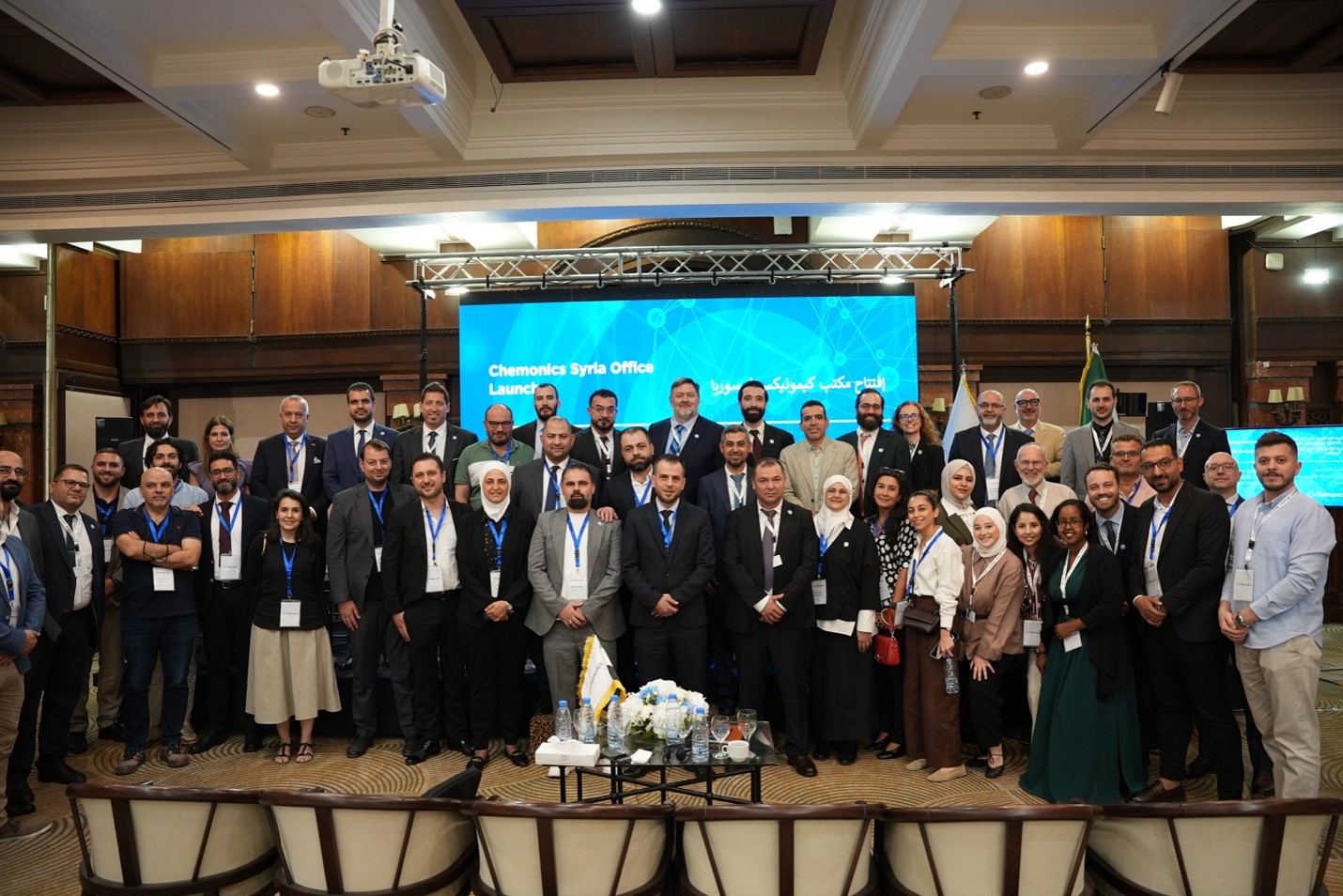
Chemonics International opened its office in Damascus on July 5, 2026, and used the occasion to mark 14 years of work in Syria. Syrian leaders, partner organizations and program alumni attended. The agenda they set out runs well past emergency relief, into education, essential services, livelihoods, economic recovery, and the institutional capacity needed to support Syria’s new government, private sector and civil society.
Jamey Butcher, the company’s chief executive officer and chair, said: “Today is a celebration of what Syrian people have achieved through some of the hardest years their country has known. For 14 years, Chemonics has been honored to stand alongside Syrian communities, organizations, and institutions — and the opening of our Damascus office reflects our continued commitment to Syrian-led recovery as Syria builds its future.”
14 years of Chemonics’ work in Syria
The Syria portfolio dates to 2012. Chemonics puts the value of that work at more than $572 million across 24 projects, figures the company gave the Syrian Arab News Agency, and says nearly 600 local Syrian organizations have benefited.
Those projects have names that mean more inside Syria than outside it: Idarah, the Syria Regional Program, the White Helmets Assistance Program, Manahel and Injaz. Through Idarah and the Syria Regional Program, Chemonics worked with Syrian partners to reach more than one million peopletogether reached more than one million people. Together, the two programs sustained essential services, strengthened local governance and civil society, and rehabilitated critical infrastructure in communities across the country.
Chemonics’ work in education: the Manahel program
Manahel takes its name from the Arabic word for fountains. The Syria Education Programme it names is funded by UK aid and implemented by Chemonics.
Its first phase ran from 2018 to 2023 and reached more than 600,000 children across Idlib and Aleppo. A second phase opened in 2024. Chemonics reports that Manahel has now reached more than 950,000 students and works alongside education directorates in Aleppo and Idlib.
The program’s remit runs across the school system. It covers teacher compensation, curriculum development, child protection, girls’ education, psychosocial support, literacy and numeracy instruction, and accommodations for students with disabilities.
In Northeast Syria, a separate program, Injaz, worked in post-ISIS areas through learning, vocational training, educator development and school rehabilitation. It supported more than 12,300 children and provided psychosocial support to more than 19,000 people.
Emergency response and the Syria Civil Defense partnership
Chemonics’ emergency response work is organized around rapid analysis, procurement and logistics, emergency financing, and crisis communications. In Syria, the clearest expression of it has been the long-standing partnership with the Syria Civil Defense, the volunteer rescue organization known internationally as the White Helmets.
Chemonics helped strengthen training, operational systems and institutional capacity for more than 3,000 Syrian responders. Those responders are credited with saving over 127,000 lives.
Raed al-Saleh, Syria’s minister of emergency and disaster management, spoke at the Damascus event. “Chemonics believed in the capabilities of the Syrian people and their determination to confront and overcome challenges,” he said at the Damascus event. “This belief has had a tangible impact on the lives of millions of Syrians and has left a lasting mark on the landscape of humanitarian and development work over the past years.”
On the next phase, he said: “What began as collaboration under exceptional humanitarian circumstances is evolving into a broader partnership that supports early recovery, strengthens institutional capacities, drives sustainable development, and empowers communities to build a more stable and prosperous future.”
Locally led development as the operating model
Nearly 600 local Syrian organizations have been part of this work. Partnerships on that scale depend on people on the ground and relationships built over many years.
Taj Alkaisi, a deputy team lead for Chemonics, said: “Syria’s recovery requires long-term commitment, trusted partnerships and practical delivery. We are proud to continue working alongside Syrian partners to strengthen institutions, support communities and help create the conditions for a stable and prosperous future.”
What the Damascus office signals about Syria’s recovery phase
Bahjat Hajjar, representing the Ministry of Social Affairs and Labor, told the event that cooperation among government institutions, civil society, the private sector, and international partners is essential to Syria’s recovery and reconstruction. He cited the government’s Syria Without Camps initiative, which aims to help displaced Syrians return home safely, as an example of where that cooperation is needed.
Helping families return home touches housing, schools, clinics, water, documentation and livelihoods, and brings many ministries and partners together at once.
Chemonics’ work in Syria has been building toward that transition for some time. Teacher training and curriculum development inside the education programming, Syrian responders trained through civil defense work, and a partner network built inside the country all point the same direction. With an office in Damascus, Chemonics can work more directly alongside the Syrian institutions, partners and communities leading the country’s recovery.
Chemonics enters this phase with 14 years of work alongside Syrian colleagues, partner organizations and institutions, and a commitment to supporting Syria’s new government, private sector and civil society through the transition. Its new office in Damascus brings the company closer to the Syrian institutions, partners and communities leading the country’s recovery.
DISCLAIMER – “Views Expressed Disclaimer – The information provided in this content is intended for general informational purposes only and should not be considered financial, investment, legal, tax, or health advice, nor relied upon as a substitute for professional guidance tailored to your personal circumstances. The opinions expressed are solely those of the author and do not necessarily represent the views of any other individual, organization, agency, employer, or company, including NEO CYMED PUBLISHING LIMITED (operating under the name Cyprus-Mail).

Click here to change your cookie preferences