
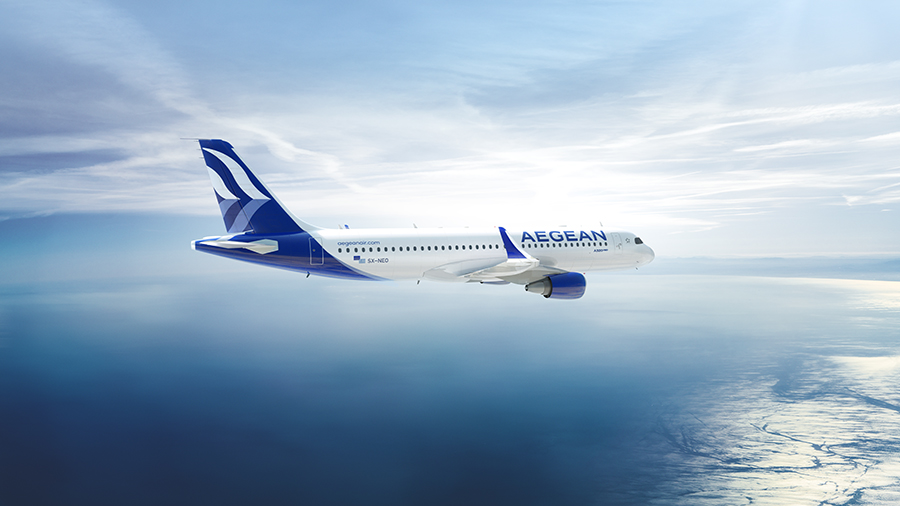
Aegean Airlines’ net profit fell 32 per cent to €100.6 million in the first nine months of 2026, as higher jet fuel costs and foreign exchange losses outweighed the gains from a busier summer. The Greek carrier flew more passengers and lifted revenue by 4 per cent to nearly €1.5 billion.
Aegean earned more in the three months to September than it did in the first nine months combined. Summer net profit rose 4 per cent to €103.9m, following a €3.3m loss in the first half of the year. In the first half of 2025, the airline had made a €47.9m profit.
Third-quarter revenue rose 5 per cent to €679.9m, while earnings before interest, tax, depreciation and amortisation, known as EBITDA, increased 4 per cent to €208.7m. The airline carried 5.9m passengers during the quarter, up 5 per cent on domestic routes and 4 per cent on international services.
Larger Airbus A321neo aircraft helped Aegean offer 5 per cent more seats while increasing the number of flights by just 2 per cent. The airline also benefited from a brief fall in jet fuel prices in July and from hedging contracts that protected 65 per cent of its fuel consumption during the quarter against price increases.
Across the nine months, the fuel bill before hedging jumped by €138.1m to €408.1m, from €270m a year earlier. Aegean estimated that its contracts cushioned about 66 per cent of that year-on-year increase. Foreign exchange revaluations produced a €14.2m loss, compared with a €27.6m gain a year earlier. Emissions costs also rose 39 per cent to €73.3m.
“Without the fuel hedges secured in the previous year, we would not have been able to sustain our profitability, even in the third quarter,” said chief executive Michalis Kouveliotis. He said jet fuel prices had returned to peak levels in September and October and that the airline would adjust its flight schedules over the coming months as its earlier hedging contracts gradually ran down.
For the nine months, pre-tax profit fell 35 per cent to €127.2m, while EBITDA slipped 1 per cent to €354.1m. Aegean ended September with €923m in cash, cash equivalents and other financial investments, down from €955.1m at the end of 2025. Net debt rose to €736.1m from €680.2m as lease liabilities increased and borrowings fell.
Aegean offered 16.7m seats from January to September and carried 13.6m passengers, up 3 per cent. Domestic traffic increased 6 per cent to 5.8m, helped by new direct routes from Thessaloniki and Heraklion to smaller Greek islands and other destinations. International traffic grew 2 per cent to 7.8m. The load factor fell to 81.8 per cent from 82.4 per cent.
The airline said disruption in the Middle East from March restricted flights on parts of its network and reduced the number of passengers connecting through Athens to and from the region. In its September results, Aegean said some services had been suspended for four months, from March to June.
The group took delivery of seven Airbus A321neo aircraft during the nine months, bringing its total Airbus neo deliveries to 45, comprising 21 A320neos and 24 A321neos. Its overall fleet stood at 90 aircraft, including 72 jets and 18 turboprops. Kouveliotis said the airline expected to start receiving its longer-range A321LR aircraft in the second quarter of 2027.
In Cyprus, Aegean resumed Paphos–Athens flights in July. The Paphos regional tourism board said in October that the airline planned to keep the route in 2027, with two or three flights a week depending on the season. The service provides onward connections through Athens to Britain, France and Germany.
Aegean also operates the direct Larnaca–Brussels service under a public service agreement signed for Cyprus’ EU Council presidency. The agreement runs through November 30, with two return flights a week scheduled in its final months.




Click here to change your cookie preferences