
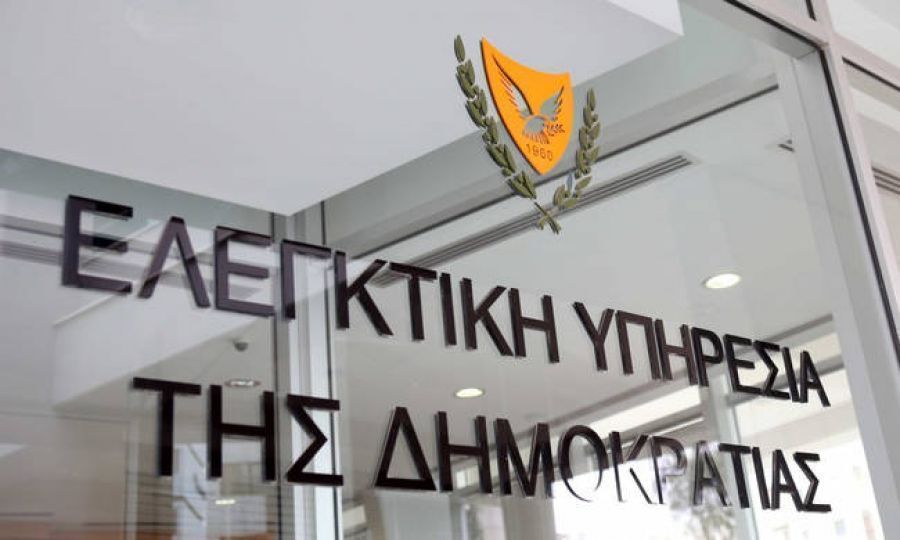
A €50,000 grant awarded to an organisation that was not eligible for state funding is among a series of questionable decisions uncovered by the Audit Office in its examination of Cyprus’ cultural grant programmes.
In a report published on Wednesday, Auditor-General Andreas Papaconstantinou raises serious concerns about how public money is distributed, revealing cases of inconsistent assessments, funding decisions made following repeated appeals from applicants, and financial documents whose authenticity could not be adequately established.
The findings point to wider shortcomings in the Deputy Ministry of Culture’s oversight of grants, raising questions about whether funding is being allocated fairly and whether sufficient checks are in place to ensure public money is properly spent.
“When available funds are insufficient to finance all worthwhile proposals, every euro allocated incorrectly or without adequate scrutiny effectively deprives another activity of the opportunity to receive funding,” Papaconstantinou said in the report’s foreword.
Among the findings is a €50,000 grant awarded under the 2025 Kypria programme to an organisation classified as a recognised charitable institution, despite such organisations being explicitly excluded from the scheme.
The audit also identified five applications awarded a combined €74,036 under the Culture-Music programme without sufficient evidence in their statutes that music was their principal activity, as required by the funding rules.
Two other organisations received grants of €15,000 in 2024 and €20,000 and €35,000 in 2025, despite having received written warnings from the District Administration as far back as 2021 over non-compliance with legislation governing their operations. The warnings indicated that dissolution proceedings could potentially be initiated.
The Audit Office said the information was publicly available through the Interior Ministry’s online register and should have been considered before funding was approved.
Questions over how grants were awarded
The report also raises concerns about decisions to fund applications following repeated requests for reconsideration.
In one case, an initially rejected application under the Culture-Music programme was eventually funded after approximately six months of repeated communications from the applicant.
The money came from funds originally allocated to another scheme that was never implemented, with internal correspondence describing the arrangement as a one-off exception.
The organisation had ranked second on the waiting list, and the applicant ranked first was also funded to preserve the order of priority.
In another case, applicants with lower evaluation scores received funding following the cancellation of previously approved proposals, while a higher-scoring applicant was overlooked without adequate justification.
For Kypria 2025, available funding was sufficient to cover the 14 highest-ranked applications. However, the department extended funding to the 18th-ranked proposal to ensure representation of traditional folk culture, even though the programme rules contained no requirement to fund that category.
The Audit Office said changes to funding decisions and programme conditions following repeated requests and complaints from applicants, without adequate justification, raised questions about whether decisions had been based on objective and transparent criteria or influenced by pressure exerted during the process.
“The rules must be clear, applied consistently, and decisions must be fully documented,” Papaconstantinou said.
Conflicts of interest and inconsistent scoring
The report identifies cases raising concerns about actual or potential conflicts of interest among evaluation committee members.
For Kypria 2024, declarations of confidentiality and absence of conflicts of interest were not required during the evaluation process. They were eventually signed in July 2025, almost 18 months after evaluations had been completed.
Significant inconsistencies were also found in the scoring of applications.
Two applications receiving identical written assessments were awarded scores of 80 and 93 per cent respectively, while separate evaluation forms for the same project recorded final scores of 85.66 and 94.68 per cent despite containing the same justification.
In another case, an evaluator awarded a perfect score of 100 without a corresponding individual assessment form being located.
Concerns over invoices and financial checks
Financial oversight was another area of concern, with the Audit Office finding that the department did not independently verify supporting invoices and other documents submitted by grant recipients.
Instead, financial reports were certified by external auditors, without sufficiently clear instructions governing the scope of their checks.
“The verification of expenditure and revenue is inadequate, safeguards for identifying multiple funding have gaps, and monitoring of implementation needs substantial strengthening,” Papaconstantinou said.
A sample examination of ten Kypria beneficiaries uncovered cases of insufficiently documented ticket revenue, expenses whose connection to the funded events was unclear and invoices raising questions about authenticity.
In one case, invoices submitted in 2025 contained electronically pasted signatures without evidence that their authenticity had been verified.
In another, invoices and payment receipts supposedly issued by different suppliers carried consecutive numbers, despite each supplier being expected to maintain a separate numbering sequence.
The Audit Office stressed that these findings did not, in themselves, establish forgery or wrongdoing, but warranted further investigation.
It also warned of a risk of the same expenses being funded through different grant programmes, as systematic cross-checks were not being conducted.
Little evidence of what public funding achieves
Beyond the individual cases, the Audit Office found that the department lacked an effective system for measuring whether its grants achieved their intended objectives.
Assessments focused largely on the amounts distributed, the number of successful applications and the proportion of available funds spent, rather than the actual impact of public investment in culture.
The report also questioned the long-term sustainability of some festivals, noting that several remained heavily dependent on state grants, while others continued to operate at a loss even after receiving funding.
Papaconstantinou warned that such dependence risked undermining the very sustainability that public funding was intended to encourage.
“State support should encourage creativity and sustainability, rather than gradually becoming guaranteed funding,” he said.
Delays in approving grants were another concern. Funding decisions for cultural programmes in 2026 were not announced until around mid-May, leaving organisers with less time to prepare events and forcing a substantial proportion of activities into the second half of the year.
Department says reforms are under way
The Department of Contemporary Culture told the Audit Office that it had been working over the past three years to establish a more transparent and coherent framework for managing cultural grants.
Its efforts include consolidating existing schemes into larger programmes to reduce fragmentation, improve the consistent application of rules and strengthen administrative efficiency.
According to the department, several of the Audit Office’s recommendations have already been initiated or are being implemented.
The audit examined grants under the Kypria festival programme for 2024 and 2025 and the music and theatre categories of the Culture II programme for 2025.
The Audit Office called for stronger financial checks, clearer evaluation procedures, better safeguards against conflicts of interest and a more systematic assessment of the benefits delivered by state-funded cultural activities.
Summing up the broader issue, Papaconstantinou said the purpose of cultural funding should extend beyond simply distributing the money available.
“The objective cannot simply be to absorb the available funds, but to use them where they produce the greatest possible benefit for culture and society. It is not enough to know how much money was given. We need to know what it achieved.”





Click here to change your cookie preferences