
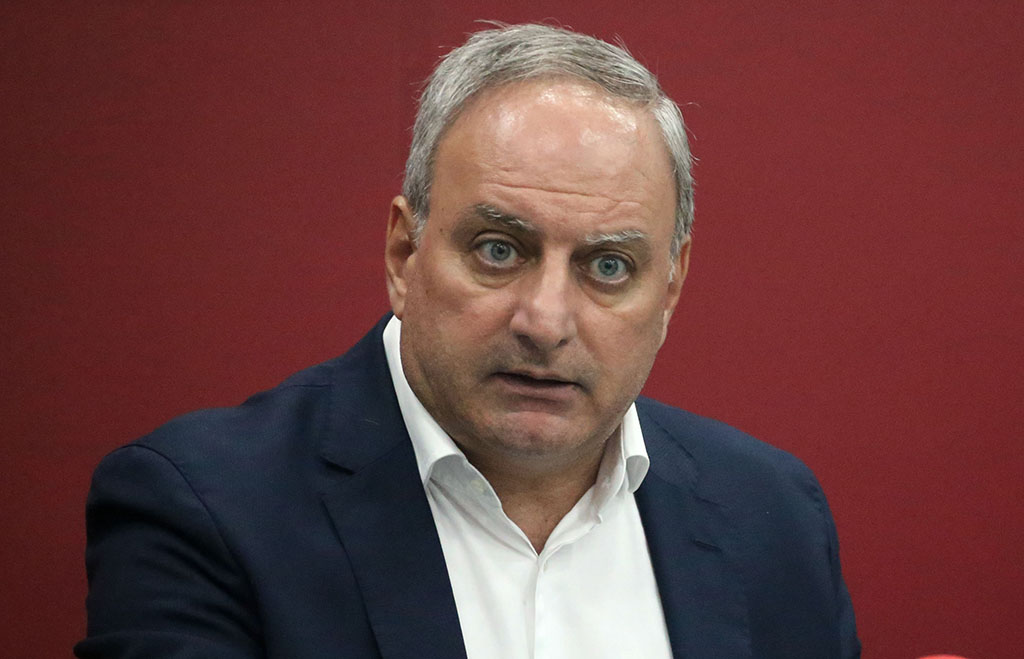
Two bills restricting and monitoring property purchases by third country nationals have been submitted to the House of Representatives, Akel leader Stefanos Stefanou said on Tuesday.
He told a press conference in Nicosia that his party’s legislative initiatives pursue a dual objective: to impose restrictions and oversight on the large-scale sale of Cypriot land to citizens of non-EU states, and to set measurable, transparent criteria for property acquisition.
According to Akel, data from the audit office and the department of lands and surveys confirm growing concern over “uncontrolled and massive” property sales. Nearly one in two contracts for the sale of Cypriot land, he said, now involves nationals of third countries.
The first bill seeks to end the ability of non-EU nationals, or companies linked to them, to purchase large areas of land. It would also introduce strict limits on the type and size of property that can be acquired, allowing the purchase of only one residence up to 200 square metres, one office up to 300 square metres, and one shop up to 200 square metres.
Companies with foreign interests would be fully barred from purchasing residential property.
A second bill would require full disclosure of the ultimate beneficial owner in every transaction, to prevent indirect acquisitions through European or Cypriot companies controlled by non-EU nationals.
The proposals also include a ban on property purchases in areas near critical infrastructure, such as ports, airports, coastal zones, and the buffer zone, as well as a full prohibition on the sale of forest or agricultural land.
Further clauses call for the removal of existing legal provisions that link the acquisition of property with “golden visas” or Cypriot citizenship and empower the director of the department of lands and surveys to reject contracts that fall outside the new rules.
Stefanou said the uncontrolled sale of land poses both security and economic risks, arguing that “in a semi-occupied country, selling land to non-EU nationals on such a scale endangers sovereignty and fuels the surge in housing prices”.
He said that extensive coastal areas in Larnaca and Limassol have already been purchased by non-EU nationals and companies, warning that these trends risk changing the character of local communities.
During the press conference, Stefanou criticised the government for failing to act despite earlier commitments.
He said Interior Minister Constantinos Ioannou had promised to bring forward similar proposals but “remained at the stage of announcements”.
He also linked the current property situation to the now-terminated “golden passport” scheme, which led to international criticism and EU scrutiny.
“After Cyprus was exposed globally over the citizenship scheme, the government is now bringing restrictions to Parliament only because it faces the risk of condemnation from the European Union,” he said.
Akel argues that passing the two bills could gradually stabilise the housing market, which shows signs of overheating, especially in urban areas.
The party says the proposed restrictions would help maintain access to affordable housing for Cypriots while protecting sensitive areas of national interest.
Stefanou added that Akel has also submitted separate proposals to reduce VAT from 19 per cent to 5 per cent on social housing, a measure that, according to the party, was previously misused to benefit wealthy investors under the former government.
Akel MP Aristos Damianou, who chairs the House interior committee, explained that the two bills amend seven separate laws and several related regulations, including those governing the transfer of immovable property.
He said discussions in the committee are expected to begin after the Epiphany holidays, when party positions and possible areas of consensus will be examined.
Other MPs from various parties have already submitted similar proposals, he added, and Akel is open to dialogue to reach common ground.
Also present at the press conference were central committee member Marina Hadjisavva, head of social policy Evanthia Savva, and Haris Polykarpou, head of Akel’s economic affairs department.
Stefanou concluded that the party’s initiative reflects its long-standing call for transparent, balanced property laws.
“Cyprus must remain in the hands of its people,” he said, stressing that all political forces will now be judged by their stance in Parliament.





Click here to change your cookie preferences