
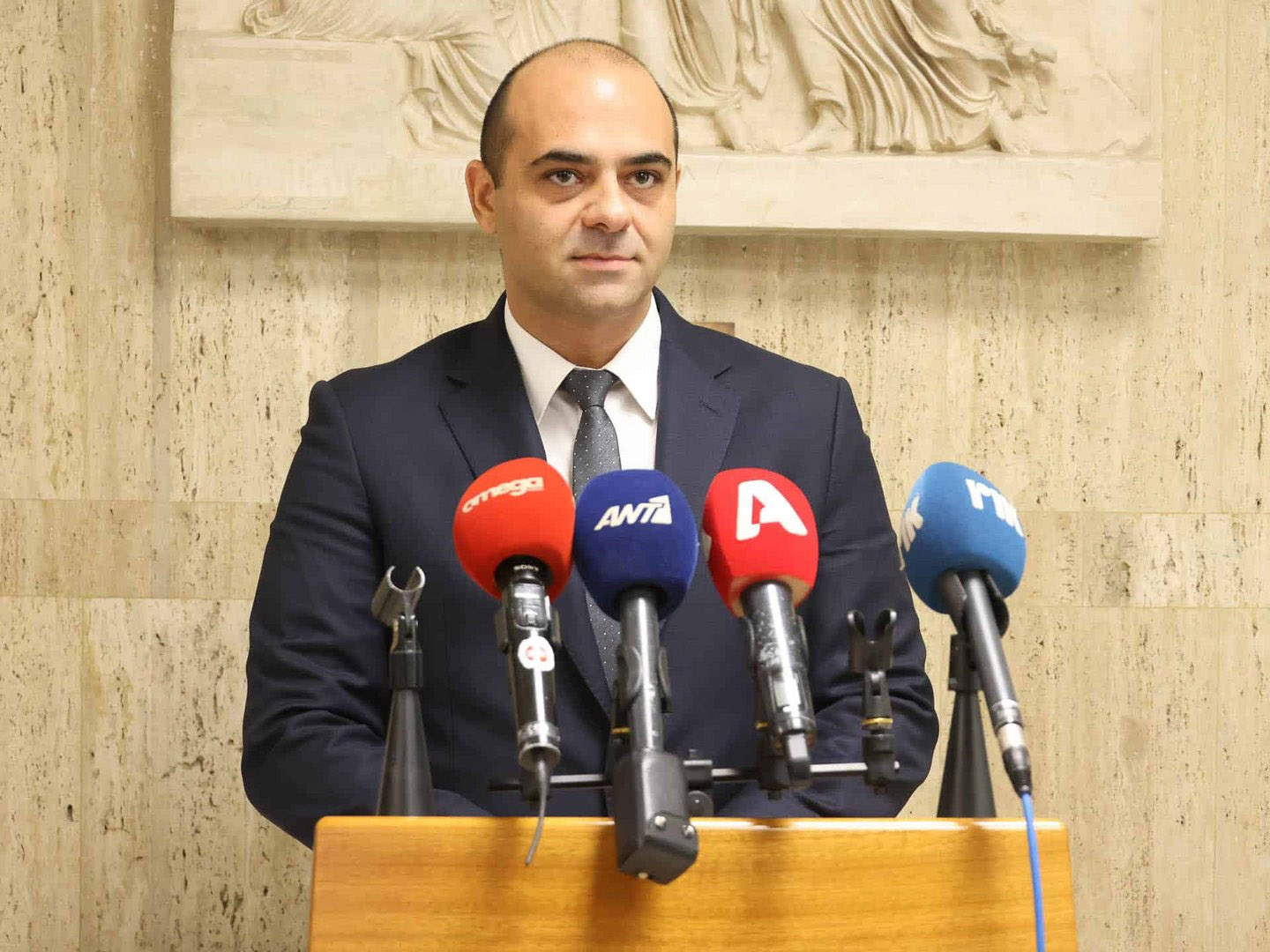
The minimum wage is set to be adjusted and “substantially improved” twice, Labour Minister Yiannis Panayiotou said before the House finance committee during its discussion of the ministry’s 2026 budget on Monday.
“As long as the economy is on a positive track, it cannot fail to benefit workers who earn less than others,” Panayoitou said.
He explained that the minimum wage legislation will be amended in two phases.
The first adjustment will be agreed in December and take effect in 2026. The second will be decided in December 2027 and implemented at the start of 2028.
When asked about the level of the revised minimum wage, Panayiotou declined to comment but said invitations would be sent to social partners on Monday.
On the calculation of the hourly equivalent of the minimum wage, he referred to a statement issued in December 2023, stressing that the framework on working hours would be more strictly regulated and that technological systems would be upgraded to improve monitoring of minimum wage compliance.
In the 2023 statement, the minister said his “ultimate goal” was to limit the exposure of vulnerable workers to poverty and social exclusion.
Earlier on Monday, Panayiotou had reiterated that the government’s action plan on renewing collective agreements and extending minimum wage coverage will be finalised in the first quarter of 2026 and submitted to the European Commission.
He emphasised that linking the cost-of-living allowance (CoLA) to the minimum wage would benefit low-income earners, while clarifying that CoLA adjustments would not determine minimum wage levels.
During the committee meeting, Disy MP Onoufrios Koullas criticised the newly signed CoLA agreement, noting that only half the population receives it and that all recipients receive the same percentage increase.
While acknowledging that the lack of a universal CoLA agreement is an issue, Panayiotou highlighted the government’s efforts to address it.
Responding to a question from Dipa MP Alekos Tryfonidis on incentives for employers to extend CoLA, Panayiotou said that tax incentives had been proposed by the finance ministry for employers who grant it.
In regards to the long-awaited pension reform, Panayiotou reiterated his initial statement made in 2024 that key pension reform bills would be submitted to parliament before the end of 2025.
“I believe that the discussion can realistically be completed and and voted on before the parliamentary elections,” he said in response to question from Disy MP Fotini Tsiridou.
The minister said that the aim was for the reform to be implemented from 2027.
He added that consultations with social partners were nearing completion, and that any agreed changes would be incorporated into the bills already under review by the attorney-general’s office.
Acknowledging that the timetable is “ambitious but achievable,” he said the aim was for committee discussions to begin immediately after the winter recess,
He expressed his disappointment that the long-discussed exemption from the 12 per cent penalty for early retirement at 63 was not approved, adding that this issue would be addressed in the pension reform.
“Unfortunately, it was not accepted, resulting in the continuation of the current situation,” he said, noting that the regulation was included in the framework of the pension reform.
The minister said the reform’s core goals include increasing low pensions from the social insurance fund – particularly for women – modernising the fund’s investment policy to include non-public investments and rationalising its long-term investment strategy.
The labour ministry’s budget for 2026 will total €951 million, an increase of €67 million.
Projects co-financed by the European Social Fund will add €29 million, bringing the total to €980 million. Of this, 21 per cent will be allocated to benefits, sponsorships, and plans; 3 per cent to personnel expenses; and 75 per cent to the general government contribution. Operating expenses remain at 1 per cent.
The budget is expected to rise to €994 million in 2027 and €1.052 billion in 2028.
Panayiotou said the ministry has already achieved significant milestones, including reaching the 80 per cent full-employment target – initially set for 2030 – by 2025, and keeping unemployment below 5 per cent. He said it is not expected to exceed 4.6 per cent in 2025.






Click here to change your cookie preferences