
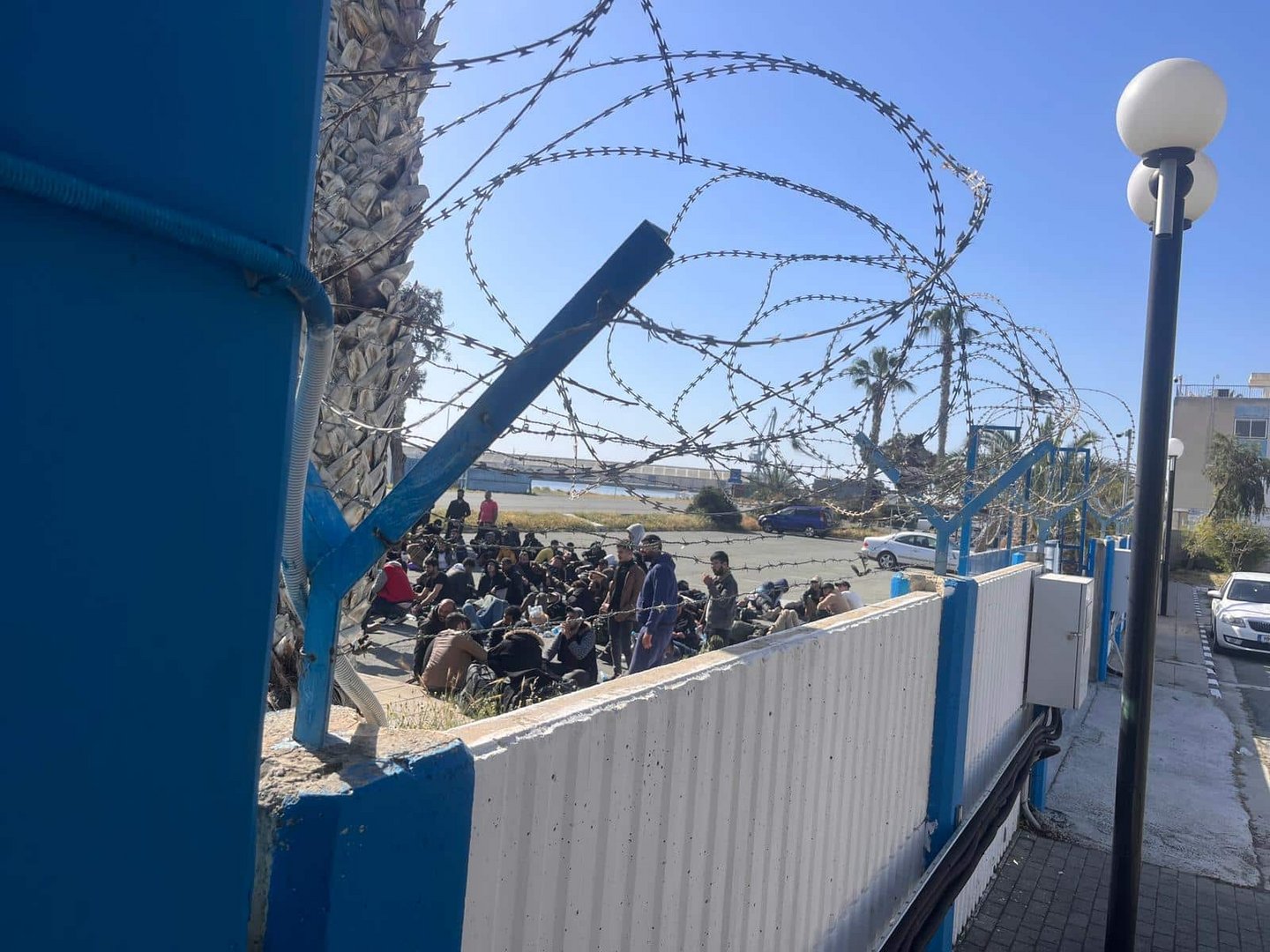
Following the passage of a new bill on Thursday, migrants granted asylum in Cyprus will soon be at risk of losing their international protection status if they commit crimes, making it easier for the government to deport them.
The bill amends the existing refugee law and sets out technical provisions linked to the establishment of the deputy ministry of migration in summer 2024, whose responsibilities were previously handled by the interior ministry.
Under the changes, migrants who have been granted international protection – meaning asylum – may have their status revoked and be deported if they engage in criminal acts. However, the specific offences that could trigger revocation have not been clearly defined.
The deputy ministry of migration said it could not provide a list of qualifying crimes, as each case would be “examined on a case-by-case basis, in light of the pertinent case law.”
As a result, revocation could apply to offences ranging from serious crimes such as murder or rape to illegal employment or repeated theft.
“It depends on the circumstances of the case, for example whether the offence has been committed repeatedly,” the ministry said.
Thursday’s amendments aim to align Cyprus with EU Directive 2011/95/EU, which defines common standards for asylum procedures and qualifications for international protection.
The deputy ministry told the Cyprus Mail that individuals who lose their protection status also lose the right to remain in the Republic.
Asked whether the changes imply automatic deportation for protected migrants who commit crimes, the ministry stressed this was not the case, noting that affected individuals retain the right to appeal.
“If they challenge the revocation in court, a final judgment must be issued before they definitively lose the right to remain,” the ministry said.
For this reason, it insisted the amendments do not introduce an automatic deportation system for migrants with international protection who commit crimes.
The decision to revoke protection status will rest either with the Deputy Minister of Migration, Nicholas Ioannides, or the asylum service, the ministry added.
The bill passed with 27 votes in favour and 15 against, opposed by AKEL, the Greens, Edek MP Kostis Efstathiou, and Volt MP Alexandra Attalides. It will come into force once signed by President Nikos Christodoulides.
Attalides told the Cyprus Mail on Friday that she disagreed with the amendments, primarily because responsibility would now fall to the deputy ministry of migration.
“I prefer that such decisions are issued by a court of law,” she said, emphasising that her objection was not tied to the current or future minister’s political views, but to the principle that ministers could use this authority according to their beliefs.
Disy welcomed the bill’s approval on Friday, calling it “a necessary tool for managing migration and ensuring the safety of citizens.” The party supported allowing revocation of refugee or subsidiary protection status for third-country nationals who commit serious crimes, saying it favours “strict management of immigration.”
According to data published in February 2025 by the United Nations Office for the Coordination of Humanitarian Affairs (OCHA), around 23,300 people have been granted international protection in Cyprus from 2002 to the end of 2024.
Of these, approximately 18,700 received subsidiary protection and 4,600 refugee status.
Cyprus is also home to some 24,00 refugees from Ukraine who benefit from temporary protection, a special category of international protection through which more than €39 million has been allocated during the first two years of the war for accommodation, language classes, psychological support, and legal services.
Cyprus passed its first refugee law in 2000, with further amendments regulating asylum procedures introduced in 2002.
UNHCR Cyprus highlights the principle of non-refoulement – the obligation not to return individuals to countries where they risk torture, inhumane or degrading treatment, or punishment.
The organisation stresses that this applies to all persons with international protection, including refugees, beneficiaries of subsidiary protection, and asylum seekers. Revocation of protection is allowed only under strict conditions “if this is considered necessary for reasons of public interest or public policy.”
“However, deportation of any person to a country where they would face such dangers is prohibited, even if deportation has been decided on grounds of public security or public order,” UNHCR notes.





Click here to change your cookie preferences