
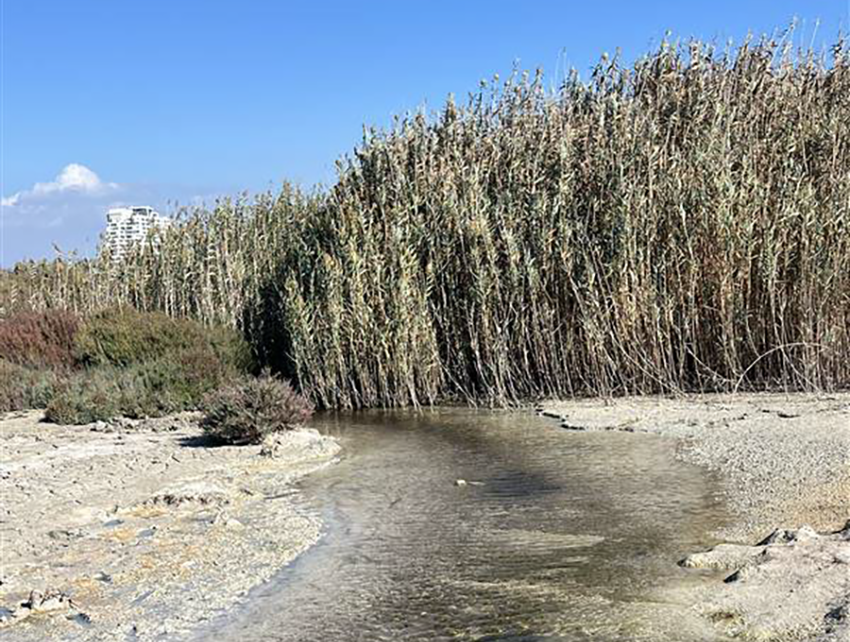
Alarm over serious ecological degradation at the Akrotiri wetlands was raised by BirdLife Cyprus on Tuesday, which urged an immediate official investigation into abnormal water inflows and pollution detected in the protected area.
During field inspections last month, the conservation group observed unusual stagnant, foul-smelling water accumulating amid drought conditions alongside stormwater drains overflowing despite no rainfall.
The organisation also documented multiple instances of water discharge from nearby construction sites into the wetland system, disrupting its natural hydrology.
Water quality tests added to the concern by revealing elevated E. coli levels at several British Bases sampling sites.
Together, these findings raise serious concerns about contaminated inflows threatening not only the ecosystem but public health as well.
Birdlife pointed out that the dramatic drop in the flamingo population to historically low levels clearly indicates worsening water quality in Larnaca salt lake.
In January only around 30 flamingos were recorded at the Akrotiri salt flats, the lowest count since systematic records began in 1992, compared to an average of about 3,800 flamingos annually.
BirdLife Cyprus has formally requested clarifications from the agriculture and interior ministers and filed a complaint with the environmental department regarding construction-related water discharges.
However, no substantive explanations or actions have been reported so far.
In its latest letter, the organisation warned that recent extensive tourist, residential and commercial developments, with increased soil sealing and drainage demands, have likely disrupted the hydrological balance of the catchment area and the salt lake.
It urged immediate investigation into the uncontrolled discharge of water from construction sites into stormwater systems and called on authorities to disclose permits for water abstraction and drainage, verify the legality of construction connections to stormwater, and enforce adherence to environmental conditions tied to these projects.
“The Akrotiri salt flats present a picture of serious environmental degradation that can no longer be ignored,” BirdLife Cyprus director Melpo Apostolidou said.
Apostolidou stressed that “the competent authorities have a responsibility to provide immediate answers and solutions and to ensure that all developments comply with the terms of their environmental permits.”
She called for “a full investigation, transparency and disclosure of data and immediate remedial measures.”
BirdLife Cyprus added that environmental organisations must be included in the new technical committee for the Akrotiri salt flats, ensuring decisions are based on science, transparency and active stakeholder involvement.




Click here to change your cookie preferences