
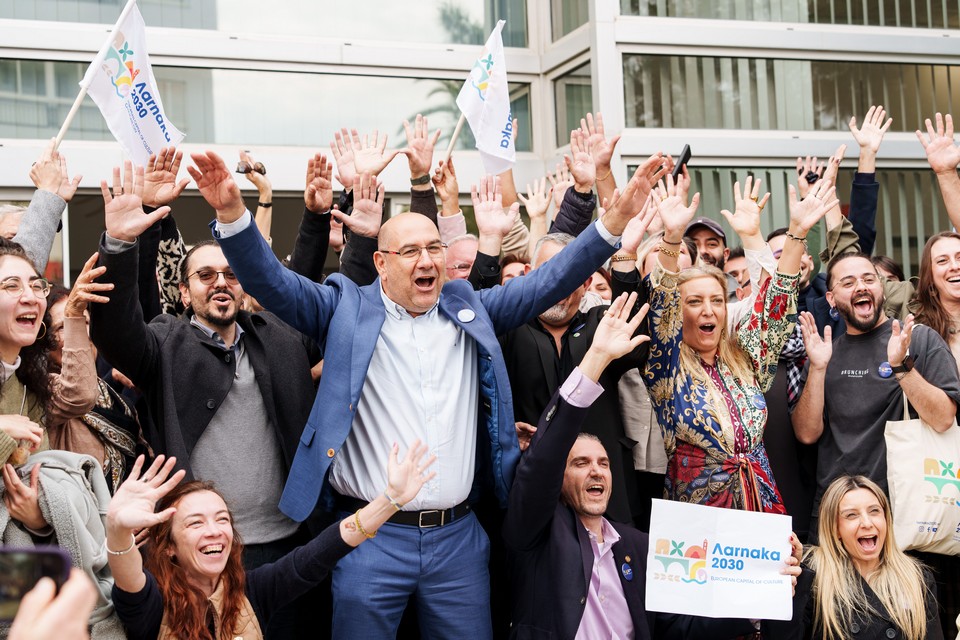
Larnaca was officially named European capital of culture for 2030 on Thursday, following a closely contested process against the rival city of Limassol.
The announcement concludes an arduous battle between the two cities, both of which spent years to meet the expectations of the European capital of culture institution.
Limassol expressed satisfaction at reaching the final round, while Larnaca municipality said it was thrilled with the outcome and heralded their vision of a city that is “inclusive, sustainable and accessible”.
The expert panel who made the final verdict consisted of ten members appointed by the European commission along with two Cypriot experts chosen by the deputy minister of culture, Vasiliki Kassianidou.
She expressed “warm thanks to the European committee for its cooperation as well as to the team of experts who have been working tirelessly to complete the competition and in these last days for the smooth work of the committee”.
Earlier this year, the deputy ministry approved an increase in financial aid for the programme from six million to ten million euros.
Larnaca shall now move into its preparation period, during which it will determine its artistic programme, create implementation teams and develop its financial and administrative framework for the next four years.
The city will also become eligible for the Melina Mercouri prize worth €1.5 million, granted once the European commission confirms that all commitments have been met.
“The institution of the European capital of culture remains one of the strongest cultural projects of the European union,” Kassianidou said.
“It highlights the role of cities as living engines of culture where tradition and innovation meet, where artistic expression becomes a lever for collective upliftment and social cohesion.”
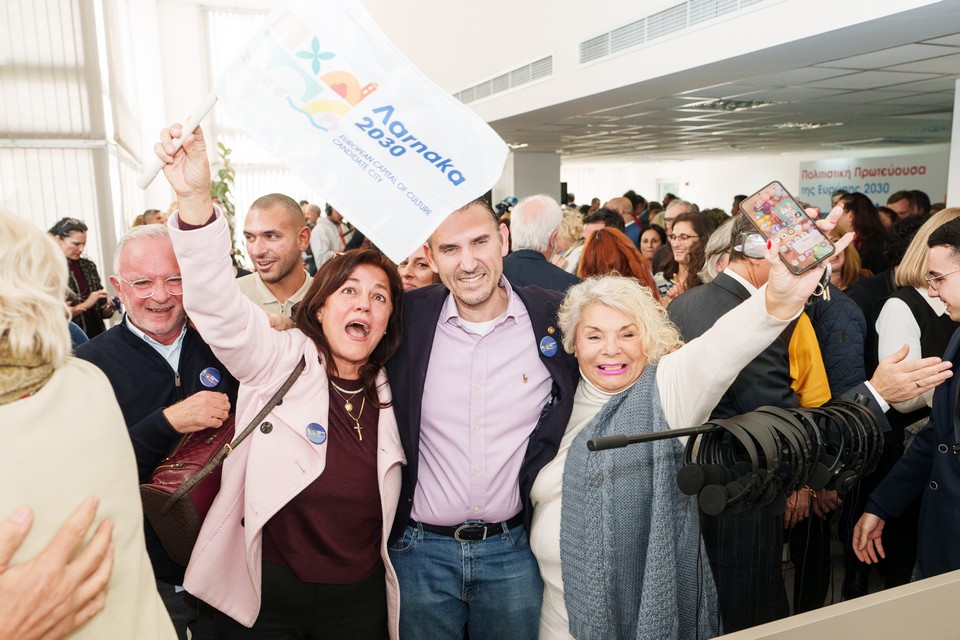
Nicosia municipality congratulated both Limassol and Larnaca for reaching the final stage of the competition, describing the achievement as recognition of their commitment to promoting European cultural creation and heritage.
It said it would continue to support the selected city and the wider significance of the institution for Cyprus and European cooperation.
The process formally began when the deputy ministry of culture issued a call for nominations on December 18, 2023.
By the 2024 deadline, Nicosia, Limassol, Larnaca, Kourion and Ayia Napa had all vied for the title.
In February 2025, the five candidates presented their visions in Nicosia, after which the shortlist of Larnaca and Limassol was announced.
The two cities then had until autumn 2025 to deliver their final files, followed by site visits, presentations and question-and-answer sessions held between December 8 and 11 ahead of Thursday’s final decision.
In the months leading up to the evaluation, Larnaca received backing from the deputy ministry of tourism, with minister Costas Koumis frequently employing the dais to promote the city.
Koumis had expressed the need for coordinated planning, effective cooperation between private ventures and the state, and a communication strategy that reinforces Larnaca’s unique character.
Larnaca’s tourism sector has grown steadily, reaching a 13.4 per cent share of national arrivals, and the city now offers close to 6,000 beds across 100 accommodation establishments.
Local cultural bodies also played a central role in amplifying the city’s bid. Larnaca 2030 shaped its candidacy under the theme “Common Ground” with Kelly Diapoulis as artistic director.
Initiatives such as Mahalart, the Larnaca Biodesign Festival and the Care Festival focused on residents, artists and institutions, while significant regeneration works underway in western Larnaca around the former refinery.
Limassol mounted an equally determined campaign, with mayor Yiannis Armeftis praising the dedication and enthusiasm of the Limassol 2030 team and the civic pride of the city’s residents.
Its bid, “Understory”, led by artistic director Eleana Alexandrou, prioritised participation and public access, mapping the needs and potential of the city’s cultural ecosystem.
Larnaca mayor Andreas Vyras described the city’s journey since launching its bid in 2022 as a “truly collective endeavour”.
He acknowledged that the competition with Limassol “had been fierce” but maintained confidence in Larnaca’s ability to offer “significant cultural value in return”.





Click here to change your cookie preferences