
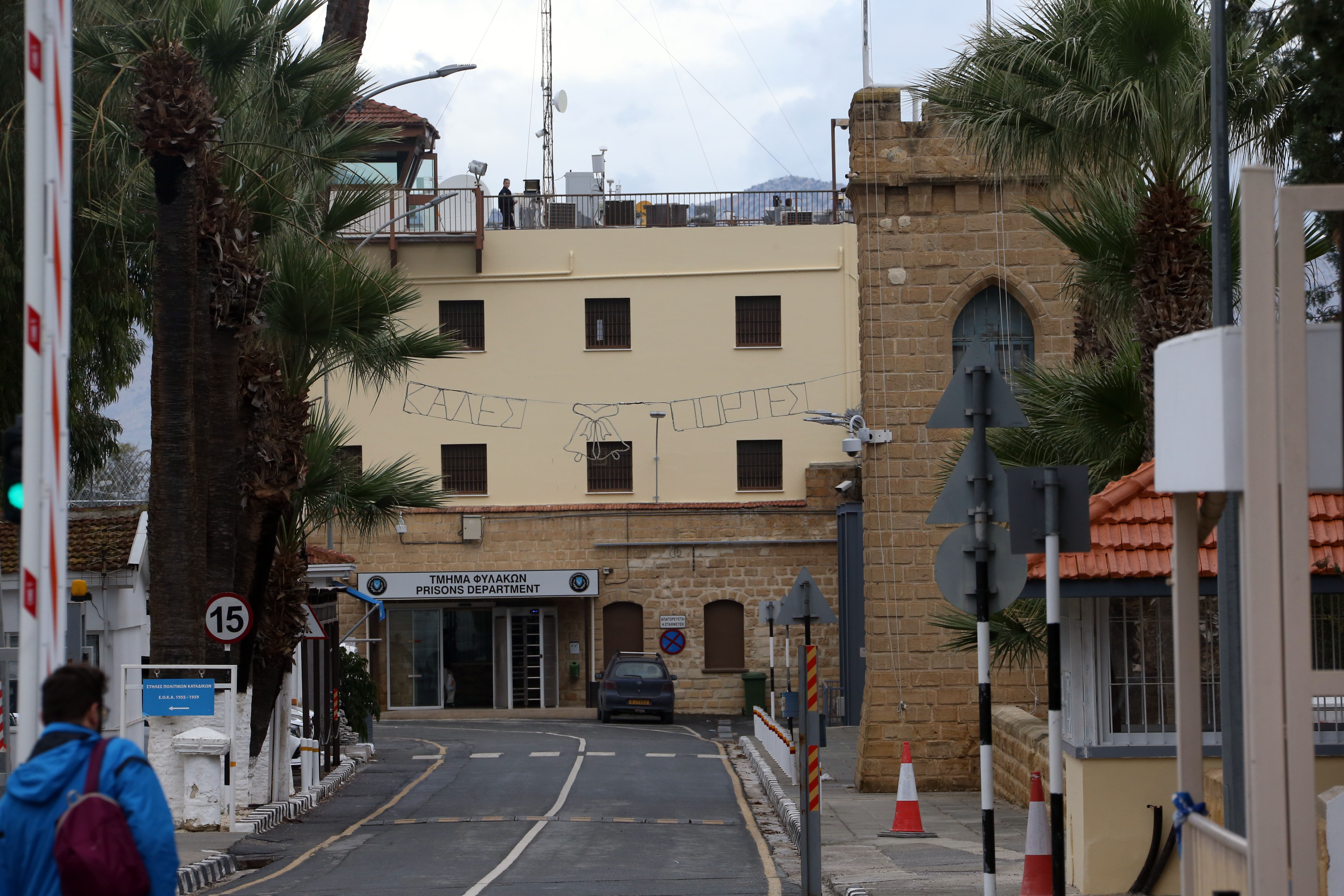
New Justice Minister Constantinos Fitiris on Thursday pledged immediate steps to address severe failings in the prison system, following a damning report by the European council.
The minister spent more than three hours at the central prisons, meeting management, staff and inmates, and inspecting cells and common areas.
Speaking after the visit, Fytiris said his aim was to gain “information on the ground” to form his own assessment of the system’s problems.
He said his priority was to ensure that those who serve time in detention “return to society in a better disposition”, adding that the government will “improve conditions and the quality of staff in prison”.
His visit coincided with the publication a report made by the European committee for the prevention of torture (CPT), which highlighted “grave concerns” over chronic staff shortages, prisoner violence and severe overcrowding.
The committee said the shortage of frontline officers had allowed organised groups of inmates “to dominate and impose informal punishments”, undermining safety and order.
It also reported “very poor” living conditions, with up to four prisoners sharing cells of less than six square metres, and some inmates forced to “urinate in bottles and, at times, defecate in bags” because staff were not available to unlock cells.
Fytiris acknowledged the scale of the staffing deficit, calling it one axis of the problems facing the system.
“There is indeed a shortage of personnel and one of the axes is training, staff recruitment, facilities and in general the prison system as a whole,” he said.
He promised to accelerate measures already under way.
“To be honest, I am not starting this effort, my role is to accelerate these actions so that all the required actions are completed as soon as possible.”
The minister said he had toured cells to see conditions firsthand.
He stressed that prison authorities must respect court decisions while upholding human rights and the standards of a proper penitentiary system.
The CPT report also drew attention to the detention of minors.
Fytiris said all issues would be recorded and prioritised, with human rights “one of the top priorities”.
On the speculated relocation of the central prisons, he said goals would be split into short, medium and long term.
“Now we are dealing with short-term issues. New prisons are an issue that requires a lot of time,” he said.
The visit came amid growing alarm from prison staff.
The branch of the trade union, Pasydy, responsible for prison guards, warned this week that conditions had “exceeded all limits of endurance and tolerance”, citing an “explosive security crisis” that threatened the lives of inmates and guards.
It said decades of neglect had left staff working in facilities that “do not meet even basic safety standards” and urged the construction of a new prison meeting European requirements.
Recent incidents have intensified scrutiny, including the murder of a 35-year-old inmate on Sunday and allegations from a prisoner who claimed he was repeatedly raped in August.
His lawyer accused prison authorities of delaying action, failing to protect him and attempting to cover up the assaults.
The ombudswoman later found the victim held in conditions she described as “inhumane and humiliating”.
Fytiris, who took office earlier this month, said his tenure as justice minister shall be a “period faced with significant challenges”.





Click here to change your cookie preferences