
What is ours is ours, and what is yours is ours too
A lot has happened in the past month I have been away, and I was struck by how, on at least three fronts, issues I have previously explored in this column have again made headlines.
On the home front, I wrote on November 2 arguing in detail why Finance Minister Makis Keravnos needed to be replaced. The recent government reshuffle not only left him in his post, but instead gave the boot to Energy Minister George Papanastasiou, with whom Keravnos had disagreed on the Great Sea Interconnector (GSI) issue. What a sad state of affairs, and how badly this reflects on President Christodoulides. Apart from the president’s obvious motivation to use the reshuffle to boost his electoral standing, the removal of Papanastasiou – possibly the only minister with relevant background in his portfolio – marks a victory for vested interests over efforts to push for a more holistic solution to our energy problems.
While I have never been a fan of Christodoulides, I was willing to give him a chance, hoping he would prove me wrong. I fear that hope now seems unfounded.
Turning to the European front, I wrote on two occasions – on March 15 and on October 13 – arguing for the need to proceed with using the Russian frozen funds for Ukraine’s war effort. In those articles I suggested that the best way to proceed, while safeguarding international law, was through the ECtHR route, drawing on how Cyprus secured compensation from Turkey for property losses. While the EU has finally decided to proceed with a scheme to utilise these funds (to be put for approval at the European Council on December 18), I have my doubts as to how the proposed plan avoids contravening established legal precedent.
Let us hope that the collective wisdom of EU politicians does not disappoint, as the outcome of this decision will determine whether Ukraine can continue its resistance to Russia – or whether it will be forced to capitulate to the latest US-led peace plan.
On the world stage, the latest development that resonates with themes I have written about inevitably involves Donald Trump. (No, my absence did not cure my Trump derangement syndrome!) Last week saw the publication of the US National Security Strategy (NSS), where US policy is no longer speculative but set out in a formal strategy document. In it, Trump’s hostility toward Europe is unmistakable: Europe, it claims, faces “civilisational erasure” within the next two decades, calling for the US to “cultivate resistance” within the continent to “Europe’s current trajectory”. If the NSS was not clear enough, Trump followed up with an interview with Dasha Burns in Politico, where his disdain for Europe was plain to see.
I have long argued that Europe has been left with very difficult choices since Trump came to power. On May 4 , I wrote that Europe may eventually have to choose between the US and China, while more recently on September 28 I expounded on the differences between the traditional West and the US. The Financial Times, in a recent article by Gideon Rachman, put it more eloquently: “The Trump administration view of ‘western civilisation’ is based on race, Christianity and nationalism. The European version is a liberal view founded on democracy, human rights and the rule of law, including international law.”
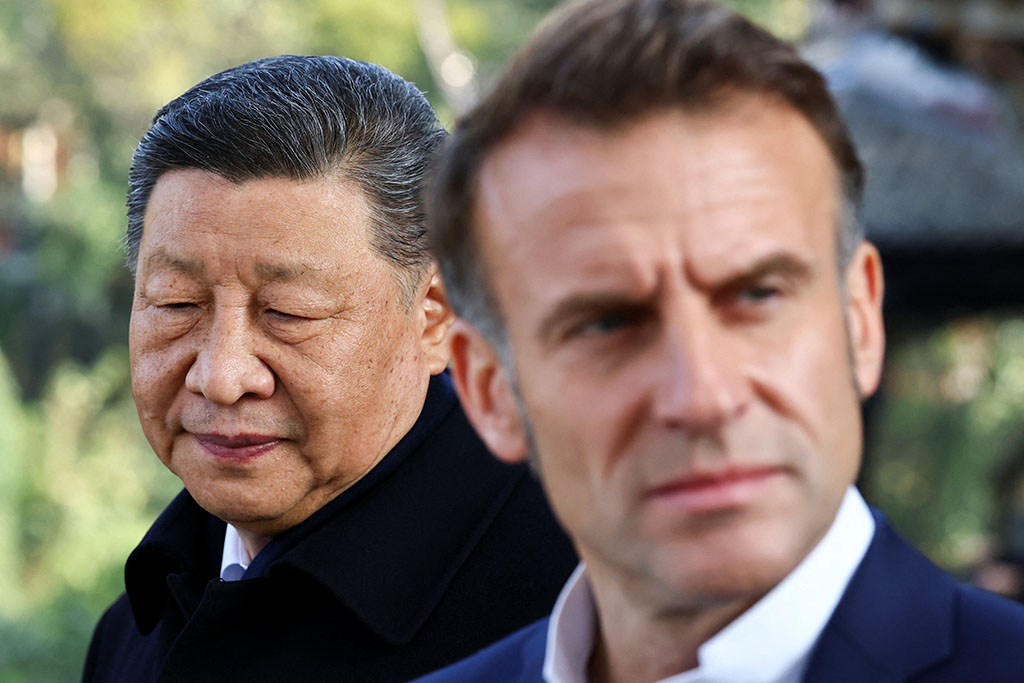
The issue now takes on renewed urgency, as the future of Europe – and indeed the entire liberal world – is at stake. Perhaps this was on French President Emmanuel Macron’s mind during his recent state visit to China. Even though no concrete agreements were reached, that is hardly surprising given the delicate nature of a European pivot away from the US toward China.
Equally unsurprising was Russia’s gleeful reaction to the NSS document. Russia’s long-term strategy – like that of the Soviet Union before it – has always been to drive a wedge between Europe and the US and to destabilise Nato in the process. But Russia should be careful what it wishes for. For all the talk in the US of returning to the Monroe Doctrine (the doctrine established by US President James Monroe in 1823 – whose portrait hangs in Trump’s Oval Office – asserting that European powers should no longer interfere in the Western Hemisphere (The Americas), and the US would not interfere in Europe, Trump’s intentions go much further.
It may suit Trump for now to sell Ukraine out to Russia (perhaps in exchange for Greenland), but his long-term vision for Europe is to turn it into a US protectorate. Hence the active intervention in European politics to boost like-minded parties. This, for Trump, is the new Monroe Doctrine: what is ours is ours, and what is yours is ours too.
The NSS did not appear by accident, nor are Trump’s public comments on Europe a mere whim. They are part of a carefully orchestrated campaign to influence European electorates toward a Trumpian worldview. The key instrument is fear over immigration – an issue genuinely on many people’s minds. There is no doubt that mass immigration has created valid worries among many Europeans, and acknowledging this does not make one racist. Economic migration has long been tightly controlled – I remember how, in my time, working in the UK was almost impossible because economic migration was, and still is, heavily supervised. However, the rules on asylum seekers are lax, poorly enforced, and systematically abused by both economic migrants and their money-seeking enablers.
Something drastic clearly needs to be done. In that spirit, the joint article by the UK and Danish prime ministers in The Guardian on December 9 (“We must protect our borders to defend our democracies. Here’s how”) is a step in the right direction. There are ways to address these problems without succumbing to the siren calls of Donald Trump. I have warned before about the dangers of jumping on the Trump bandwagon simply because he appears aligned with you on one particular issue.
A litany of people believed in him, only to be thrown under the bus when they expressed even the slightest disagreement. The latest example – believe it or not – is Trump’s once-number-one supporter, Marjorie Taylor Greene. The US congresswoman – who has since resigned – has undergone a major transformation, and her recent interviews are jaw-dropping in how dramatically her view on Trump has shifted.
Be careful, then, who you choose to befriend. Europe, you have been warned.





Click here to change your cookie preferences