
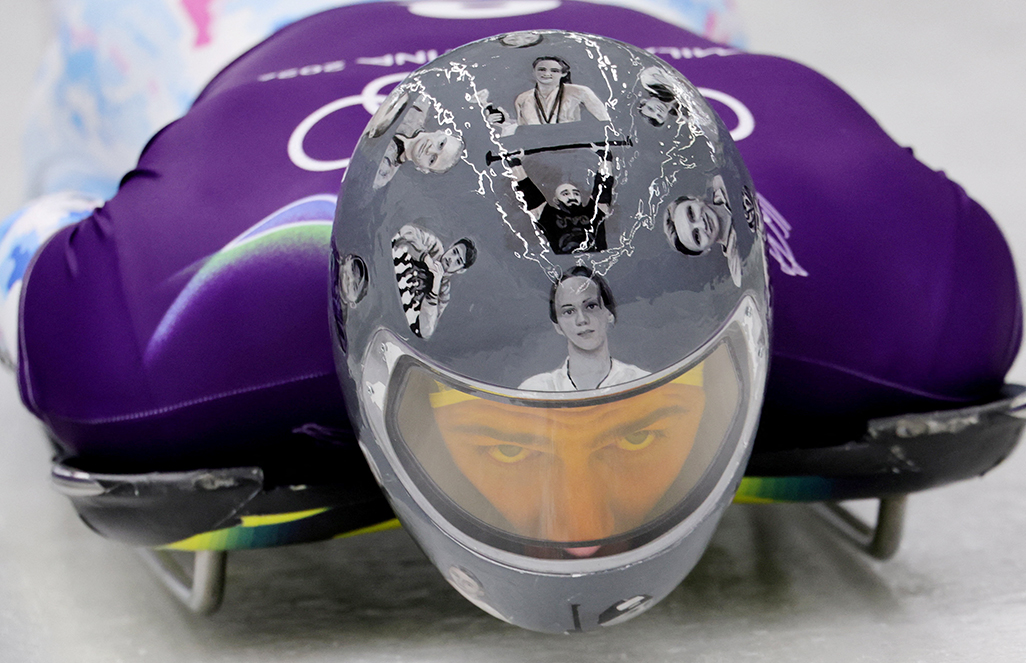
Ukrainian Vladyslav Heraskevych cannot wear his “helmet of remembrance” honouring those killed in the war with Russia at the Winter Olympics skeleton competition but may use a black armband, the International Olympic Committee ruled on Tuesday.
The 27-year-old, who displayed a “No War in Ukraine” sign at Beijing 2022 days before Russia’s invasion, had been training in Italy with headgear showing images of slain Ukrainian athletes.
He condemned the IOC decision as unfair.
The Olympic body said the athlete had worn the helmet in training and had expressed his views on social media but could not do so once the competition starts on Thursday in order to keep politics off the fields of play.
“We tried to address his desire with compassion,” IOC spokespserson Mark Adams told a news conference, explaining the decision. “The IOC fully understands the desire of athletes to remember friends who lost their lives in that conflict.”
Rule 50.2 of the Olympic Charter states that no form of demonstration or political, religious or racial issues can be raised on fields of play or podiums though athletes can express themselves freely elsewhere.
“The Games need to be separated from all types of interference so that all athletes can concentrate on their performances … We need to keep that specific moment as pure as we can for the competition,” Adams added.
“This helmet contravenes the … guidelines but … we will make an exception to allow him to wear a black armband during that competition to make that commemoration … We feel this is a good compromise of the situation.”
UKRAINIAN UNHAPPY AT DECISION
Heraskevych was not happy that the Ukrainian Olympic Committee’s request on his behalf was denied.
“It’s unfair treatment,” he told Reuters.
“I don’t see any violation of rule 50. It is not discrimination propaganda, it is not political propaganda.”
More skeleton training was scheduled for later on Tuesday with competition starting on Thursday.
The helmet depicts various athletes killed in the war – some of whom were Heraskevych’s friends.
They include teenage weightlifter Alina Perehudova, boxer Pavlo Ischenko, ice hockey player Oleksiy Loginov, actor and athlete Ivan Kononenko, diver and coach Mykyta Kozubenko, shooter Oleksiy Habarov and dancer Daria Kurdel.
Following Moscow’s invasion, athletes from Russia and its ally Belarus were largely barred from international sport but the IOC has since backed their gradual return under strict conditions.
Moscow and Minsk say sport should remain separate from international conflicts.




Click here to change your cookie preferences