
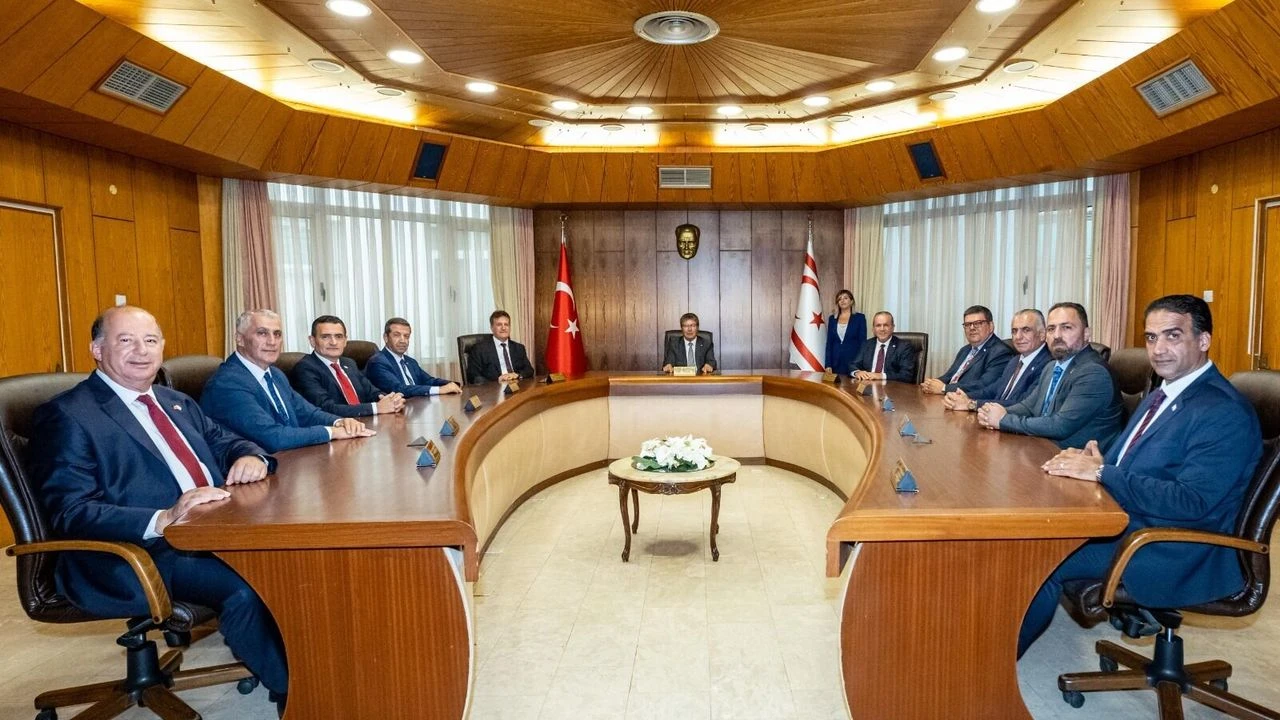
The Turkish Cypriot cabinet was called to an emergency meeting over the ongoing conflict involving the United States, Israel, and Iran by ‘prime minister’ Unal Ustel on Saturday.
Ustel’s office said that the meeting will see members “comprehensively assess the effects of the war and interventions launched against Iran on national and regional security balances, and the potential economic and energy-related risks”.
Additionally, they will “address the latest developments in the region, potential security risks, and measures to be taken in the event of possible scenarios”.
The meeting will begin at 7.30pm.
Meanwhile, the north’s ‘foreign ministry’ said it is “closely and carefully” monitoring the situation, in coordination with Turkey’s foreign ministry.
It recommended that Turkish Cypriots in Iran and the wider region “remain in safe areas and closely follow the statements and warnings issued by local authorities”.
Additionally, a “service line”, operated 24 hours a day by the ‘ministry’, can be called at (+90) 533 851 40 06, while also saying that Turkish Cypriots in the region can, in the event of an emergency, contact Turkish Cypriot representative offices in Abu Dhabi, Doha, Muscat, Kuwait, and Manama.
On this matter, it said that 37 Turkish Cypriots who had travelled to Dubai on holiday had contacted the ‘ministry’, that they are “in good health”, and that “there is no cause for concern regarding their safety”.
It is expected that they will return to Cyprus once suspended flights resume.
Earlier in the day, Turkish Cypriot leader Tufan Erhurman said that “the region, the world, and civilisation urgently need an order where rules and international law prevail, and stability and lasting peace are established through diplomacy and on a legal basis”.
It is possible that Turkish Cypriot involvement in developments could be deeper than is typical in other regional conflicts, with American officials having visited Ercan (Tymbou) airport earlier this month to inspect its capacity for “evacuations” in the event of a regional conflict.




Click here to change your cookie preferences