
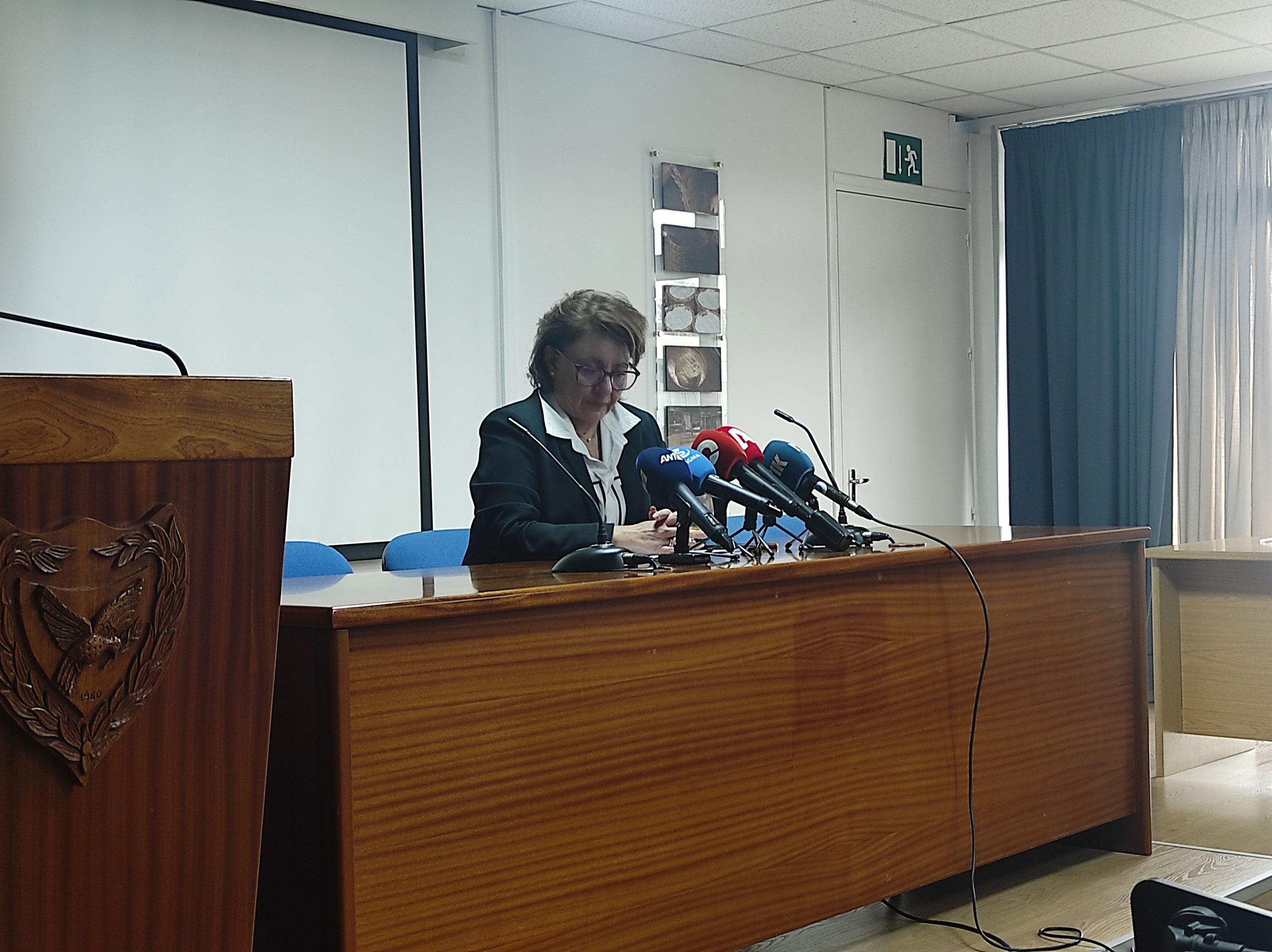
There are no new cases of foot-and-mouth disease, while culling and sampling are continuing without obstruction, veterinary services spokeswoman Sotiria Georgiadou said.
Georgiadou said the second round of vaccinations is expected to begin at the end of March, while vaccines for pigs are due to arrive in Cyprus by late March or early April. She also noted that the culling of cattle in Geri has been completed.
She clarified that current sampling does not detect antibodies from vaccinated animals.
“We have no new cases. Sampling and tracing are continuing without obstruction from anyone,” she said.
Culling operations are progressing alongside preparations for new sites. “We are proceeding with the excavation of trenches at the site where culling will take place in Dali, while culling continues in Dromolaxia and Oroklini, with some minor disruptions due to weather conditions,” she added.
On tracing and sampling, Georgiadou stressed that authorities are working retrospectively to identify possible earlier cases. “We must carry out tracing to identify potential cases from movements that took place before the first case, that is before February, going back even to early January,” she said.
She added that epidemiological investigations are being carried out both within 3km and 10km zones, as well as across the rest of the country.
“So far, fortunately, we have no additional cases beyond the 42 already reported,” she said.
Explaining the testing process, Georgiadou said current analyses detect either the virus itself or antibodies resulting from natural infection.
“When we take samples, we do not detect antibodies from vaccinated animals, even if they were vaccinated days earlier,” she clarified.
“The aim now is to identify where the virus is circulating and where it has passed and left antibodies, so that we can contain and limit the infection.”
Referring to incidents where sampling was obstructed, she said arrangements would be made to ensure testing is carried out in all areas. Addressing concerns about misinformation among farmers, she urged them to rely on official sources.
“Everyone hears various things, but they must listen to the competent authority,” she said. “If they have questions, they can come to us and we will gladly explain. Our offices are open at all times and provincial office phone lines operate 24 hours a day.”
“We are here to work together, to guide and to help. We are not here to argue,” she added.
On cases where farmers refuse sampling, Georgiadou said the matter is being handled by authorities in Nicosia district, warning that administrative fines may be imposed under health legislation if procedures are obstructed.
Responding to claims of false test results, she explained that two different tests are used: a rapid test detecting antibodies and a PCR test detecting both the virus and antibodies.
“One result may be negative and the other positive, or both positive. Therefore, if one test is positive, the unit is considered positive,” she said. On concerns about possible spread to other cities, she said authorities hope to prevent this but warned the risk remains if measures are not followed. “The disease exists. The measures are in place, but if they are not implemented, there is a risk,” she said.
She added that once the second vaccination round is completed, further sampling will be required to confirm that immunity comes from the vaccine rather than infection.
She also referred to discussions with Turkish Cypriot authorities, saying they had been urged to take similar action. “They were asked to seriously consider that they must act as we do. We are waiting to see their response,” she said. She added that vaccines had been supplied to help reduce the viral load in the north, thereby lowering the risk for the rest of the island.
“We are standing by farmers to guide them in taking the right steps that will improve both their own production and overall production in the country,” she said. “We are here to help them recover in any way possible.





Click here to change your cookie preferences