
Iran will attack Israel’s power plants and those supplying U.S. bases across the Gulf region if President Donald Trump carries out his threat to “obliterate” Iran’s power network, the Revolutionary Guards said in a statement on Monday.
They appeared to retract earlier threats to attack desalination plants, which are crucial for providing drinking water in Gulf countries.
“The lying … U.S. president has claimed that the Revolutionary Guards intends to attack the water desalination plants and cause hardship to the people of the countries in the region,” said the statement, shared on state media.
“We are determined to respond to any threat at the same level as it creates in terms of deterrence … If you hit electricity, we hit electricity.”
On Saturday, Trump warned that Iranian power plants would be destroyed if Tehran failed to “fully open” the Strait of Hormuz to all shipping within 48 hours. Trump set a deadline of around 7:44 p.m. EDT (2344 GMT) on Monday.
ENERGY CRISIS ‘EXCEEDS THE LAST THREE SHOCKS COMBINED’
Iranian attacks have effectively closed the Strait of Hormuz, which carries a fifth of global oil and liquefied natural gas.
Fatih Birol, executive director of the International Energy Agency, said the resulting energy crisis was worse than the two oil shocks of the 1970s and the gas shortage connected to Russia’s 2022 invasion of Ukraine put together.
Iran’s Defence Council escalated its threatened retaliation on Monday, saying Tehran would cut all Gulf routes by laying sea mines if Trump followed through, state media reported.
“Any attempt to attack Iran’s coasts or islands will cause all access routes in the Gulf … to be mined with various types of sea mines, including floating mines that can be released from the coast,” its statement read.
“In this case, the entire Gulf will practically be in a situation similar to the Strait of Hormuz for a long time …”
Iranian media on Sunday quoted the country’s representative to the International Maritime Organisation as saying the strait remains open to all shipping except vessels linked to “Iran’s enemies”. Indian and Pakistani vessels are among those that have reportedly been allowed safe passage.
More than 2,000 people have been killed in the war the U.S. and Israel launched on February 28, which has upended markets, driven up fuel costs, fuelled global inflation fears and convulsed the postwar Western alliance.
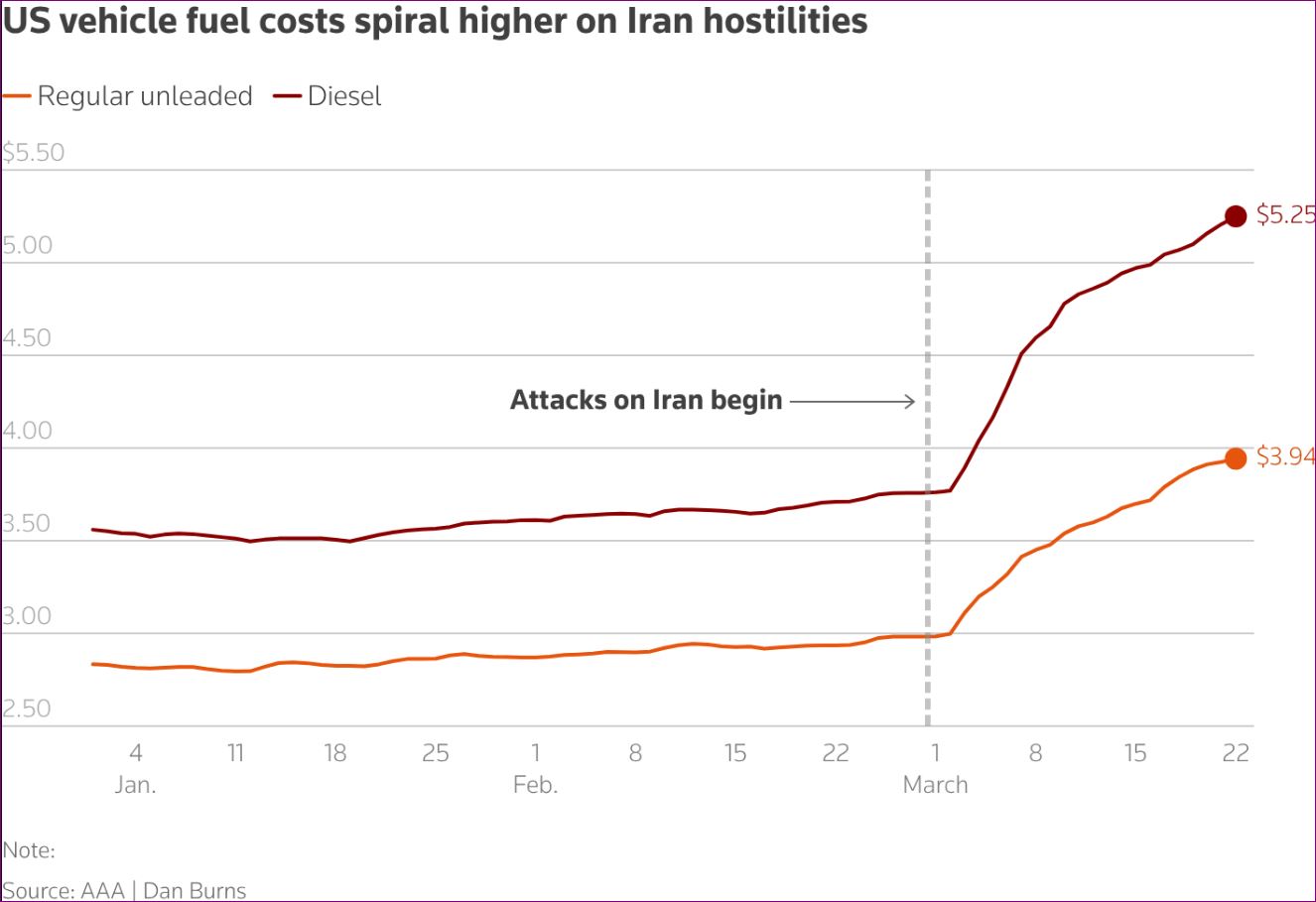
The threat of strikes on Gulf electricity grids on Sunday raised fears of mass disruption to desalination for drinking water, and further unsettled oil markets LCOc1, with prices opening choppy in Asian trading. O/R
U.N. High Commissioner for Human Rights Volker Turk has said that attacks on indispensable civilian infrastructure do not meet the strict definition of military objectives, and amount to war crimes.
After more than three weeks of heavy U.S. and Israeli bombardment that officials say has sharply reduced Iran’s missile capabilities, Tehran has continued to demonstrate its ability to strike back.
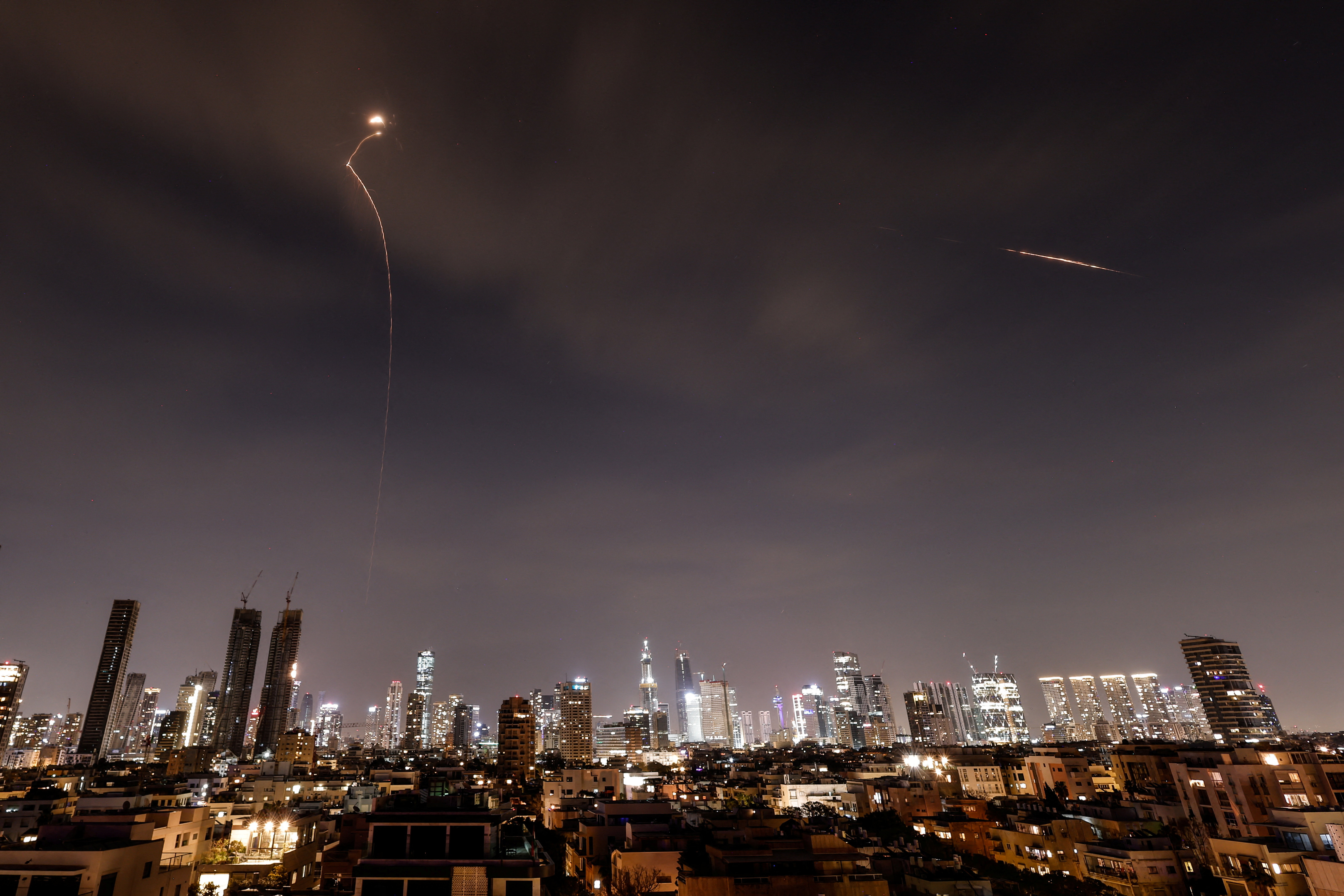
Air raid sirens sounded across parts of northern and central Israel, including in Tel Aviv, and the occupied West Bank overnight on Sunday, warning of incoming missiles from Iran.
FEARS OVER DRINKING WATER
The Israeli military said early on Monday it had begun its latest broad wave of strikes on infrastructure in Tehran.
The Washington Post reported that Iranian Supreme Leader Mojtaba Khamenei was “injured, isolated, and not responding to messages directed to him”. An Iranian official said this month that Khamenei was lightly injured.
Khamenei succeeded his father Ayatollah Ali Khamenei, who was killed in the first wave of strikes on February 28, but has not been seen in public since his appointment.
Iranian news agencies said six people had been killed and 43 injured in strikes on residential buildings in the western city of Khorramabad.
The Iranian Red Crescent posted a video of a residential building in affluent northern Tehran with most of its facade destroyed and emergency staff rescuing someone on a stretcher from the upper floors.
Across the Gulf, the Saudi defence ministry said two ballistic missiles had been launched towards Riyadh. One was intercepted while the other fell in an uninhabited area.
Trump’s threat to strike Iran’s power network came less than a day after he signalled the United States might be considering winding down the conflict, even as U.S. Marines and heavy landing craft head to the region.
While attacks on electricity could hurt Iran, they could be catastrophic for its Gulf neighbours, which consume around five times as much power per capita.
Electricity makes their gleaming desert cities habitable, in part by powering the desalination plants that produce 100% of the water consumed in Bahrain and Qatar. Such plants use seawater to meet more than 80% of drinking water needs in the United Arab Emirates, and 50% of the water supply in Saudi Arabia.
The war has been taking place alongside a confrontation on a separate front between Israel and Lebanon’s Hezbollah militia, backed by Iran.
Israel said on Sunday its troops had raided a number of Hezbollah sites in southern Lebanon.
Military spokesperson Brigadier General Effie Defrin told reporters Israel expects “weeks more of fighting against Iran and Hezbollah”.
Hezbollah said it had attacked several border areas in northern Israel. Israeli emergency services said one person was killed in a kibbutz near the border. Israel later said it was checking whether the death had been caused by Israeli firing.





Click here to change your cookie preferences