
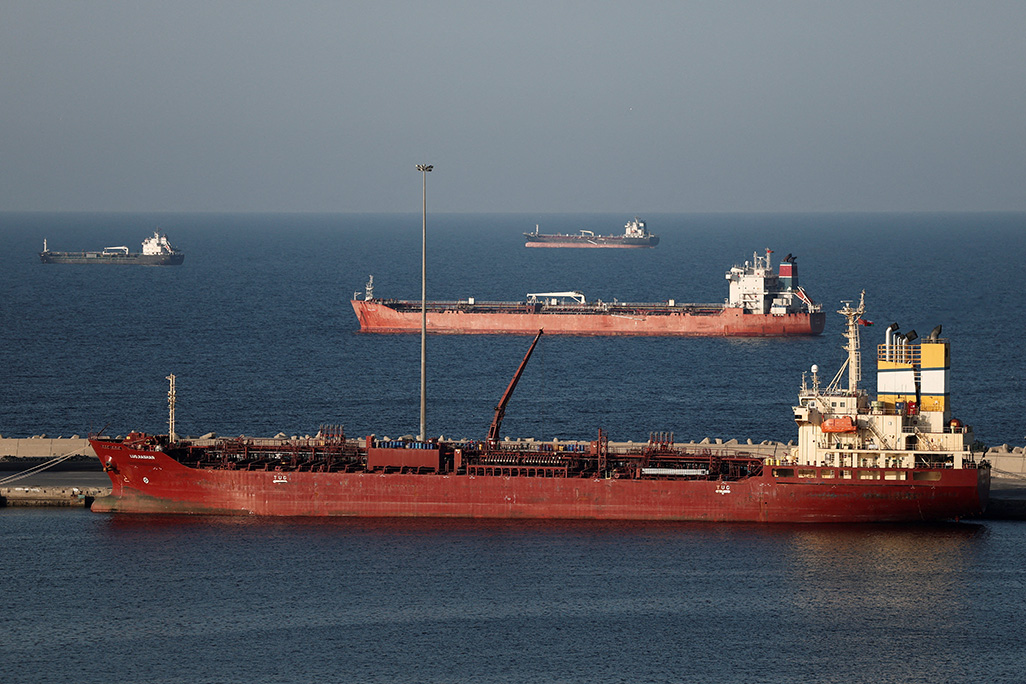
A renewed threat to commercial shipping in the Red Sea and Gulf of Aden is adding to wider fears over a deepening global energy and trade shock, with separate assessments by EOS Risk Group and DNV pointing to mounting risks for maritime transport, fuel costs and the broader world economy.
According to a report by EOS Risk Group cited by newmoney, the maritime security firm has raised its baseline threat level for the southern Red Sea and Gulf of Aden to high (4/5) from March 30, warning that Houthi attacks on commercial vessels are increasingly likely to resume within the coming week.
The northern Red Sea, in addition, remains at significant risk (3/5).
The reassessment followed a series of developments that have further destabilised the regional security picture.
On March 27, the Houthis said they were prepared to support Iran militarily under specific conditions, including if any country joined the US-Israeli campaign against Iran, if the Red Sea was used for hostile action against Muslim countries, or if the conflict continued to escalate.
Attempted attacks against Israel began on March 28, although there was no immediate announcement of attacks on merchant shipping. EOS said the likelihood of renewed strikes on commercial vessels has increased.
The report said ships considered most exposed, based on previous patterns, include vessels linked to Israel through flag, ownership or business ties, ships that have called at Israeli ports, and vessels with US or UK links through flag or ownership.
EOS also warned that commercial traffic through the Strait of Hormuz remains at high risk, with merchant shipping in the area likely to face targeting within the next week.
It said 26 commercial ships have been attacked or nearly attacked in the Persian Gulf and Gulf of Oman since February 28.
Further concern was raised by an incident on March 31, when an unidentified object struck a tanker 17 nautical miles north of Doha, damaging the vessel above the waterline but causing no injuries to the crew.
A separate analysis by Norwegian classification society DNV suggests the security deterioration at sea is now feeding into a much broader global energy and economic crisis.
DNV’s Energy Transition Outlook research group said the war in Iran has triggered one of the largest energy shocks in modern history, with the effective closure of the Strait of Hormuz in early March severely disrupting the flow of oil and gas through one of the world’s most strategically important maritime corridors.
The strait normally handles about 20 per cent of global energy trade, much of it destined for Asia. DNV said the disruption has hit countries with limited reserves and weaker economic resilience particularly hard, while pushing up costs and uncertainty for energy-importing economies more broadly.
It added that the lack of immediate replacement supply is making the shock more severe. Major Gulf producers have also been affected by the conflict, while other suppliers lack the spare capacity to fill the gap quickly.
Russia is attempting to absorb part of the shortfall, DNV said, but not on a scale sufficient to stabilise global markets.
The result, according to the analysis, is likely to be a prolonged period of high oil and gas prices, feeding inflation and weighing on growth, while putting extra strain on sectors ranging from shipping and aviation to agriculture and food supply chains.
For shipping, the implications are particularly severe. DNV said thousands of ships are either stranded in the Persian Gulf or forced to reroute around Africa, sharply increasing voyage times and pushing up fuel, freight and insurance costs across global trade.
At the same time, the crisis is also reinforcing the strategic case for a faster shift away from fossil fuels. DNV said repeated disruptions to oil and gas supply are likely to accelerate investment in renewables, electricity storage and nuclear power, as governments and companies seek greater energy self-sufficiency.
Even if the conflict eases, DNV said confidence in energy markets will take far longer to recover, meaning that regional risk in the Persian Gulf is likely to remain elevated for some time.
Taken together, the two assessments point to the same conclusion, the conflict is no longer only a regional security crisis.
It is becoming a broader threat to commercial shipping, energy markets, inflation and global trade, while at the same time hastening the push towards a less fossil fuel-dependent energy system.





Click here to change your cookie preferences