
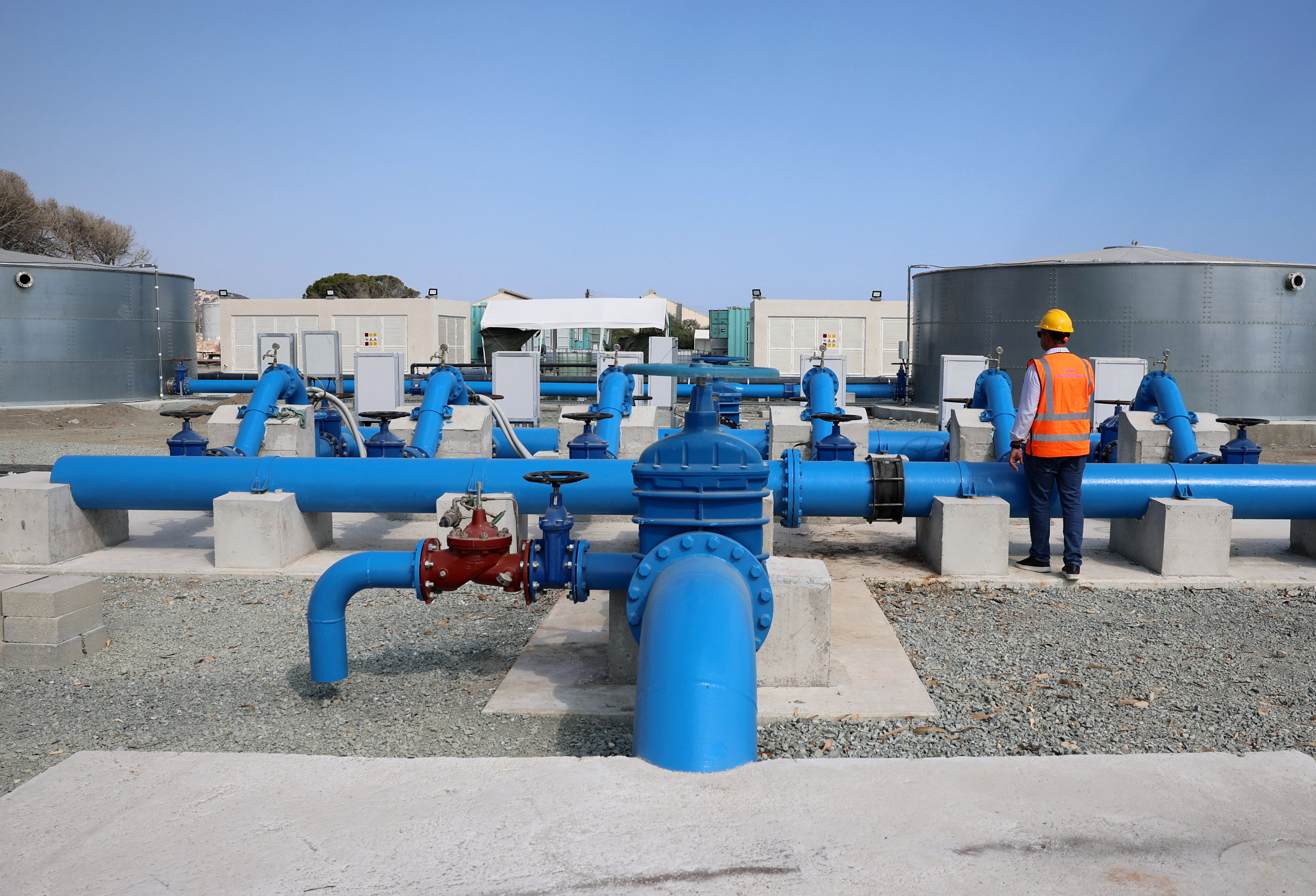
A mobile desalination plant in Limassol port has been put into full operation, the agriculture ministry said on Sunday, underlining that the planning for the permanent solution of Cyprus’ water shortage continues uninterrupted.
The unit can output 10,000 cubic metres per day, and had previously operated on a trial basis where all necessary technical and quality controls were carried out. “After they were successfully completed, it is now operating normally and produces water that is added to the water balance,” the ministry said.
The unit is the third to be fully operational following one in Moni, which can produce 15,000 cubic metres a day that starting operating in July 2025, and one in Kissonerga that can produce 12,000 cubic metres a day that has also been operable since July.
“With the addition of these new units, the number of desalination plants increases from five, which were in operation in previous years, to eight today, while with the inclusion of the unit in Garyllis it is expected to rise to nine,” the ministry added.
The Garyllis unit, with a capacity of 10,000 cubic metres a day, is expected to be put into operation in the coming weeks, after the delays that arose due to geopolitical developments in the region.
The ministry’s planning for 2026-2027 includes the completion of the mobile desalination plant in Episkopi, with a capacity of 15,000 cubic metres a day, the mobile unit in Vasiliko, with a capacity of 20,000, one Mazotos, with a capacity of 40,000 and the floating unit in Yermasoyia, with a capacity of 20,000 cubic metres a day.
The completion of all these projects is expected to add a total daily capacity of 157,000 cubic metres. In combination with the daily capacity of the five existing permanent units, which amounts to 235,000 cubic metres, the total capacity of the system will increase by 66 per cent.
The five permanent desalination plants until 2023 covered about 70 per cent of water supply needs served by the state.
This percentage approached 75 per cent in 2025, while now it has reached 80 per cent.
With the projects in progress, it is estimated that at the beginning of 2027 this percentage will approach 100, with the aim of fully covering the water supply needs from desalinated plants and maintaining reserves in the dams for irrigation needs.
“Water awareness and the end of overconsumption, which is another perennial problem, also play a key role in this planning,” the ministry said.





Click here to change your cookie preferences