
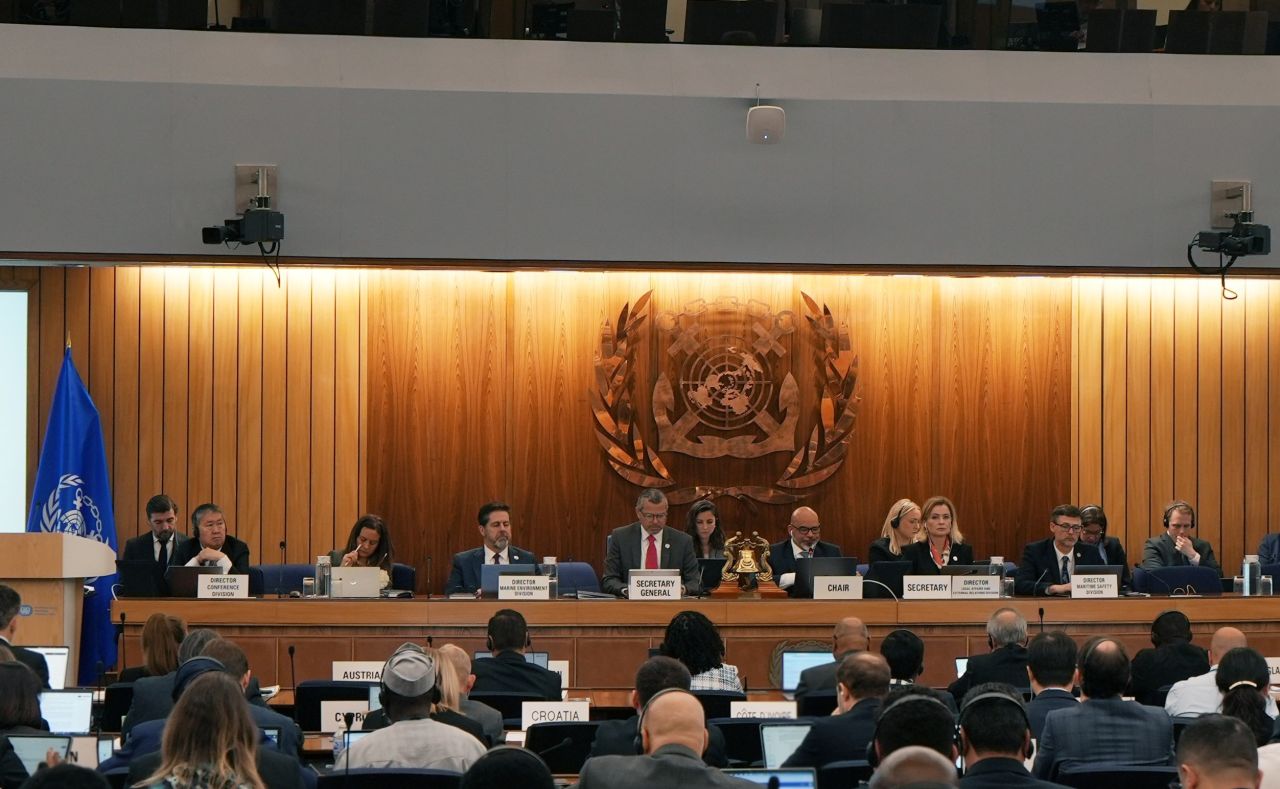
After weeks of destruction and distress, there is no military solution to the current conflict in the Middle East, UN secretary-general spokesman Stephane Dujarric said.
While no agreement was reached at talks hosted by Pakistan between the United States and the Islamic Republic of Iran in Islamabad, he said the discussions themselves “underscored the seriousness of their engagement and constituted a positive and meaningful step toward renewed dialogue.”
Given the deeply rooted differences, he added, “an agreement cannot be reached overnight,” and the secretary-general called for the talks to continue constructively so that an agreement can eventually be reached.
At the same time, he made clear that the ceasefire “must absolutely be preserved” and that “all violations must cease.”
He also thanked the continued efforts of the mediators, Pakistan, which hosted the talks, as well as Saudi Arabia, Egypt and Turkey, and called on the international community to support those efforts.
At the same time, the secretary-general stressed that all parties to the conflict must respect freedom of navigation, including in the Strait of Hormuz, in line with international law.
He warned that some 20,000 seafarers have been caught up in the conflict and are currently stranded on ships, facing increasing hardships daily.
Moreover, disruptions in maritime trade through the Strait of Hormuz have already had a direct effect well beyond the immediate region, he said, increasing global economic fragility and insecurity across many sectors.
He added that the disruption of fertiliser and its inputs was further exacerbating food insecurity for millions of vulnerable people around the world, adding to the rising cost of living through the impact on fuel, transportation and supply chains.
Against that backdrop, Dujarric said the Executive Director of the UN Office for Project Services (UNOPS), Jorge Moreira da Silva, working with UN Trade and Development (UNCTAD), the International Maritime Organisation (IMO) and the International Chamber of Commerce, continues to engage extensively with relevant parties to design and operationalise the mechanism announced for the Strait of Hormuz on March 27.
For his part, he said, the secretary-general’s personal envoy, Jean Arnault, remains actively engaged in the region, consulting closely with key stakeholders and continuing his outreach in support of a comprehensive and durable agreement.



Click here to change your cookie preferences