
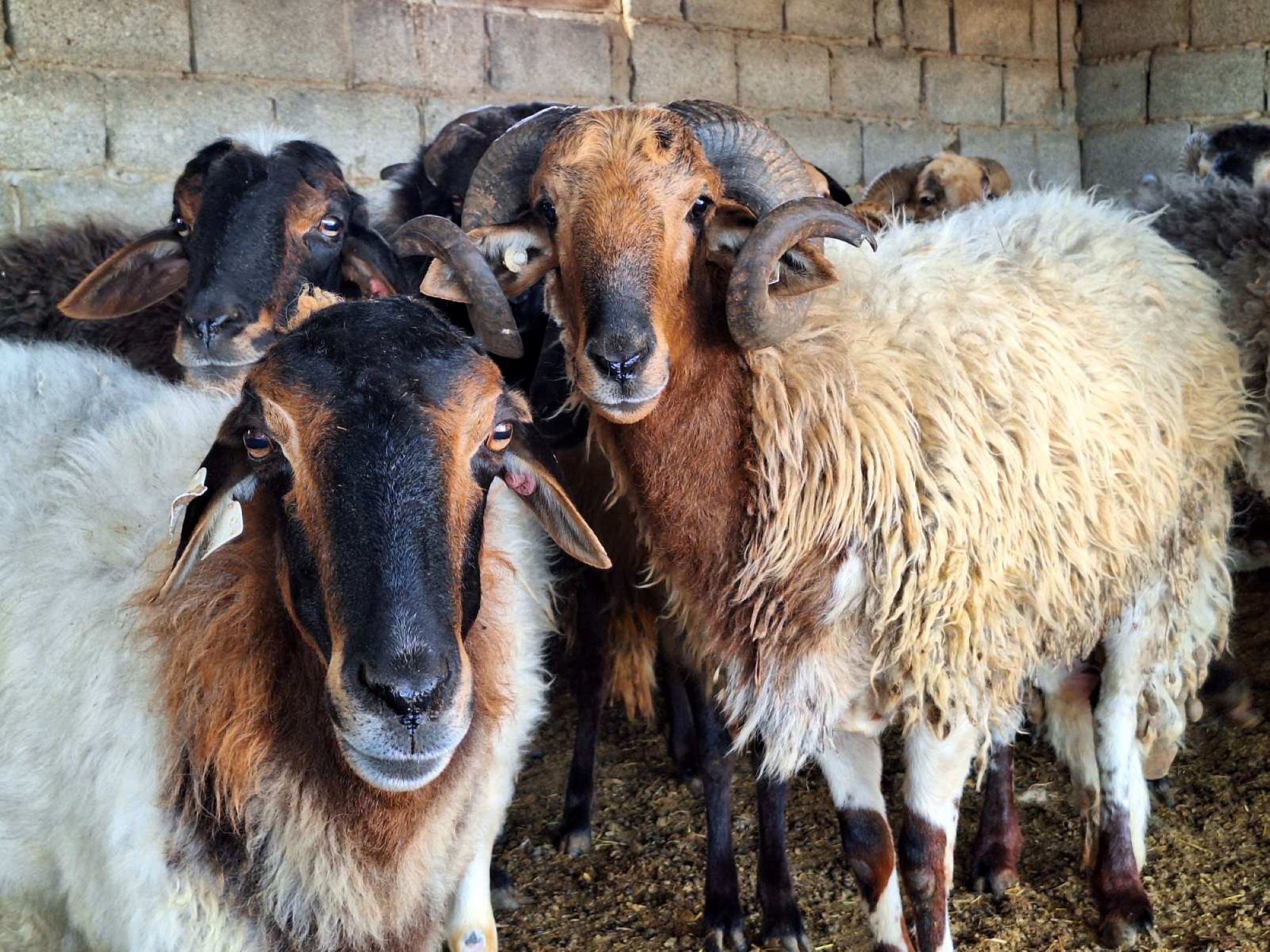
Decisions regarding rare breeds affected by foot and mouth disease (FMD), specifically fat-tailed sheep and red cattle, will be taken by the end of the week, Veterinary Services spokesperson Sotiria Georgiadou said on Tuesday.
She said the decisions would be reached in cooperation with the agriculture ministry based on legislation, scientific documentation, their genetic purity, as well as how many of them there are compared to the breed’s total population.
Authorities will weigh the risks and the potential benefits of any decision to preserve or cull the animals, she said.
“Our primary priority in everything we do is to contain the spread of the disease,” she said, noting that culling, vaccination and restrictive measures are all part of this effort.
Around 350 adult animals, approximately 33 red cattle and 320 fat tail sheep, are currently infected.
These are indigenous breeds developed over time through evolution and crossbreeding that exist in relatively small numbers on the island, with red cattle mainly found in the Paphos district and fat-tailed sheep in various areas.
Regarding the practical management of the situation, she said multiple scenarios are under consideration. “It is possible that only animals that test positive will be culled. It is also possible that all animals will be culled. Total culling cannot be ruled out,” she said, adding that the number of infected units has reached 105.
In emotional remarks to Cyprus Mail, breeder Constantinos Mouskou said he fears his flock of 600 fat tail sheep could be destroyed by the Veterinary Services.
“My family has been breeding the same flock for six generations,” he said. “During the 1974 war, this flock was trapped in Lysi and my father saved it. Since then, I have kept it exactly as he brought it back,” he added.
Andreas Christodoulou, representative of the breeders’ association for native cattle and a breeder of the red cattle himself told the Cyprus Mail that “this breed is different from all others”, the issue is also deeply personal as he described the cattle as more than livestock, recalling how he grew up alongside them.
Experts warn that even if some animals are spared, the remaining population may not be sufficient to ensure the breed’s survival.
Ouranios Tzamaloukas, associate professor at the Cyprus University of Technology, told the Cyprus Mail the number of animals likely to remain would not be enough for the fat-tailed sheep breed to continue.
Under EU Regulations, member states may request exemptions from blanket culling for breeds of high genetic or cultural value, provided disease control is not compromised.




Click here to change your cookie preferences