
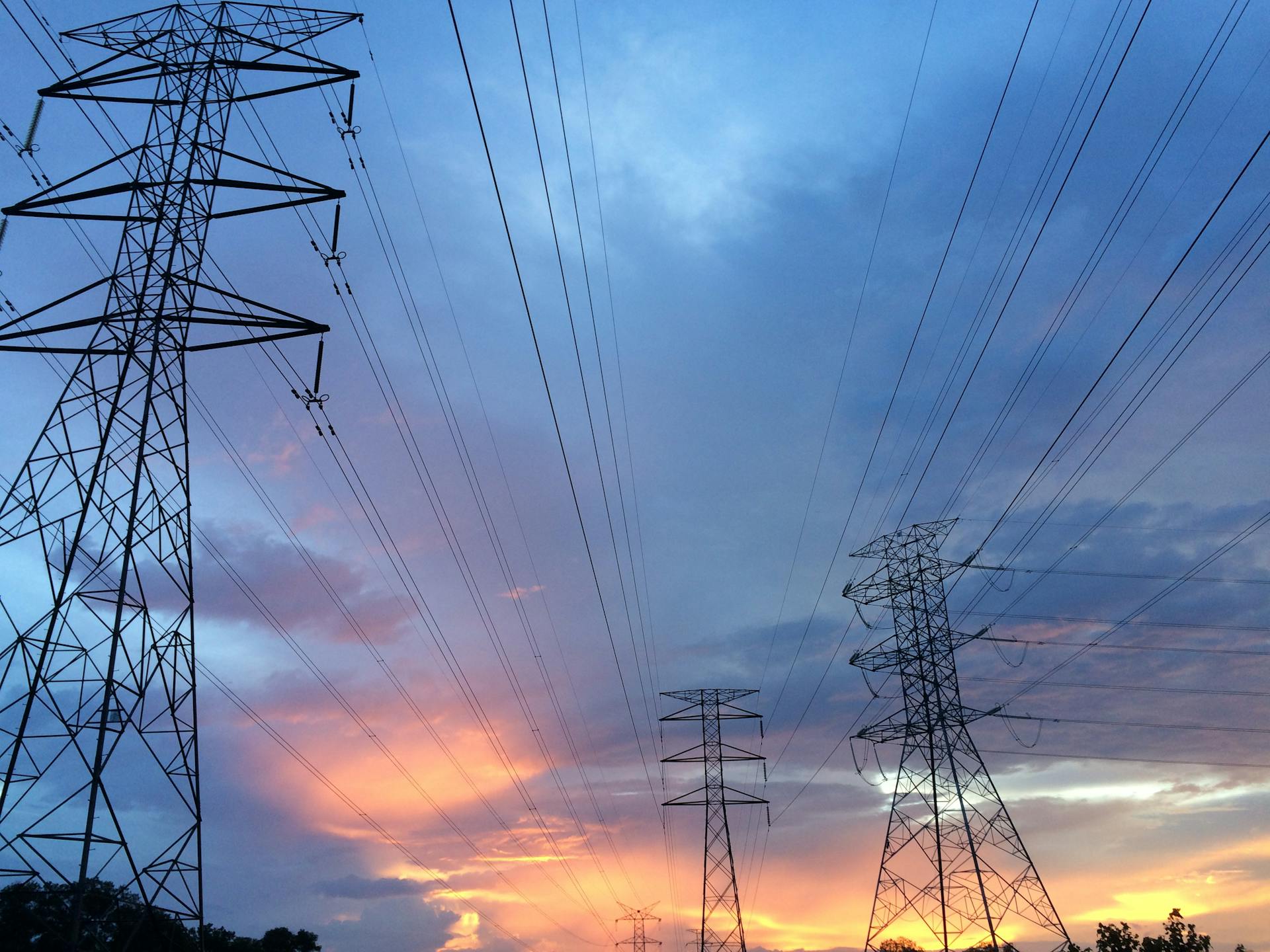
Eurobank executives used their participation at the 11th Delphi Economic Forum to outline the challenges of the energy transition, as well as the need for a new productive model for the Greek economy.
“The energy transition is a necessary and irreversible process,” said Head of Structured Finance Spyros Venetsianos.
However, he warned that “you cannot have at the same time a fast transition, low prices and full market liberalisation”.
He explained that energy policy must balance conflicting goals, including accelerating the transition, maintaining competitive pricing and opening markets to greater private sector participation.
Venetsianos also stressed that these objectives are not fully compatible and require clear priorities and trade-offs.
He pointed to structural challenges, including grid adequacy, slow network development, complex licensing procedures, legal risks and geographical constraints.
Moreover, he highlighted that solar energy production costs in Saudi Arabia are at least 60 per cent lower than in Greece, with less than 20 per cent of this gap attributed to higher solar radiation, underlining the role of infrastructure and scale.
He said this has led to asymmetrical growth across technologies, with photovoltaics expanding faster than wind energy due to fewer constraints.
“The imbalances we see today are not a problem, they are a symptom of a transition evolving faster than infrastructure,” Venetsianos stated.
The Eurobank executive added that limited storage capacity and regulatory delays are increasing market pressures, with excess supply sometimes leading to zero or negative prices and curtailments, while peak demand drives sharp increases.
“The challenge is not the direction, it is the speed and the ability to implement,” he said.
Eurobank, he noted, has maintained a long-standing role in financing the energy market, supporting its evolution and continuing to back projects that enhance sustainability and resilience.
At the same forum, Eurobank chairman of the board George Zanias said the Greek economy requires a deeper shift towards productive and technology-driven investments.
He acknowledged strong recent performance, including rapid growth, falling unemployment and fiscal surpluses, which have contributed to reducing public debt.
He said banks have played a crucial role, with credit expansion averaging 10.9 per cent annually between 2022 and 2025, one of the highest rates in the eurozone.
However, he warned that the structure of demand for financing is critical.
“The importance lies in the type of demand,” Zanias said, explaining that a sustainable model depends on where capital is directed.
Furthermore, he stated that consumption accounts for 69 per cent of GDP in Greece compared to 52 per cent in the eurozone, highlighting an imbalance.
He stressed that investment levels remain insufficient, with investment at 16.9 per cent of GDP in 2025 versus 21 per cent in the eurozone.
In addition, Zanias called for a focus on capital-intensive and technology-based investments, which improve productivity and support wage growth.
He also pointed out that much financing demand still comes from lower value-added sectors such as tourism and real estate, while greenfield foreign direct investment remains limited.
Zanias further stated that structural reforms are essential to improve competitiveness, including in justice, land use, urban planning, digital transformation and regulatory enforcement.
He concluded by saying that addressing these issues would help eliminate long-standing inefficiencies and support a sustainable long-term growth model.





Click here to change your cookie preferences