
Turkey and the ‘administration’ in the north have revived plans for major energy projects linking the two, including an electricity interconnection and a proposed natural gas pipeline.
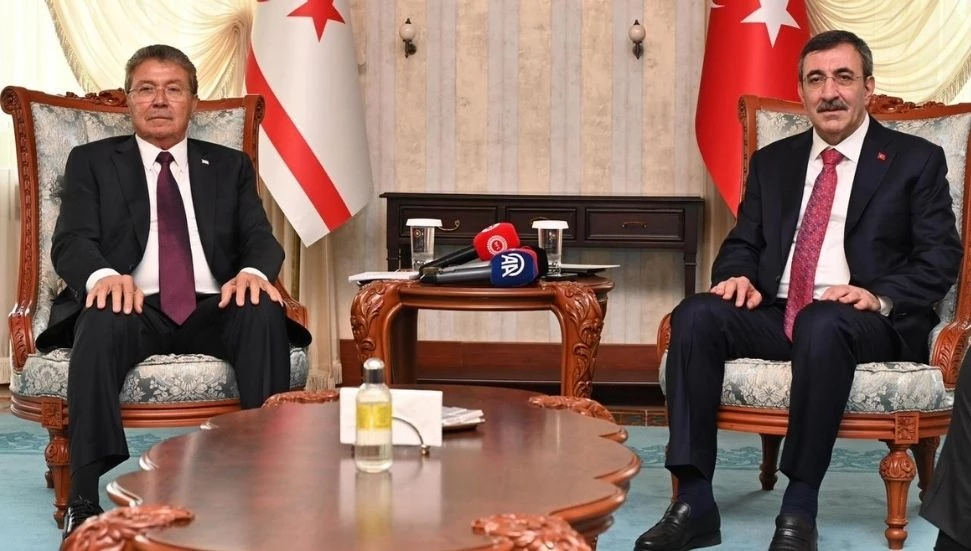
The renewed agenda follows high level talks in Ankara involving Turkish Vice President Cevdet Yilmaz, Turkish Energy Minister, and Erdogan’s son-in-law, Alparslan Bayraktar as well as the north’s ‘prime minister’ Unal Ustel.
The discussions centred on strengthening the north’s energy system through new and upgraded facilities, including mobile power plants, maintenance of existing grids and technical studies on gas transport.
Officials said feasibility work on an electricity cable has been completed, while planning for a gas pipeline is moving towards an investment phase.
Both sides described the projects as part of a wider strategic energy framework aimed at improving stability and supply resilience.
Yilmaz said the talks covered “projects aimed at strengthening energy security” in the north, as well as increasing “electricity generation capacity and advancing natural gas supply”.
He said current work includes mobile generation units, upgrades to energy infrastructure and technical preparation for natural gas systems.
He also said the objective is to make the north’s energy network more robust and less dependent on external constraints.
Turkish officials stated that several mobile power plants have already been deployed in recent years under financial cooperation agreements, with maintenance and fuel supply support continuing through bilateral arrangements.
Ustel described the pipeline plan as a “project of the century”, saying natural gas would first be used for electricity generation before expanding into wider energy use.
He said feasibility studies for the electricity interconnection were complete and expressed confidence that “political obstacles” would be overcome.
He added that “water came from Anatolia through the project of the century. Now electricity and natural gas are coming too”, in reference to the previously laid undersea cable connecting the Anatolian peninsula to Kyrenia.
Ustel said an ‘intergovernmental’ agreement is being prepared to move the gas project into the investment phase once technical studies conclude.
He said the aim is lower energy costs, improved supply reliability and modernised infrastructure.
Turkish officials said a visit to the north by energy authorities is planned for June to advance implementation discussions.
Yilmaz said some technical issues remain on the electricity cable project due to EU frameworks but stated there are no similar constraints on natural gas infrastructure.
He remarked that “natural gas is entirely a matter dependent on the decision” of Turkey and the north alone.
Both Yilmaz and Ustel repeated Ankara’s position that any settlement requires recognition of “sovereign equality” and “equal international status”.
He argued that energy cooperation would support regional stability and economic growth.
Ustel reiterated his long-held narrative that the island consists of “two peoples and two states” and that a lasting settlement is not possible without recognition of this framework.
He said cooperation with Turkey remains central to energy security and development in the north.
The republic maintains that energy planning is based on international law and the United Nations Convention on the Law of the Sea.



Click here to change your cookie preferences