
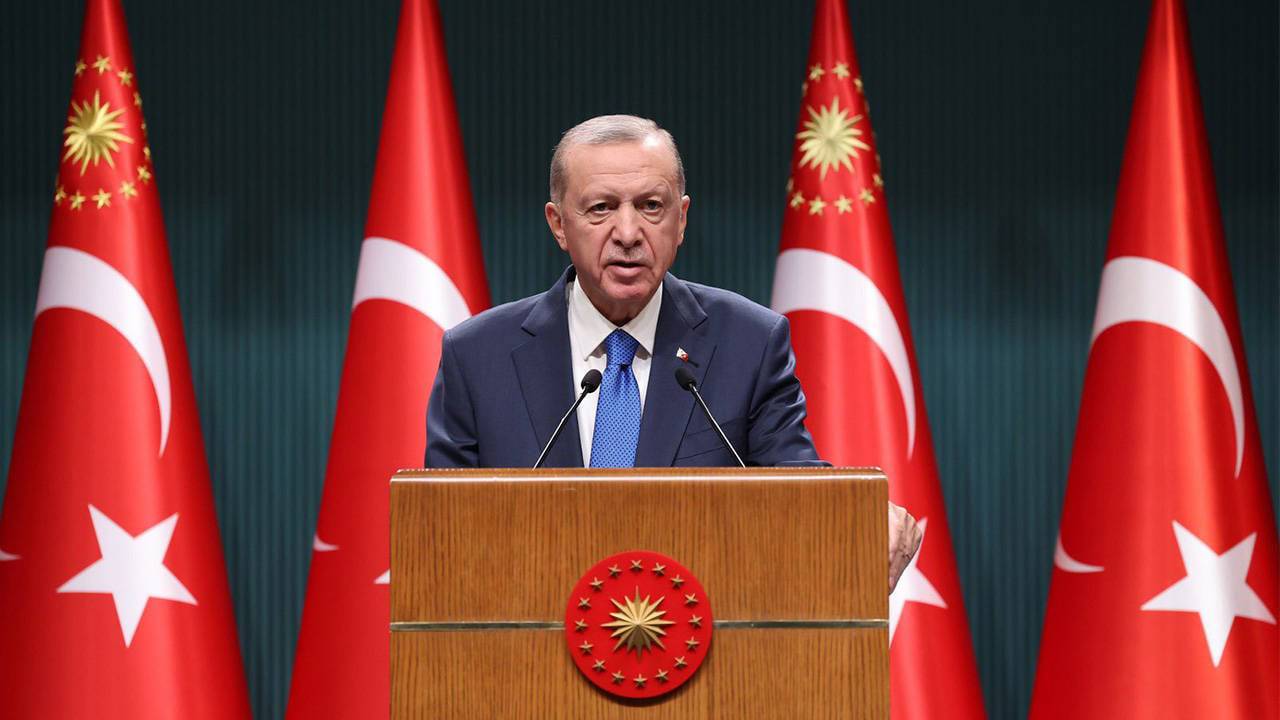
The Cyprus issue “blocked” Turkey’s journey toward membership of the European Union, the country’s President Recep Tayyip Erdogan said on Monday.
“Recently, some damaging debates regarding Turkey’s position in Europe, again triggered by European actors, have been witnessed,” he said after the day’s cabinet meeting, before pointing out that Turkey first applied for association with the European Economic Community in 1959.
He said that in 1963, an agreement was signed for Turkey to join the EEC in three phases, with the first, preparatory phase, having been completed, and the second, transitional period having been initiated in the early 1970s.
“In the subsequent period, disagreements stemming from the Cyprus issue caused our journey towards the European Union to be blocked. At that time, our neighbour Greece, which applied for membership of the European Union in 1975, was accepted very shortly afterwards. It was accepted in 1981,” he said.
However, he added, “Turkey was completely pushed out of the negotiating table for purely political reasons”.
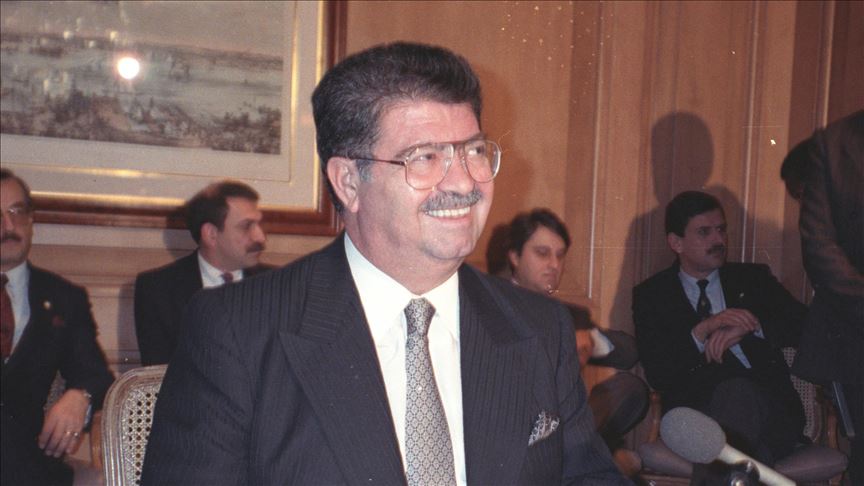
He then said that the 1980 Turkish coup d’état “severely damaged our democracy” and thus Turkey’s path towards the EU, but that with the coming to power of late prime minister Turgut Ozal following the democratic elections of 1983, “our relations with the union gained momentum again”.
“On April 14, 1987, we submitted our application for full membership of the union, and, in the words of the late Turgut Ozal, we embarked on a long and arduous journey. The commission evaluating our application, in its response given two and a half years later, stated that while Turkey was eligible to join the community, it would not accept new members until it had achieved its own internal integration,” he said.
He added that when the customs union agreement between the EU and Turkey entered into force in 1996, “we completed the transition period and entered the final phase”, but that nonetheless, “the difficulties we faced soon began to recur”.
“For example, at the Luxembourg summit in 1997, while 12 countries were granted candidate status, Turkey was once again ignored. Finally, at the Helsinki summit in 1999, Turkey’s candidacy was approved by the European Council, and it was decided to prepare the accession partnership document,” he said.
When he came to power as prime minister in 2002, he said, “we breathed new life into these activities”.
“Within a two-year period, eight harmonisation packages were passed by parliament. During the same period, we amended 218 articles of 53 laws. Again, in 2001 and 2004, two constitutional packages were accepted by our parliament,” he said.
Despite this, he added, “when the European Union, undertaking the largest expansion in its history, accepted ten more countries as members, Turkey was excluded”.
“Unfortunately, the Greek Cypriot administration was among them. Turkey patiently continued its path, enduring these erroneous and unfair decisions,” he said.
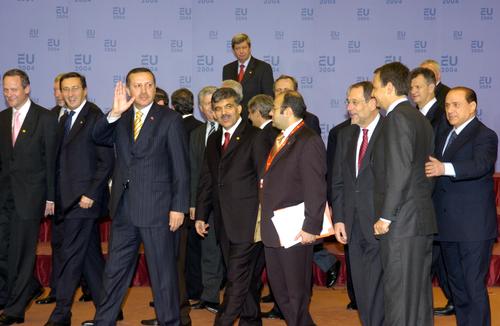
He then said that Turkey “fulfilled its obligations completely in the negotiating process” which began in 2005, but lamented in the years that followed, progress from the EU’s side ground to a halt.
“Between 2006 and 2010, 13 chapters were opened for negotiation. In the period between 2010 and 2013, only one chapter could be opened. The positive agenda, which was put into effect in 2012, lasted only two years,” he said.
He added that “from 2015 onwards, our relations with the union intensified again, partly due to the civil war in Syria and the largest wave of irregular migration Europe has seen since the second world war”, but that even then, “our relations with the union could not maintain the momentum it had gained”.
This, he said, was because “it was late, insufficient, and unwilling to provide the necessary support to Turkey in the face of the July 15 [2016] attempted coup d’état, in which 253 of our people were martyred”.
“In subsequent meetings, we did not encounter an encouraging picture which would overcome the existing deadlock and give impetus to [our] relations. Despite all the double standards to which we have been subjected, we continue on the path to full membership. We persistently continued our work,” he said.
He added that since filing its first application to the EU in the 1950s, “we have been unable to overcome the prejudice against Turkey which have taken root in some circles in Europe”.
“Sometimes, they criticised our democracy, sometimes, they saw our economy as a threat, sometimes, they spread fear based on our population, sometimes, they used our faith as an excuse to marginalise us, but each time, they found an excuse to exclude Turkey, to slow down Turkey’s membership process, to keep Turkey waiting at the door,” he said.
He added that in response to this, “Turkey has changed, transformed, and strengthened its economy and its democracy”, but that “there has been no change in the distorted approach of these circles towards our country”.
“Unlike other candidate countries, we have had to struggle with this mentality and its representatives. As the late Turgut Ozal said, we walked not only a long and arduous road, but also one full of artificial obstacles and bumps,” he said.
He added that “I must regretfully state that this journey continues on the same ground”, and that “the strategic bias against Turkey is unfortunately one very evident in many institutions in the union”.
As such, he said, “as was the case yesterday, the issue today is not where Ankara stands”, but instead “where Brussels wants to be in the world of the future, and where it sees itself”.
“It should now be understood that the European Union without Turkey as a full member will not be a global actor or a centre of attraction,” he said.
He added that Turkey “is not a country whose existence will be remembered only when necessary, whose door will be knocked on only when needed, and which will be pushed aside at other times”.
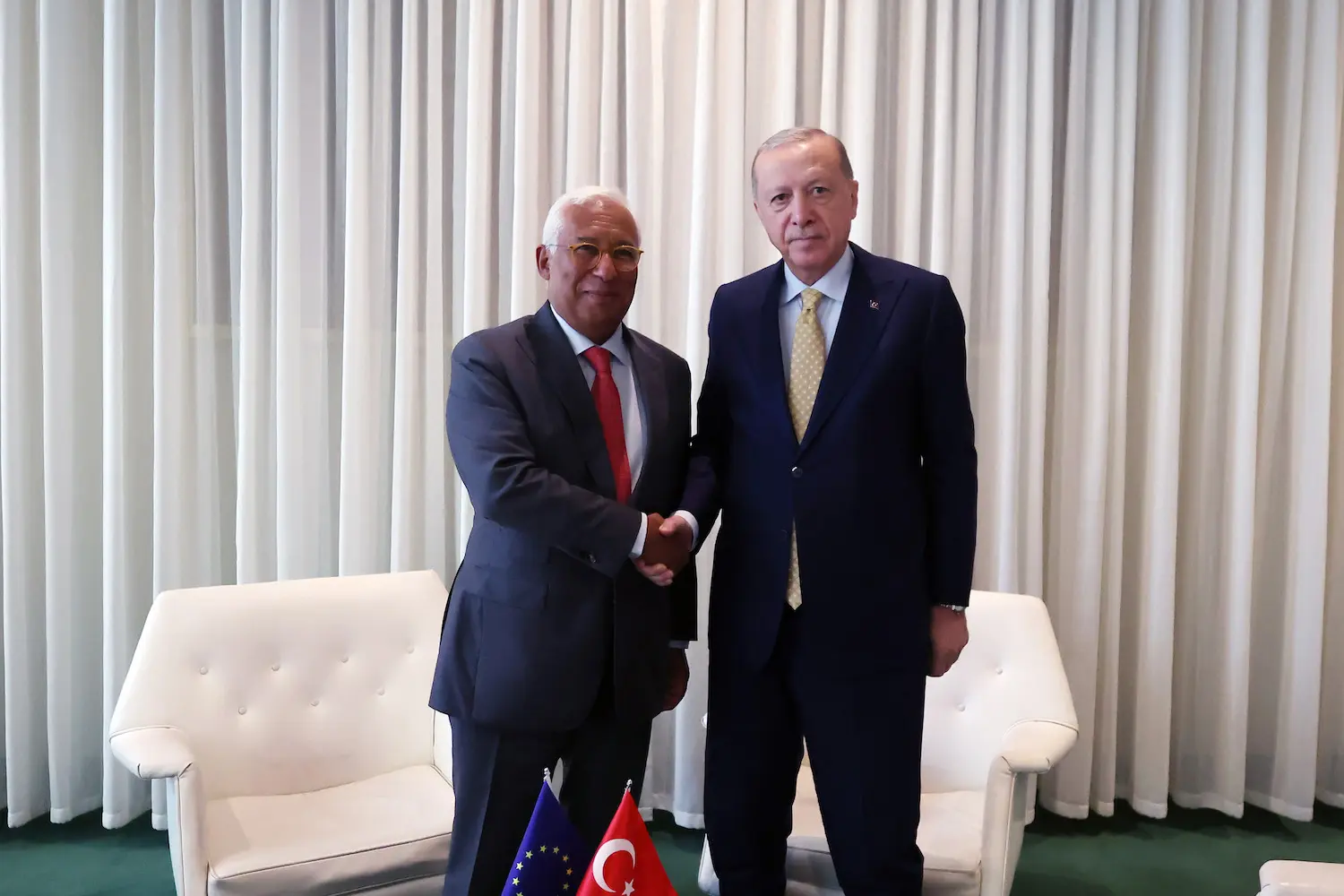
“The European Union should know very well the value of Turkey’s constructive attitude, should not misuse it, and should refrain from actions and statements which will jeopardise it. Let it not be forgotten that Turkey is not the old Turkey and that the world is not confined to the sphere of western influence, as it once was,” he said.
He said to this end that “a new world is being built in which regional collaborations are gaining importance, new actors are emerging, and the global system is rapidly evolving towards multipolarity”.
Turkey, he said, “is among the strongest countries poised to become one of the poles of this new system”.
“Let me be clear: today, Europe’s need for Turkey is greater than Turkey’s need for Europe. Tomorrow, this will only increase. Europe is at a crossroads. Either it will see Turkey’s growing power and global influence as an opportunity for the union to emerge from this current crisis, or it will allow exclusionary rhetoric to darken Europe’s future,” he said.
He added that “our hope is that the decision makers in Europe will abandon their political and historical prejudices and focus on developing sincere, genuine, and fair relations with Turkey”.
“The winner of such a relationship will be the European continent, of which Turkey is an integral part.”




Click here to change your cookie preferences