
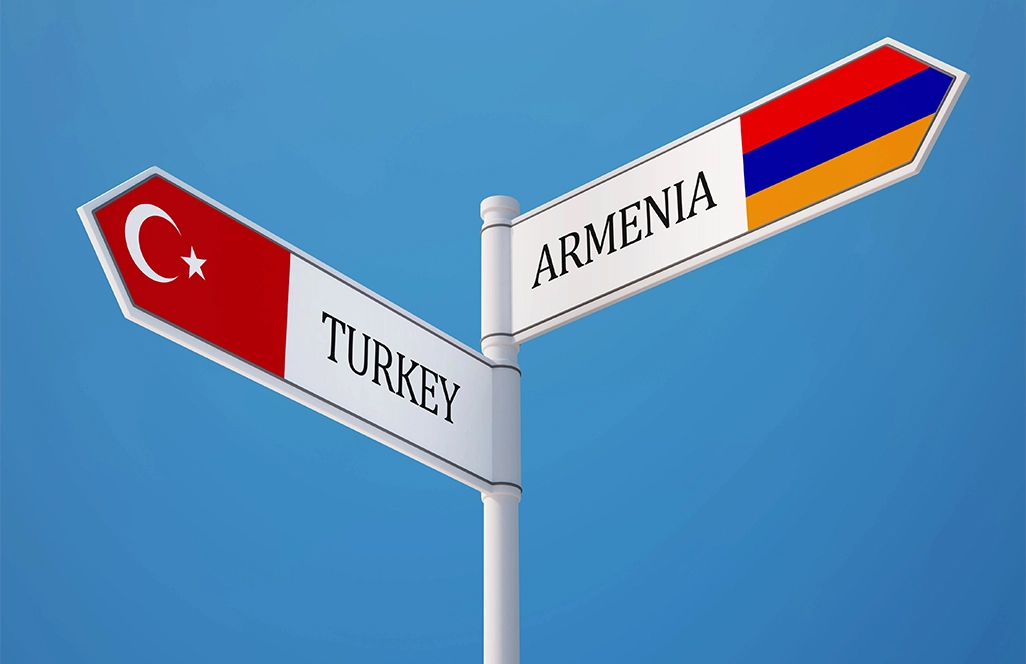
Turkey lifted some customs restrictions on Armenia on Wednesday, paving the way for direct trade links between the two countries in a further sign of normalising ties after over 30 years of strained relations.
Turkey was one of the first countries to recognise Armenia’s independence from the Soviet Union in 1991, but it closed its border and halted direct trade with its neighbour in 1993 in support of its close ally Azerbaijan in the Nagorno-Karabakh conflict with Armenia.
The neighbours have had no formal diplomatic relations since then amid a legacy of deep historical hostility stemming from the World War One mass killing of Armenians by Ottoman forces, considered a genocide by Armenia and many other countries.
The Turkish Foreign Ministry said in a statement on Wednesday that the new regulations meant goods going from Turkey to a third country and then onto Armenia, or vice versa, can now have their final destination or country of origin listed as either “Armenia” or “Turkey”.
PEACE DEAL COULD TRANSFORM SOUTH CAUCASUS
Armenia, with an economy a tiny fraction of Turkey’s and heavily dependent on energy supplies from Russia and Iran, welcomed the news.
“This decision is significant for expanding trade and business ties between the two countries, promoting economic connectivity in the region, and ensuring peace and prosperity,” Armenian Foreign Ministry spokesperson Ani Badalyan said, according to the Armenpress state news agency.
Negotiations are ongoing between Yerevan and Ankara to reopen their 311 km (193-mile) border.
Ankara has said it wants to reopen the eastern frontier, but only if Armenia signs a peace treaty with Azerbaijan, with which Turkey has cultural and linguistic ties. Yerevan is also keen to see the border reopened.
Armenia and Azerbaijan reached a U.S.-brokered peace agreement last August to put an end to their nearly four decades of conflict, but have yet to sign a formal peace deal.
Such a treaty could transform the South Caucasus, an energy-producing region neighbouring Russia, Europe and Iran that is criss-crossed by oil and gas pipelines but riven by closed borders and longstanding ethnic conflicts.
Turkish Foreign Ministry spokesperson Oncu Keceli said on Wednesday that work on reopening border crossings between Turkey and Armenia was continuing.
The two countries signed a memorandum of understanding earlier this month to restore the Ani Bridge, a historic 10th-century structure spanning a river across their shared frontier.




Click here to change your cookie preferences