
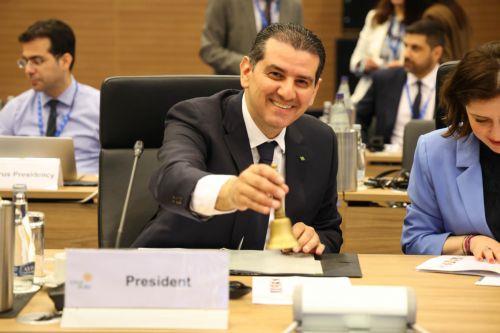
Energy security, coordinated action and the acceleration of electrification were at the centre of discussions at an informal meeting of EU energy ministers held in Nicosia on Wednesday under Cyprus’ presidency of the Council of the EU.
Energy Minister Michalis Damianou, who chaired the meeting, said the talks remained firmly focused on strengthening the EU’s long-term resilience while ensuring affordability for consumers, businesses and industry.
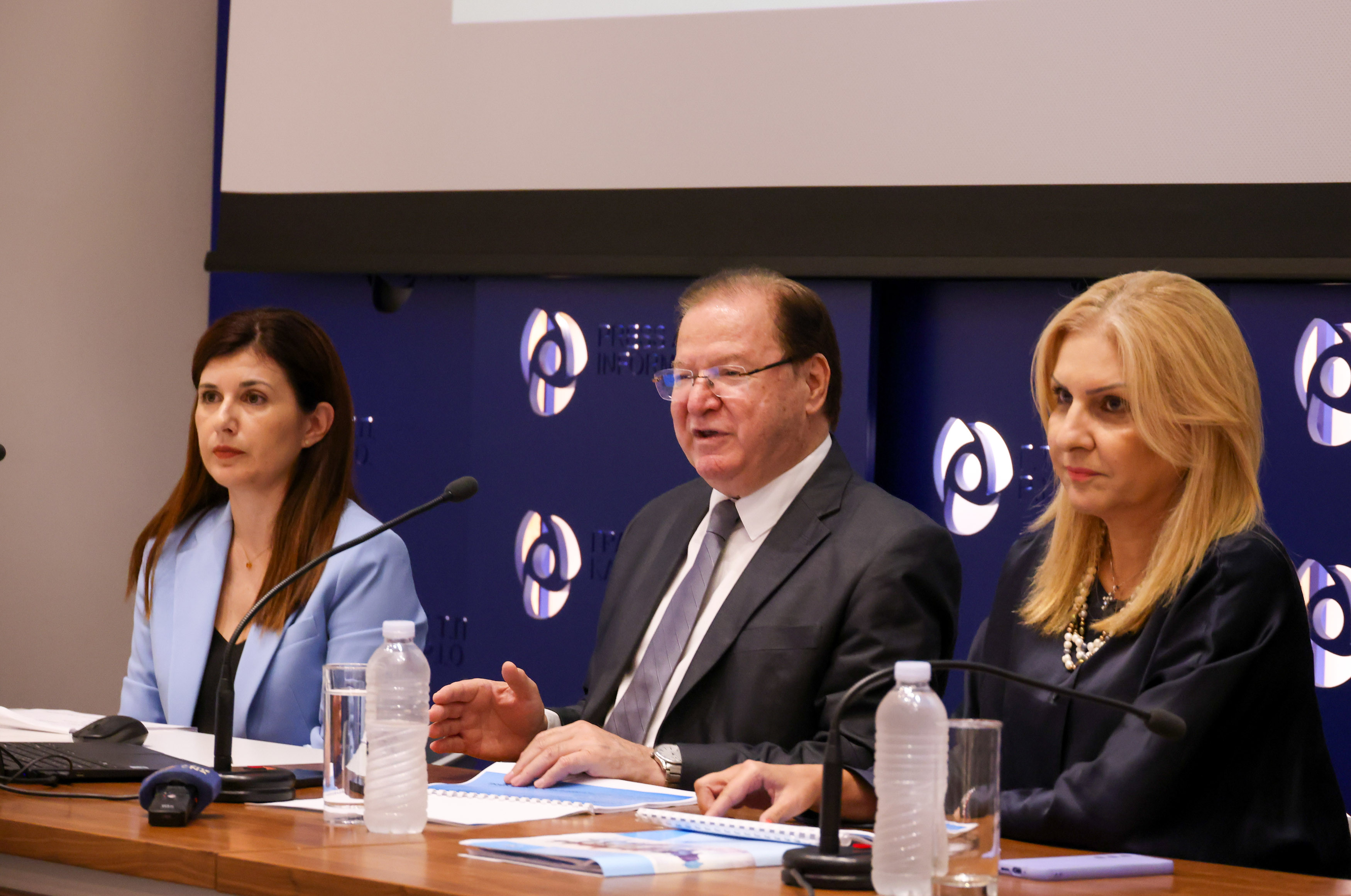
Speaking at a press conference after the meeting, Damianou said discussions were aligned with the presidency’s broader goal of promoting a competitive, highly resilient and strategically autonomous European Union.
He stressed that coordinated action and accelerated electrification are essential to mitigating risks stemming from the EU’s dependence on imported energy and ensuring long-term energy security.
“Under the current geopolitical developments, Europe’s dependence on imported fossil fuels constitutes a significant economic and strategic risk, as demonstrated by sharp price increases affecting households and industries,” he said.
Ministers also held extensive discussions on the European Commission’s AccelerateEU initiative, examining its five strategic pillars aimed at strengthening coordination, protecting consumers and speeding up electrification.
“It is now of utmost importance that member states implement these measures quickly and in a coordinated manner, to avoid fragmented responses and build long-term resilience,” Damianou said.
He added that expanding electricity storage capacity is a critical tool for ensuring grid stability and providing the flexibility needed to reduce and stabilise energy prices across Europe.
Ministers examined the key role of storage technologies in enabling a cleaner and more resilient energy future, as well as ways to overcome existing barriers such as complex administrative procedures and to enhance cross-border coordination.
“With better synchronisation of variable renewable energy with stable low-emission base units and different storage solutions, we can create a more flexible and truly integrated energy union,” Damianou said.
He added that aligning short-term crisis responses with long-term structural objectives is essential to ensuring that Europe’s energy landscape remains stable, resilient and affordable.
The minister also stressed that ensuring a predictable energy pathway requires striking the right balance between immediate policy responses and long-term commitments to decarbonisation and the transition to hydrogen technologies, in line with the EU’s target of reducing greenhouse gas emissions by 90 per cent by 2040.
During the meeting, ministers also discussed broader challenges related to volatility in global energy markets and the impact of geopolitical instability, particularly in the Middle East.
European Commissioner for Energy Dan Jorgensen said the EU has paid €35 billion more for energy since the start of the Middle East conflict without receiving additional supply, warning that the bloc remains vulnerable to global price fluctuations.
“This is not an energy crisis. It is a fossil fuel crisis,” he said.
Jorgensen noted that while Europe is better prepared than in 2022, thanks to increased renewable energy deployment, diversified suppliers and improved efficiency, it remains exposed to external shocks.
“When global market prices rise as they are doing now, we are hit hard,” he said.
He stressed the need to accelerate efforts to move away from fossil fuels, improve energy efficiency and expand renewable energy, while ensuring that any support measures for industries and vulnerable consumers remain targeted and temporary.
Despite ongoing uncertainty, he said the EU does not expect serious short-term supply disruptions, including in aviation fuels, though longer-term risks cannot be ruled out depending on developments in the Middle East and market responses.
“We are not at that point yet. We do not expect a very serious supply security problem in the very short term,” he said, adding that the situation continues to be closely monitored.
Officials said the success of EU energy policy will depend on how quickly high-level political discussions are translated into concrete cross-border projects and enhanced operational cooperation across the bloc.




Click here to change your cookie preferences