
THE WAY THINGS ARE
Lara Marlowe has written on art and politics in France, a country she knows extremely well, she has reported from Washington, and covered wars in Lebanon and Ukraine, she knows Ireland intimately. Before the Iran war caused anxiety and economic unease in Cyprus, her March article in The Irish Times analysed Ireland’s past, inadequate defence decisions. The Irish republic has been less rapid than Cyprus with those.
Given Donald Trump’s shifting stance on Nato and EU partnerships, a new Euro-defence outlook is necessary. The war between Ukraine and Russia has cast Ireland, keen to keep its neutral status, as an ‘enemy of Russia’ because of strong links to the EU and the USA. Marlowe wrote “The incursion of five drones, believed to have been launched from a ship in Russia’s shadow fleet, over Dublin Bay last December 1 was a wake-up call for neutral, idealistic Ireland.”
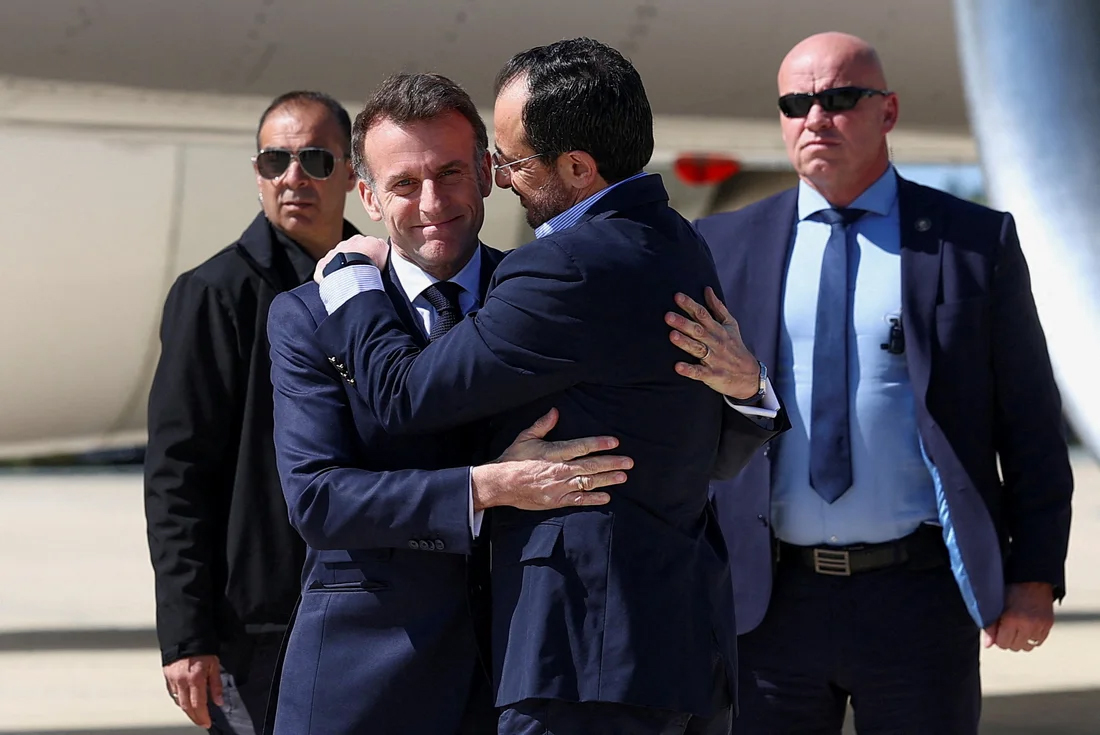
She says up until then, Ireland spent just 0.24 per cent of gross domestic product on defence, the lowest in the EU. Ireland knows, change has to come. Marlowe mentioned France’s rush to defend Cyprus, the French are taking a lead in the current unsettled defence atmosphere, willing to share their nuclear umbrella with Europe.
She says, French President Emmanuel Macron is maintaining the “European dimension” of French deterrence. France’s nuclear policy since De Gaulle hasn’t changed. What has altered is “… the willingness of Europeans to engage in discussions with France to perhaps draw consequences for their own defence.”
Ireland, she wrote, adopted the Non-Proliferation Treaty in 1968 and “Irish involvement in nuclear discussions would be politically radioactive.” The Irish like their referendums, they may want a say. Cyprus and Ireland are willing to have French vessels in coastal waters; British vessels and jets offer welcom protection to Ireland’s vast undersea cables, whereas UK Bases in Cyprus are seen as provocation to the UK’s enemies, drawing fire on Cyprus.
Both islands share historical similarities, this year Cyprus has the presidency of the EU Council from January to June, with Ireland taking over from July to December. I have a lovely Turkish Cypriot neighbour with two delightful small children. We spoke of sadness over the plight of children in Gaza, her concerns understandably, were for the future safety of her kids in an evolving world. If anyone threatened them, I’d do my best to protect them.
I read Kerim Munir’s column in the Sunday Mail keen to see his views on a mutual ‘problem’. On May 3, he commented on Cyprus’ “humanitarian defence agreement” with France and went on to say that “Cyprus is not under any imminent military threat.” He wrote of President Nikos Christodoulides’ present initiative expanding the European banner and of, “externally framed solutions that underestimated local complexities.”
With respect, Kerim, I had two small children during the 1974 invasion and know the terror it brought in its wake. This side perceives an underlying, constant ‘threat’: the Turkish army, one of the biggest in the world, is a short flight away if trouble erupted, troops already occupying territory. With our small defence force, Cyprus has every right to draw on the protection of its European identity.
Turkish Cypriots as well as Greek Cypriots suffered in 1974, and in earlier conflicts. Work on missing people shows the benefits of calm cooperation. Turkish Cypriots should have access to a European identity, a choice I think they would grasp, eliminating the need for Turkey’s armed presence. If our leaders got together to compromise, those who genuinely want a solution perceived to offer safety to our youth, could live peacefully.
A safe umbrella only for Europeans though? European hypocrisy let Israel, a non-European land, compete in the Eurovision Song Contest despite its track record of multiple innocent deaths and war criminality.




Click here to change your cookie preferences