
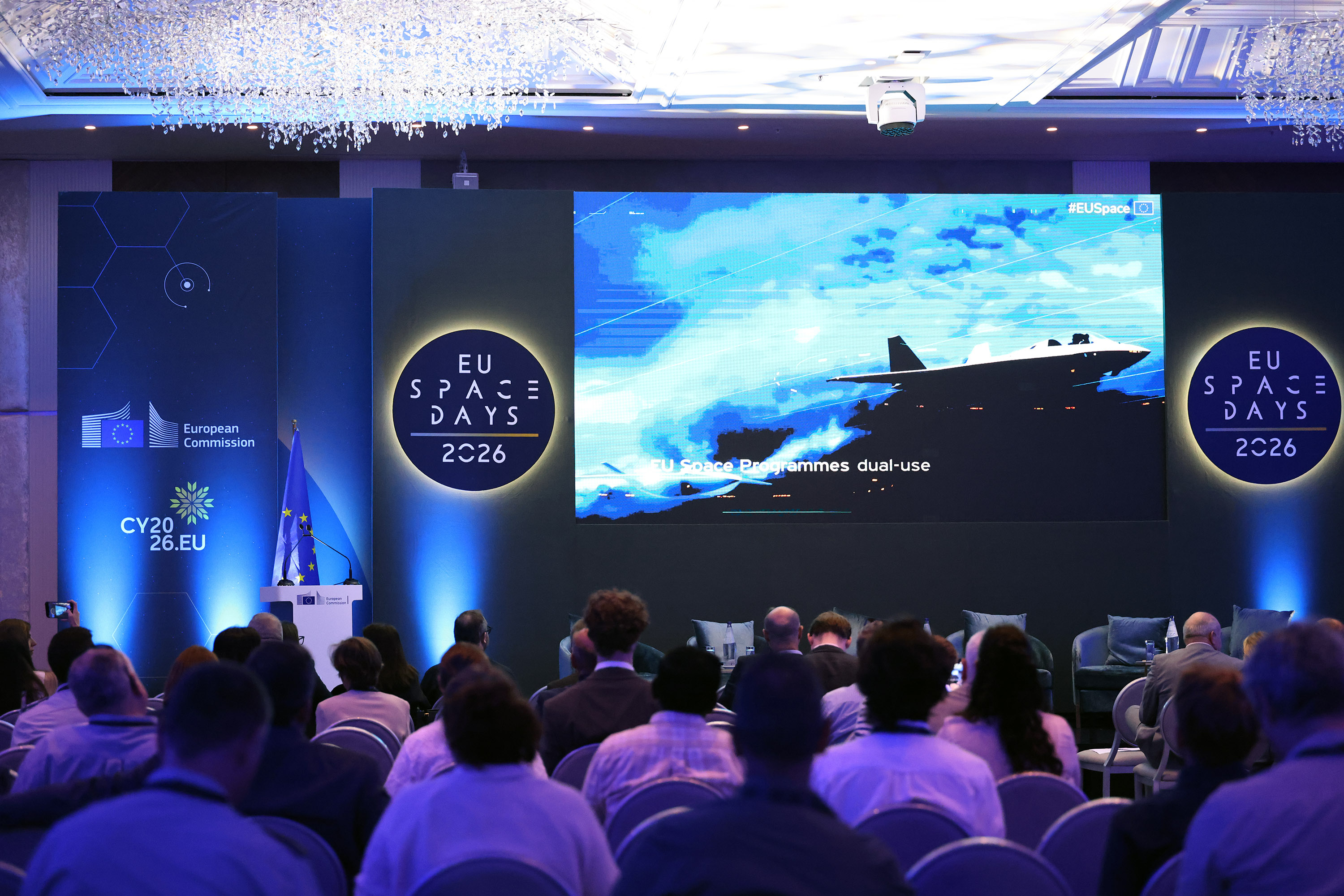
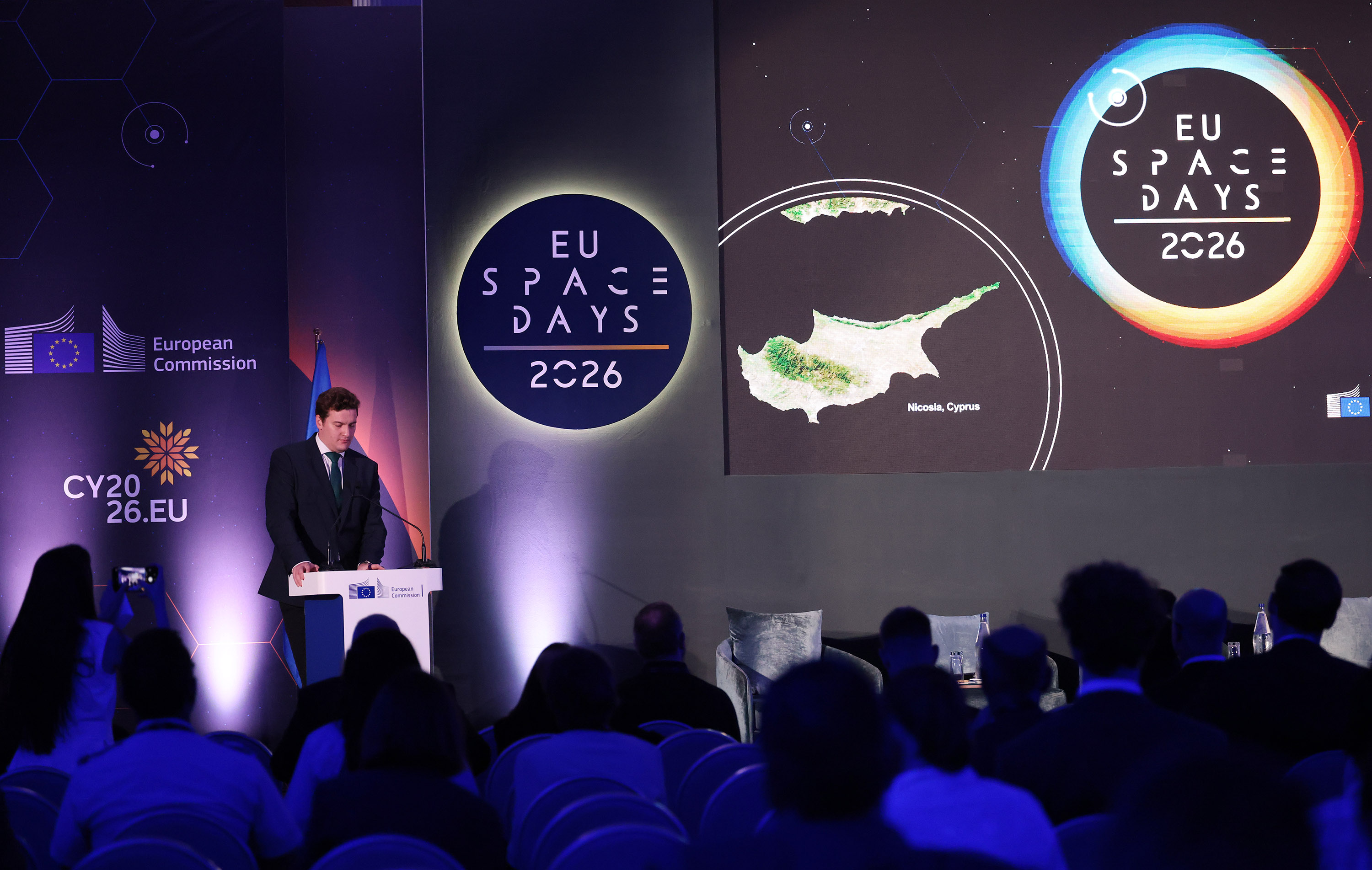
Europe’s future in space will depend not only on satellites and infrastructure, but also on whether it can build the workforce needed to sustain the sector’s rapid transformation, speakers at the EU Space Days 2026 conference in Nicosia said on Wednesday.
Experts warned that Europe’s space industry is no longer looking only for engineers and astronauts, but increasingly for professionals with expertise in artificial intelligence, business, law, cybersecurity and data analysis, highlighting a growing gap between traditional academic education and the sector’s evolving needs.
DG DEFIS senior expert Lysandros Stathopoulos said the pace of change in the European space ecosystem had made skills development a strategic priority for the bloc’s competitiveness.
STEMFreak Educational Innovation Centre founder Andri Vryoni said traditional education systems often fail to connect science with real innovation, discouraging young people before they even reach higher education. “Traditional schooling kills innovation, motivation, interests and children’s curiosity,” she said.
“We cannot wait until university to discover who is interested in space,” she added, warning that many students – particularly girls, young people with neurodevelopmental differences and those from vulnerable social groups – are pushed away from STEM education at a very early stage.
From the industry side, EY’s head of space, defence and digital technologies for EU institutions Monica Pesce said public perceptions of the sector remain outdated.
“People still think space means rockets and astronauts,” she said, despite the growing use of space technologies in agriculture, automotive industries, environmental monitoring and cultural heritage.
Against that backdrop, a separate panel at the conference turned to the infrastructure needed to underpin Europe’s ambitions in space.
“Space is no longer important only because of exploration and science. It is also critical infrastructure for our society, our economy, our security and our defence,” said Christina Giannopapa of the European Union Agency for the Space Programme.
She said Earth observation, satellite navigation, secure connectivity and access-to-space capabilities have become essential to Europe’s strategic autonomy and ability to make sovereign decisions in an increasingly complex geopolitical environment.
Portugal Space scientific and education officer Duarte Cota said sustainability in space infrastructure must be viewed beyond purely financial terms, particularly given current geopolitical realities.
He pointed to Portugal’s efforts to establish a spaceport in the Azores as part of a wider European network of access-to-space hubs, saying future infrastructure must be flexible and multi-purpose, with closer links to the defence sector.
From Cyprus, Cyta satellite communications services director Sotiris Alexandrou said cooperation was essential, particularly for smaller countries.
“Space is an expensive activity. Cooperation is the solution, especially for smaller countries,” he said, adding that EU support allows member states to build capabilities that can later evolve into commercial services.
Spaceopal chief technical officer Emiliano Agosta said Europe’s sovereignty depends not just on owning satellites, but also on controlling the software, algorithms and artificial intelligence behind them.
“Without systems that operate continuously and reliably, there is no strategic sovereignty,” he said.
Eratosthenes Centre of Excellence director Diophantos Hadjimitsis said infrastructure investments must translate into practical services, applications and economic value, while reducing Europe’s reliance on non-European data sources.
Speakers concluded that Europe’s competitiveness in space will depend as much on education and skills as on technological investment.





Click here to change your cookie preferences