
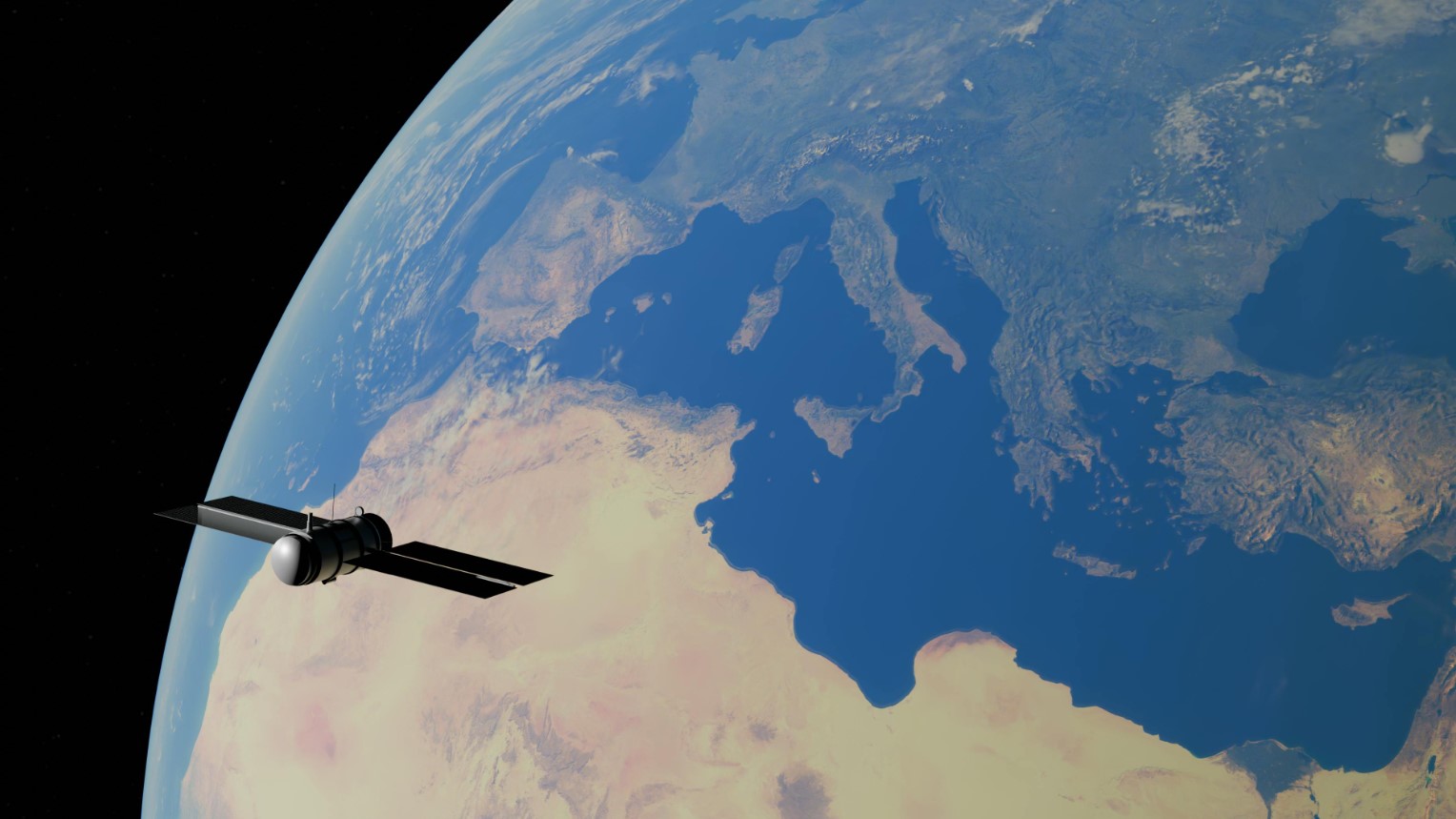
Space technologies, Earth Observation and artificial intelligence are becoming strategic tools for Europe’s competitiveness, resilience and security, speakers said at a high-level forum held in Nicosia under the auspices of the Cyprus Presidency of the Council of the European Union 2026.
The forum, titled ‘From Space to Solutions: Leveraging Space Technology, Earth Observation & AI for Real-World Impact’, brought together representatives of European institutions, governments, research organisations, businesses, investors and academia from several countries.
It was co-organised by the Eratosthenes centre of excellence and the Cyprus Chamber of Commerce and Industry (Keve), within the framework of the EXCELSIOR project.
The central message of the event was that space is no longer confined to scientific exploration, but has become a strategic sector with direct applications in the economy, security, climate resilience, agriculture, disaster management, shipping and public policy.
Speakers pointed to the growing role of Earth Observation, satellite infrastructure, artificial intelligence and advanced data analysis in helping governments, businesses and researchers respond to real social, environmental and economic challenges.
Opening the forum, Keve’s president Stavros Stavrou placed the discussion in the wider European context, noting that Europe is seeking to strengthen its competitiveness, strategic resilience and technological dominance.
The combination of space technologies, Earth Observation systems, artificial intelligence and advanced data analysis, he noted, is developing into one of the most important factors shaping Europe’s economic future.
Referring to Cyprus, Stavrou emphasised the country’s geographical position at the crossroads of Europe, the Middle East and Africa, together with its developing innovation ecosystem, strong research institutions and expanding digital economy.
These factors, he noted, create the conditions for Cyprus to make a meaningful contribution to Europe’s technological ambitions.
For the Eratosthenes centre of excellence, the forum also served as a reminder of how far Cyprus’ space and Earth Observation capabilities have developed in recent years.
Professor Diofantos Hadjimitsis, chief executive of the centre, referred to its journey from a small remote sensing research laboratory established in 2007 at the Cyprus University of Technology (Tepak) into an internationally recognised centre of excellence.
Today, the centre has more than 135 researchers and collaborations with more than 800 organisations and scientists worldwide.
Hadjimitsis noted that the centre was created through the EXCELSIOR project, with a total budget of €38 million, with the aim of becoming a digital innovation hub for space technologies and Earth Observation in the Eastern Mediterranean, the Middle East and North Africa.
On behalf of the President of the Republic, Chief Scientist for Research, Innovation and Technology Demetris Skourides said Europe needs to build its strategic autonomy through reliable technologies and open partnerships.
He noted that “space technologies and artificial intelligence are no longer specialised fields for a limited group of experts, but crucial tools for strengthening resilience, competitiveness and sustainable development.”
Particular reference was made to the possibilities offered by Cyprus’ new satellite infrastructure, as well as to applications developed through the Eratosthenes eentre of excellence.
These include disaster risk management, agriculture, maritime surveillance, cultural heritage protection and critical infrastructure monitoring.
The Head of the European Commission Representation in Cyprus, Panicos Pourgourides, also emphasised the strategic importance of space technologies for Europe’s future.
Space, he noted, is no longer only about exploration, but has become an essential tool for addressing real challenges and delivering tangible benefits to citizens.
“Space technologies, Earth observation and artificial intelligence are transforming industries and public services across Europe. They are changing the way we live, work and make decisions,” he said.
MEP Costas Mavrides described space as a strategic sector that directly affects the economy, communications, security and crisis management.
He also noted that “Cyprus has the conditions to play an important role in European security, defence and crisis management policies, making use of the new space infrastructure and technological capabilities being developed in the country.”
Cyprus’ deeper involvement in the European space ecosystem was also addressed by Georgios Komodromos, permanent secretary of the Deputy Ministry of Research, Innovation and Digital Policy.
Komodromos noted that “Cyprus is entering a new phase following its transition to Associate Member status of the European Space Agency.”
This development, he said, creates new opportunities for researchers, universities, start-ups and companies to participate more actively in European space programmes and missions.
He also referred to the creation of the Space Business Incubation Centre in Cyprus, which will support the transformation of innovative ideas into sustainable business activity.
The discussion also turned to the role of cities, with Nicosia Mayor Charalambos Prountzos referring to the growing importance of space technologies and Earth Observation systems in addressing modern challenges.
These include climate change, rapid urbanisation, natural resource management, energy security and resilience to natural disasters.
Prountzos noted that “such technologies offer new tools for understanding risks, optimising available resources and making more informed decisions for the benefit of citizens.”
He also highlighted their importance for cities, noting that “Nicosia is already using geographic information systems and modern digital tools to strengthen decision-making processes.”
The forum continued with specialised presentations and high-level discussions involving representatives of European organisations, research centres, businesses and policymakers.
The thematic sessions focused on Earth Observation applications, artificial intelligence and big data, natural disaster management, climate resilience, shipping, defence, security, sustainable development and smart cities.
Within the framework of the conference, the EarthView Cyprus initiative was also presented.
According to organisers, the initiative marks the transition from research to the commercial use of data and services resulting from Earth Observation and space technologies.





Click here to change your cookie preferences