
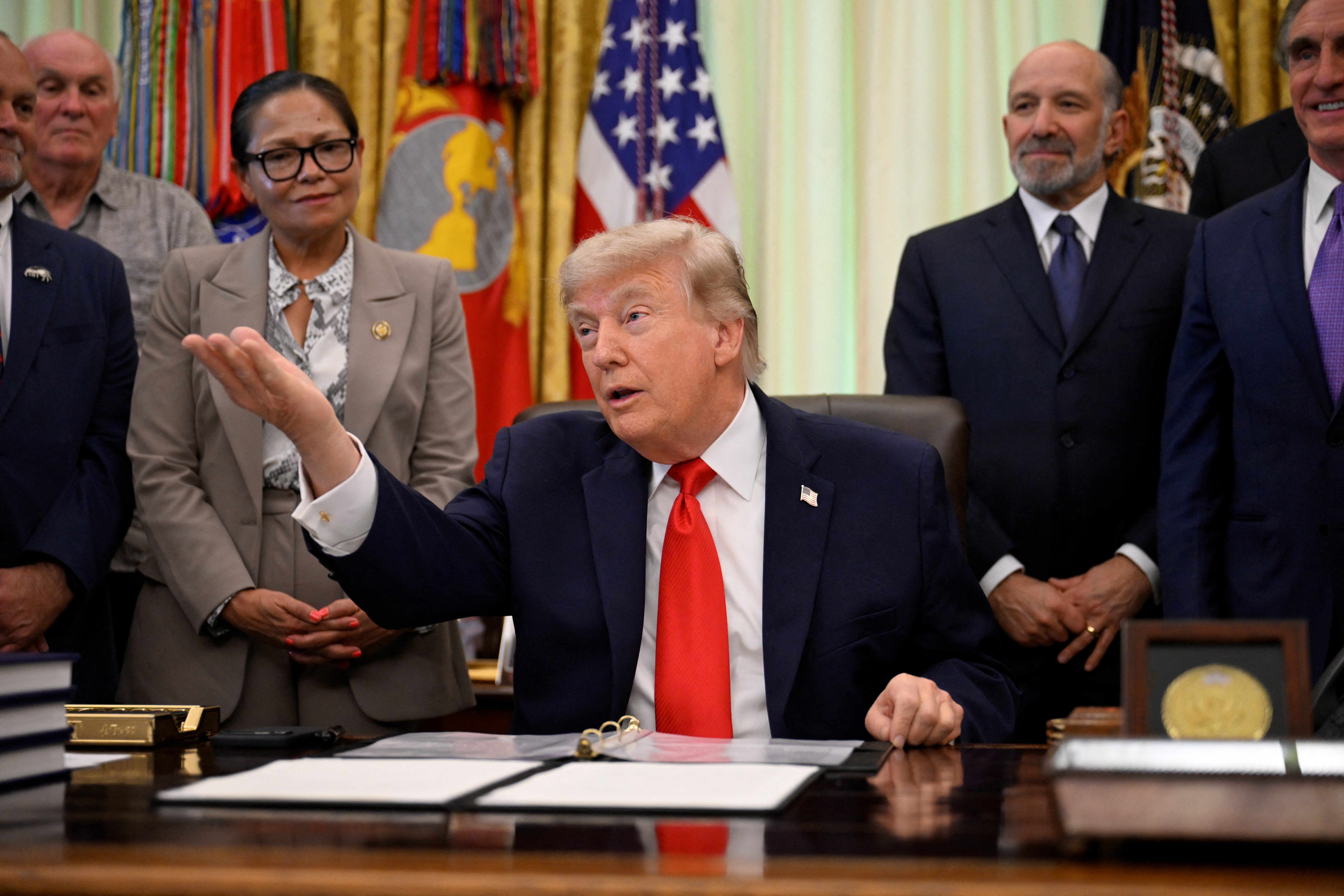
US and Pakistani leaders expressed confidence that a framework agreement aimed at ending months of conflict between the US and Iran could be signed on Sunday, though uncertainty remained after Tehran indicated that a final decision had yet to be made and hardline factions voiced opposition.
President Donald Trump said on Truth Social that the agreement was scheduled to be signed on Sunday, which coincides with his 80th birthday. Pakistani Prime Minister Shehbaz Sharif said preparations were under way for an electronic signing ceremony, to be followed by technical discussions during the coming week.
Iranian Foreign Ministry spokesperson Esmaeil Baghaei said on Saturday that an agreement would “not be tomorrow” but could be reached “in the coming days”. Iranian news agency Fars later reported that Tehran had not yet made a final decision, with political, legal and technical aspects of the proposal still under review.
A source familiar with the talks told Reuters that Qatari negotiators travelled to Tehran on Sunday in an effort to help finalise the agreement.
Trump said that once a framework agreement is signed, the Strait of Hormuz would immediately reopen to international shipping. Sources involved in the negotiations said the US would then lift its naval blockade, while discussions over Iran’s nuclear programme would take place in a subsequent phase.
The conflict, which began on February 28 with US and Israeli military action against Iran, has severely damaged Iran’s military infrastructure. Analysts have said the fighting has also strengthened the position of the Islamic Revolutionary Guard Corps within Iran’s political system.
Despite progress in negotiations, military tensions have continued. The US military said it intercepted multiple Iranian drones near the Strait of Hormuz on Saturday. Israel announced separate strikes against more than 70 Hezbollah-linked sites in Lebanon over a 24-hour period.
Israeli Prime Minister Benjamin Netanyahu has publicly disagreed with Trump over calls for Israel to limit military operations in Lebanon while diplomatic efforts with Tehran continue.
Iranian Foreign Minister Abbas Araqchi said the draft agreement demonstrated that Iran had emerged stronger from the conflict, while acknowledging that changes to the text remained possible.
At rallies across Iran on Saturday night, hardline protesters criticised the proposed agreement. Demonstrators in Mashhad were reported to have chanted “Death to the compromiser” and “Compromiser, resign, resign”, apparently targeting Araqchi.
According to draft terms described by sources familiar with the negotiations, the US would begin releasing billions of dollars in frozen Iranian assets and ease restrictions on Iranian oil exports in exchange for Iran reopening the Strait of Hormuz.
Baghaei said the release of frozen assets formed an essential part of the agreement and added that Tehran expected to charge for services provided in the strait. A US official said reopening the waterway was a core requirement and suggested it could operate without tolls. The official added that demining operations would follow, potentially involving members of the Group of Seven.
Baghaei also said foreign military bases in the region should be removed, though he did not provide further details.
The agreement envisages a 60-day period of negotiations on Iran’s nuclear programme. A US official said the process would ultimately lead to the dismantling of Iran’s nuclear programme and the destruction or removal of its stockpile of highly enriched uranium. Araqchi has previously stated that Iran’s preferred option would be to dilute the material and retain it within the country.





Click here to change your cookie preferences