
The decades-long effort to resolve the Cyprus problem has reached a definitive turning point. Years of frozen diplomacy and shifting Eastern Mediterranean geopolitical dynamics have transformed a historical stalemate into an urgent crisis of state survival. As the international community seeks to revive peace negotiations, Greek Cypriot politics are increasingly shaped by a dangerous resurgence of maximalist rhetoric.
While the official leadership claims a willingness to resume talks from where they concluded at Crans-Montana, it notably fails to endorse the Guterres Framework for a bizonal, bicommunal federation with political equality. Instead, a growing demand for a unitary state has emerged, heavily championed by traditional nationalist forces and the far-right. Even President Nikos Christodoulides implicitly aligns with this logic, promoting a political posture that is ultimately ahistorical, destabilising, and practically impossible, even if well intended. Rejecting political equality and violating United Nations parameters creates an insurmountable obstacle to meaningful negotiations. Rather than protecting the Republic of Cyprus, pursuing this unattainable vision enables partitionist agendas and actively risks the permanent annexation of the occupied north.
It is clear Christodoulides indirectly undermines the bizonal federal model through subtle rhetorical shifts, legal interpretations and specific policy stances rather than an explicit rejection.
A central element of this posture is the insistence that any settlement must yield a “normal state” strictly governed by uncompromised European Union principles, values, and laws. While appealing on the surface, applying EU law without transitional restrictions or permanent derogations inherently favours demographic majoritarianism. Because true bizonality requires restricting certain rights – such as guaranteeing a Turkish Cypriot demographic and property majority in a northern constituent state – demanding absolute EU human rights norms effectively dismantles the constitutional safeguards required for a federal agreement.
Unitary state advocates envision a unified Cyprus operating as a standard European democracy governed strictly by majoritarian voting, entirely rejecting geographic zoning and communal vetoes. They demand the total abolition of the 1960 Treaty of Guarantee and the immediate withdrawal of Turkish troops, explicitly dismissing the phased security compromises previously negotiated.
While this vision is undeniably appealing to an exhausted electorate, it ignores the fact that Cyprus was established in 1960 as a consociational partnership, not a centralised state fractured only by the 1974 invasion. For over five decades, the UN Security Council has mandated that any resolution must take the form of a bizonal, bicommunal federation. Imposing a majoritarian system directly violates these international parameters, isolating Cyprus internationally and surrendering its moral high ground.
Furthermore, this narrative fails to engage with the complex political landscape inside the Turkish Cypriot community. When Greek Cypriot political leaders reject political equality and embrace majoritarian rhetoric, they actively disarm pro-federation Turkish Cypriots, validating Ankara’s narrative and accelerating the very demographic assimilation they claim to oppose.
Unitarists also operate on the assumption that a political settlement can effectively disperse Turkish Cypriots across mixed municipalities under a centralised government. However compelling this may sound to unitarist advocates, it is completely detached from regional military realities. Ankara will never agree to a settlement that forces the Turkish Cypriot community back into scattered, indefensible enclaves.
By demanding the eradication of bizonality, unitary state advocates inadvertently provide Ankara with a geopolitical shield to maintain the status quo and finalise the island’s division. Ultimately, bizonality is not a mere diplomatic concession born at the negotiating table; it is the absolute minimum territorial requirement necessary to achieve any negotiated withdrawal of Turkish troops and to successfully restructure the island’s security architecture under established UN parameters.
In international relations, unresolved ethnic conflicts are never static. True to this principle, following the collapse of the Crans-Montana talks in July 2017, Ankara officially abandoned the UN-mandated federal framework to aggressively pursue a two-state solution based on “sovereign equality”. Consequently, when Greek Cypriot political forces reject a federal compromise in favour of a unitary state, they inadvertently validate the Turkish narrative that Greek Cypriots refuse to share power, handing hardliners the argument that a two-state reality is the only remaining option.
In an era of unforgiving regional shifts, true sovereignty requires acknowledging that a bizonal, bicommunal federation is not a concession to defeat, but a historical and pragmatic inevitability. Glafcos Clerides recognised this reality immediately after the 1974 invasion as the only viable path to save the island, yet generations later, the political establishment continues to battle the very same ghost. To prevent permanent containment, political discourse must pivot to these geostrategic realities, acknowledging that the federal framework is the only internationally recognised mechanism capable of dismantling Turkey’s occupation infrastructure.
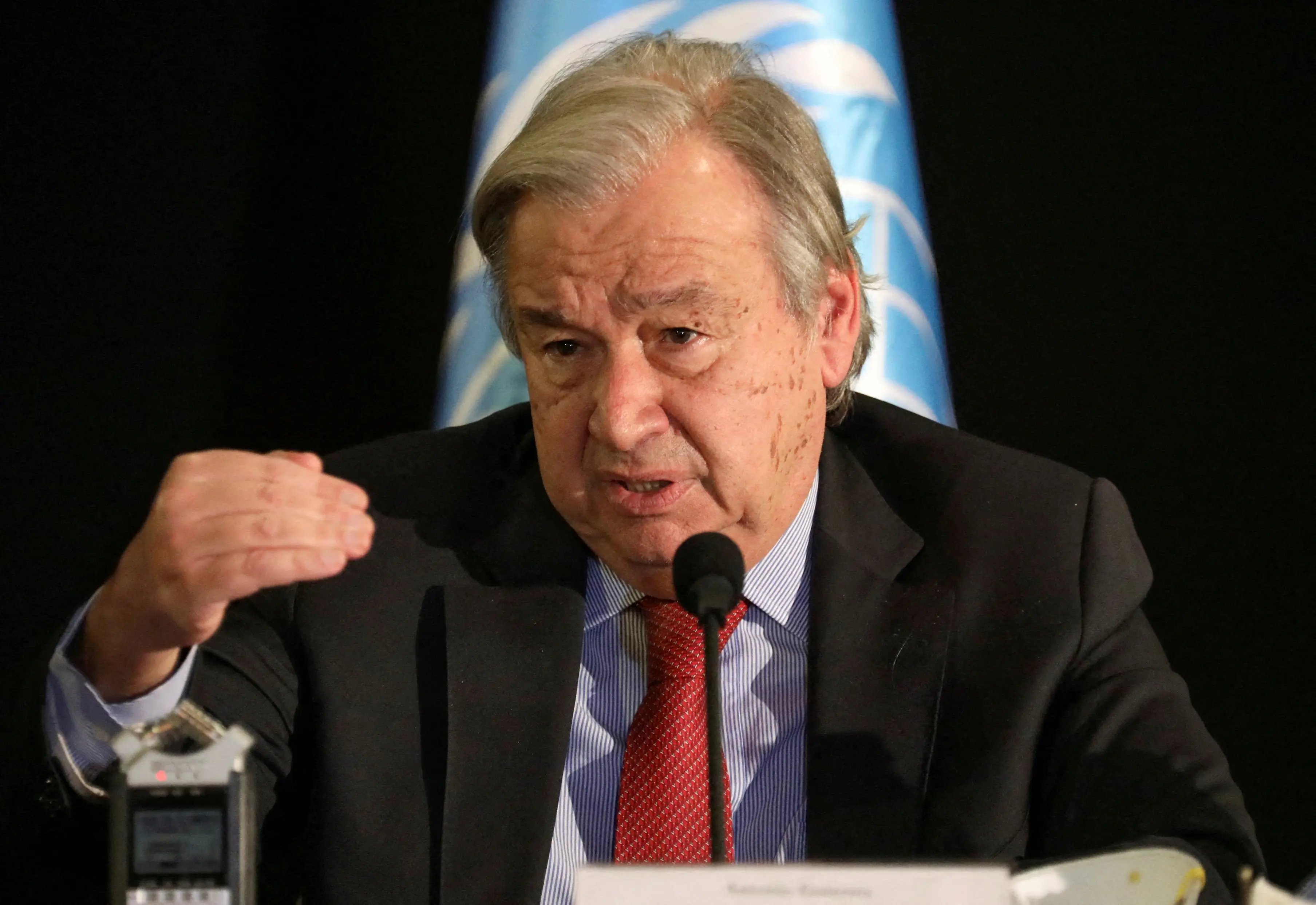
The debate in Cyprus presents a stark choice between the emotionally appealing but catastrophic illusion of majoritarian justice and the difficult, functional reality of shared governance. Active diplomatic engagements led by UN envoy Maria Angela Holguín and Secretary-General António Guterres underscore that the window for action is rapidly closing. Indulging in performative maximalism and chasing a unitary state will not protect the Republic; it will inevitably lead to diplomatic isolation, political gridlock and permanent partition. True patriotism requires acknowledging geopolitical realities and embracing the compromises of the federation to secure a reunified, European future before the island’s division becomes permanent.
Ioannis Tirkides is an economist and president of the Cyprus economic Society. This article in an extended form, can also be found in the author’s substack https://ioannistirkides.substack.com/publish/posts/published





Click here to change your cookie preferences