
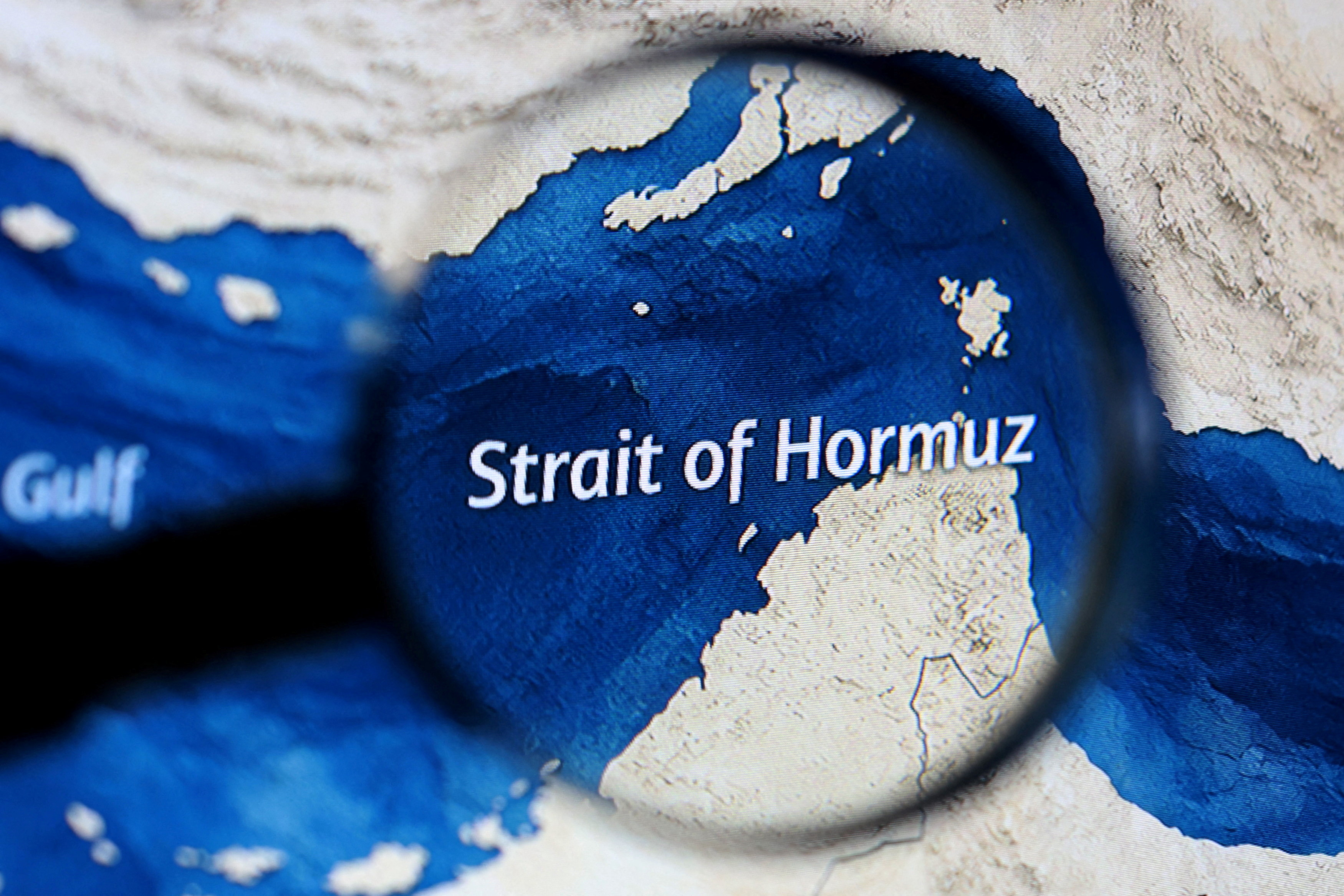
International shipping continues to operate under heightened risk across some of the world’s most important sea lanes, as renewed Houthi threats in the Red Sea, continued uncertainty in the Strait of Hormuz and the return of Somali piracy place crews and global supply chains under growing pressure.
According to the latest EOS Intelligence assessment, cited by newmoney, the situation remains particularly fragile in both the Red Sea and the Strait of Hormuz, despite diplomatic efforts between the United States and Iran aimed at easing tensions.
EOS Intelligence warned that challenges to merchant shipping are expected to continue, with the safety of seafarers and the smooth operation of global supply chains still dependent on stability in two of the world’s most sensitive maritime corridors.
The Red Sea remains one of the main areas of concern, after the Houthis expanded the range of vessels they consider legitimate targets. Ships with links to Israel, whether through flag, ownership, shareholding or business activity, are considered exposed to potential attack when transiting the area, while vessels connected to American interests are also seen as facing increased risk.
Reuters reported that Yemen’s Iran-aligned Houthis said on June 8 that they would ban Israeli maritime navigation in the Red Sea, adding further pressure to a corridor that remains vital for trade between Asia, Europe and the Mediterranean.
Although the announcement did not amount to a ban on all commercial shipping, Reuters said it was directed at vessels assessed by the Houthis as Israeli-affiliated. Even so, maritime risk analysts warned that the broad wording of the threat could increase the danger of misidentification.
One shipping source told Reuters that the announcement would cause “every ship to think carefully about the wisdom of making a transit”, noting that the Houthis had previously targeted vessels with no direct link to Israel.
At the same time, attention remains firmly on the Strait of Hormuz, through which a major share of global energy supplies passes. Although the agreement between Washington and Tehran has raised hopes that traffic through the waterway can gradually return to normal, maritime bodies and major operators remain cautious.
According to Reuters, Iran’s official IRNA news agency said the two sides would end naval blockades in the region, while Tehran would help return marine traffic in the Gulf and Gulf of Oman to pre-war levels.
However, the shipping industry has made clear that de-escalation on paper does not immediately translate into safe passage at sea.
The International Maritime Organisation (IMO) said it had verified at least 46 attacks against international shipping in and around the Strait of Hormuz since the conflict began on February 28, adding that thousands of seafarers remain affected by the crisis.
IMO Secretary-General Arsenio Dominguez welcomed the agreement as “an important step toward restoring safety in this vital maritime corridor for seafarers and ships,” while stressing that evacuation and safety efforts would still take time.
That caution was echoed by the International Chamber of Shipping (ICS), whose secretary-general Thomas Kazakos said the announcement came as a relief to “the 20,000 seafarers who have been caught in the middle of this war”.
However, he added that their safe departure from the region “must be a top priority but will take time”, especially with around 500 ships needing to pass through the Strait to leave the area.
EOS Intelligence also warned that there is currently no completely safe route for ships wishing to cross the Strait of Hormuz. Shipowners and management companies are effectively left with two difficult options: either to seek transit approval from Iranian authorities or use the route through Omani territorial waters with American support.
However, according to the assessment, neither option provides a full guarantee of security, keeping concern within the shipping market high.
The risk is not only political. Industry guidance issued by the ICS, BIMCO, INTERCARGO, INTERTANKO, IMCA and OCIMF warned that hundreds of vessels remain unable to transit the Strait of Hormuz and that, once movement resumes, the concentration of vessels could itself create a navigational hazard.
Skuld, citing Joint Maritime Information Centre data, said traffic through the Strait remained far below historical levels earlier this month, with just six transits recorded on June 4, four on June 5 and three on June 6, compared with a historical average of around 138 vessels per day. It also referred to persistent GNSS interference across the Strait approaches, the Gulf of Oman and the Arabian Gulf.
For shipping companies, this means the situation is still far from normal. Maersk told Reuters that the announced agreement was “a welcome and positive development”, but added that publicly available details remained limited and that it was “too early to assess” the impact on logistics and maritime operations.
The company also said there were no immediate changes to its operations in the region, underlining the wider caution among operators.
For Cyprus, the risk is not distant. The island has both flag-state and shipmanagement exposure to vessels operating in the wider Gulf region, while the Shipping Deputy Ministry previously said that 19 ships under the Cypriot flag were in the Arabian Gulf region, adding that both the vessels and their seafarers were safe.
The ministry also said that most of those ships operate permanently in the region under the Cypriot flag and mainly provide specialised or auxiliary maritime services.
At the same time, the Cyprus Shipping Chamber (CSC) said there were no casualties reported among crews on Cyprus-managed vessels, although the main concern remained the safety of seafarers trapped in the region.
Meanwhile, piracy off Somalia has also returned as a material threat. According to EOS Intelligence, at least one organised pirate group remains active in the Gulf of Aden and the Somali Basin, taking advantage of the opportunities created by weather conditions and the wider security vacuum in the region.
Gard said six incidents so far this year may be linked to Somali piracy groups, five in the Somali Basin and one in the Gulf of Aden close to the Yemeni coast, citing the International Maritime Bureau’s Piracy Reporting Centre.
It also said three merchant vessels had been hijacked since April 20 and were reportedly still under pirate control, confirming that the threat has not disappeared and is instead showing signs of renewed activity.
Castor Vali has described the resurgence as the most significant increase in Somali pirate activity in years, saying at least 17 piracy-related incidents have been recorded across Somali waters and the Gulf of Aden since January, including at least three successful hijackings of commercial vessels and five dhows.
For Greece, the concerns are even more direct, given the size of the Greek-controlled fleet and its exposure to energy and dry bulk trades.
According to ekathimerini, Greece’s navy is on full readiness to deploy two naval units as preparations continue for a possible expanded operation that would include support activities and mine-clearing efforts in the Strait of Hormuz.
Under the current planning, Greece is expected to contribute a MEKO-class frigate already participating in the European Union’s Operation Aspides, which escorts commercial vessels in the Red Sea, together with a general support ship.
The Greek position was also made clear during Posidonia 2026 in Athens, where shipping security and freedom of navigation dominated the discussion.
Greek Prime Minister Kyriakos Mitsotakis said Greek shipping was “a national and European asset that must be safeguarded”, especially as the strategic and geopolitical importance of shipping had become more visible.
European Commissioner for Sustainable Transport and Tourism Apostolos Tzitzikostas also said that “freedom of navigation means safe and unimpeded passage – without coercion, without discrimination, regardless of the flag a vessel flies”.
Meanwhile, Union of Greek Shipowners president Melina Travlos said that without freedom of navigation, there could be no global prosperity, and without safe sea lanes, there could be no secure global trade.
This creates a difficult operating picture for shipowners and managers. In the Red Sea, vessels face the risk of politically motivated attacks and mistaken affiliation. In the Strait of Hormuz, the diplomatic breakthrough has reduced the risk of prolonged closure, but not removed the immediate operational threat. Off Somalia, piracy has again become part of the security calculation.
The US Maritime Administration has also urged US-flagged, owned or crewed commercial vessels operating in the Strait of Hormuz, the Persian Gulf, the Gulf of Oman and the Arabian Sea to keep clear of the area where possible and maintain close contact with naval coordination channels.
For crews, the consequences are immediate. For global trade, the impact is wider, as disruption in any of these routes can affect energy flows, insurance costs, cargo schedules and the reliability of supply chains.




Click here to change your cookie preferences