
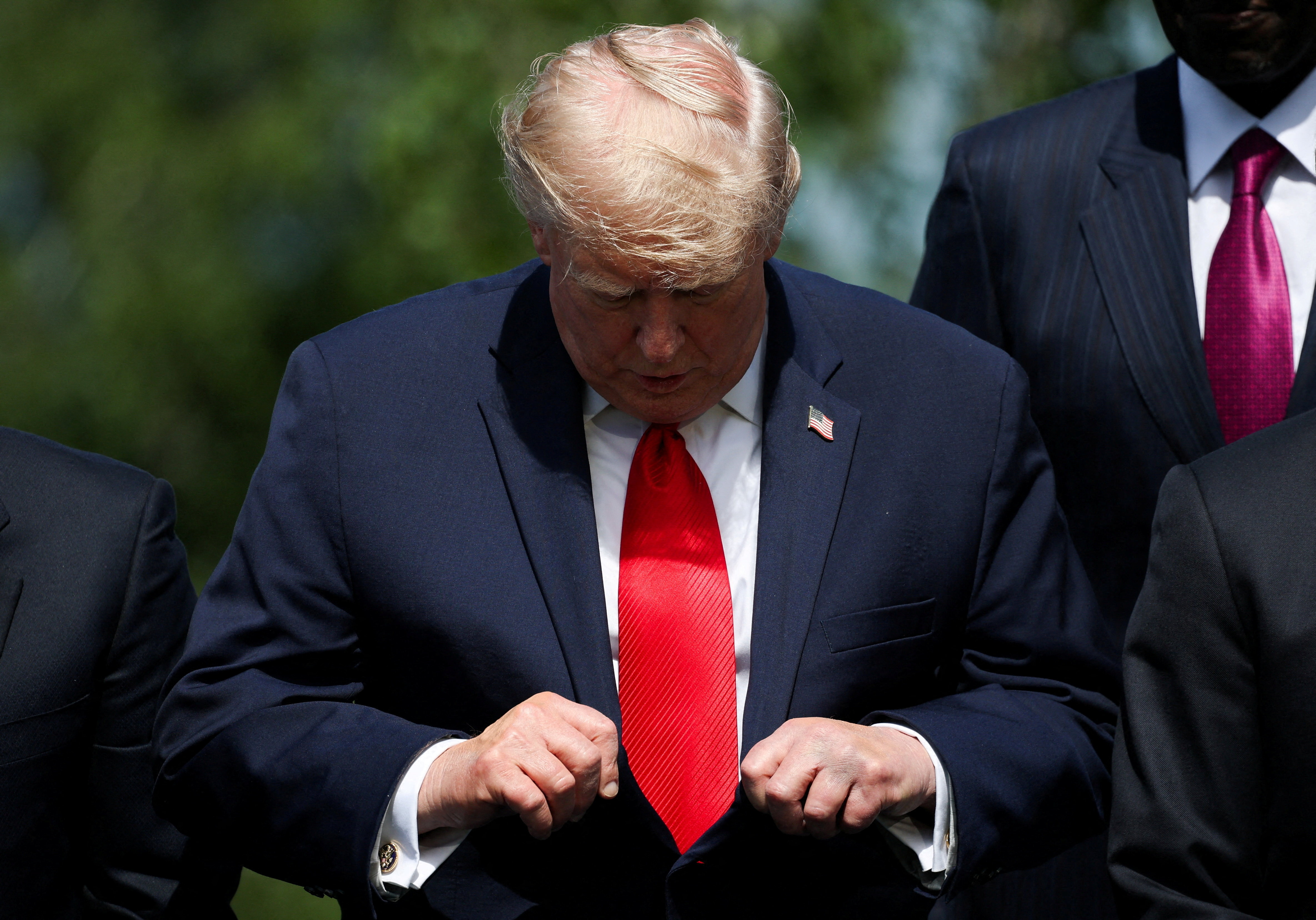
The United States entered the war with Iran three-and-a-half months ago with the objectives of halting its nuclear programme, destroying its ballistic missiles industry, ending its funding of Hamas and Hezbollah, and forcing regime change. According to the memorandum of understanding (MoU) that President Donald Trump and Iranian President Masoud Pezeshkian signed on Wednesday night, giving the two sides 60 days to work on a permanent truce, the only goal partially achieved related to the nuclear programme.
Iran pledged not to build a nuclear bomb, agreeing to the ‘down-blending’ of its 440kg stockpile of highly enriched uranium under the supervision of the International Atomic Energy Agency. Even on this, Trump did not get his way as he had wanted the ‘down-blending’ to take place in another country, but Iran rejected the idea. Worse still he did not oppose the continuation of Iran’s nuclear programme, saying on Wednesday that Iran was entitled to enrich uranium for civilian use. He also made a 180-degree turn on the ballistic missiles programme, which he has said he would “raze to the ground”. On Wednesday he said that “if other countries have them (ballistic missiles), it’s a little bit unfair for them not to have some.”
The MoU also included a ceasefire in Lebanon, an Iranian demand that will put an end to Israel’s military operations in the south of the country, something that did not go down well in Jerusalem and has caused a rift between Trump and Israel’s PM Benjamin Netanyahu. It is no wonder the agreement was welcomed by the Hezbollah leadership and hailed as “a great victory”.
Iran’s chief negotiator Baqer Qalibaf said “the agreement is a record of US failure,” a claim difficult to disagree with. “Everything we sought to achieve through military means, we obtained several times over through negotiation,” he said. The agreement also provided big financial incentives to Tehran. The immediate lifting of the US naval blockade on Iranian ports and the resumption of crude oil exports and lifting of US sanctions would boost Tehran’s revenues as would the unfreezing of billions of dollars in Iranian assets. There was also a plan for a $300 billion reconstruction fund that would be funded by Gulf countries.
Trump claimed the agreement delivered a “major win”, but few will take this claim seriously. In the end, he agreed to a host of concessions in order to secure the opening of the Strait of Hormuz, which turned out to be Iran’s biggest asset, to commercial traffic. Its closure had caused energy prices to soar, fueling inflation internationally as well as in the US. Trump will come under heavy criticism for the concessions he made, but he had made the re-opening of the Strait of Hormuz his priority, because he wanted to prevent a “worldwide depression”. It was the right decision, even if it showed weakness on the part of the US.





Click here to change your cookie preferences