
When he was campaigning for his election, President Nikos Christodoulides insisted that he would seek a more active involvement of the EU in the Cyprus problem. Superficially, this sounded like a good idea and may have won votes both from both supporters and opponents of a federal settlement, because it could be interpreted in different ways.
Shortly after his election, he went to Brussels and requested an EU special envoy be appointed for the Cyprus problem, proposing that a political personality be given the job. Former commissioner Johannes Hahn was appointed by the Commission in May 2025, but he stepped down 10 months later, citing other commitments. He probably understood that he had no role to play other than that of observer.
Now, the president wants the European Commission to appoint another special envoy for the Cyprus problem, as there might be some movement. He told reporters on Thursday in Brussels that there would be a new appointment by the European Commission. Some names were discussed “and very soon the president of the commission, after taking care of the necessary internal procedures, would proceed to public announcements,” he said.
Why is it so important for the European Commission to appoint a special envoy? And why is Christodoulides wasting his time on this matter at a time when the UN Secretary-General’s personal envoy, Maria Angela Holguin, has undertaken a new initiative aimed at creating the conditions for a resumption of the talks. Would the appointment of a Commission envoy, who, at best, will have the role of observer – assuming the Turkish side consents to this – make the slight difference to the process? Will the envoy boost the prospects of a successful outcome?
Of course not, and everybody knows this. So why are Christodoulides and his entourage making such a big fuss about the EU envoy? This is part of the broader government scheme of making the Cyprus problem a European problem (something Christodoulides has boasted of achieving several times) and linking progress in Turkey-EU relations to progress in the Cyprus problem. Although the link has been ascertained in EU documents, it remains vague as there has been no definition of what constituted progress in the Cyprus problem.
This vagueness has not stopped the government from perpetuating the myth that EU involvement will make a big difference to the peace process. On Friday, deputy government spokesman Yiannis Antoniou said the government was seeking “more substantive and more active involvement of the European Union at all stages of the process for the solution of the Cyprus problem.” He was not asked why this was being sought by the radio show host, because the consensus is that greater EU involvement is good thing even if it has zero impact on the peace process.
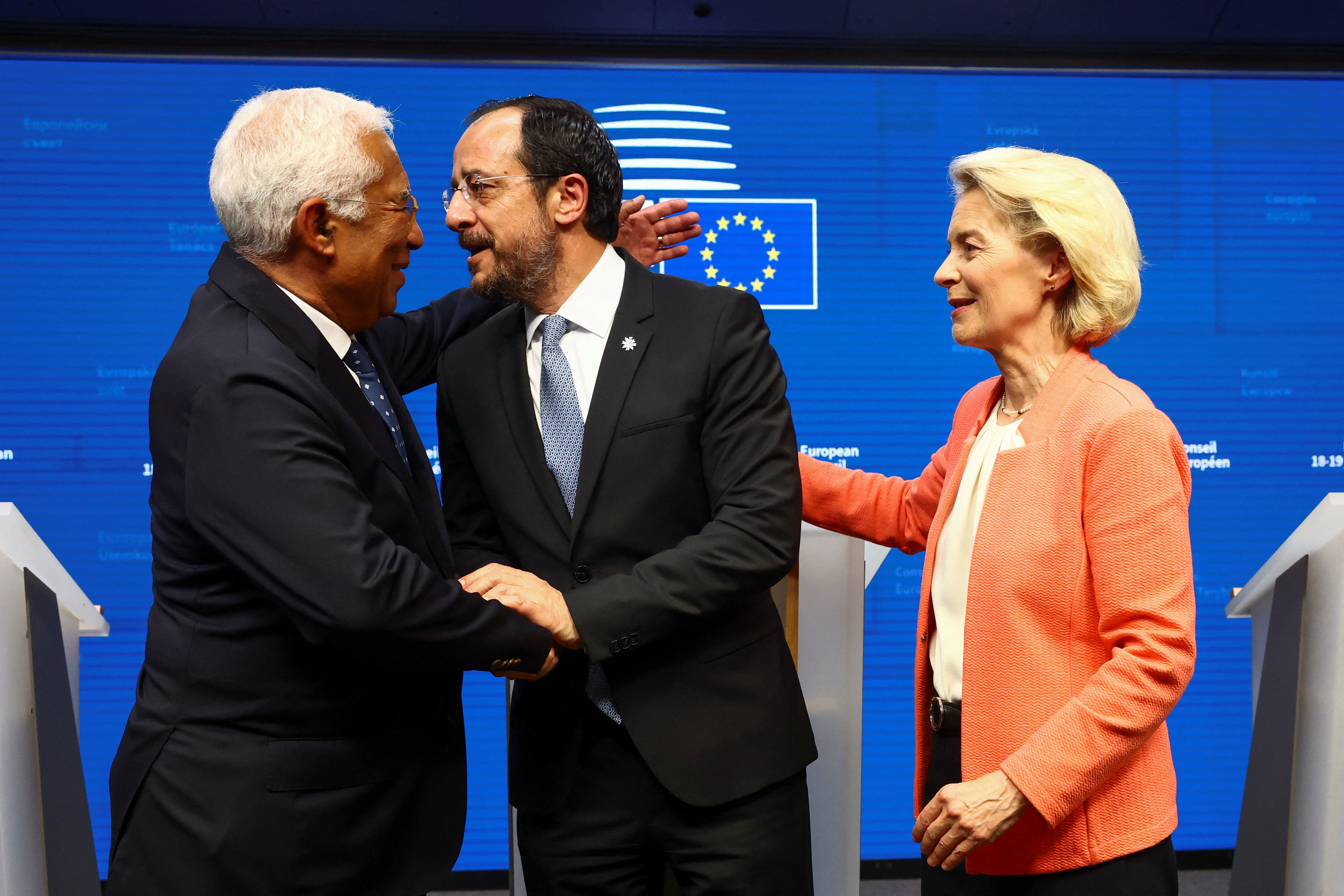
Christodoulides claimed he secured this more active involvement. He said on Thursday that European Council president Antonio Costa had recently spoken to the UN Secretary-General twice, and “conveyed the very clear message that any progress in EU-Turkey matters would first require the implementation on Turkey’s part of its European obligations including of course its Cyprus-related obligations.” Why the UN Secretary-General would have any interest in EU-Turkey affairs nobody knows, nor do we know how this could be helpful for the resumption of talks.
The government seems more concerned about EU involvement in the process than the actual process. Instead of coming up with suggestions aimed at ensuring there is a new process, which is far from a certainty, it has made the more active EU involvement, which the Turkish side will never consent to, its number one priority. All this fuss about EU involvement perfectly illustrates how the government has reduced the Cyprus problem into little more than a meaningless publicity exercise.





Click here to change your cookie preferences